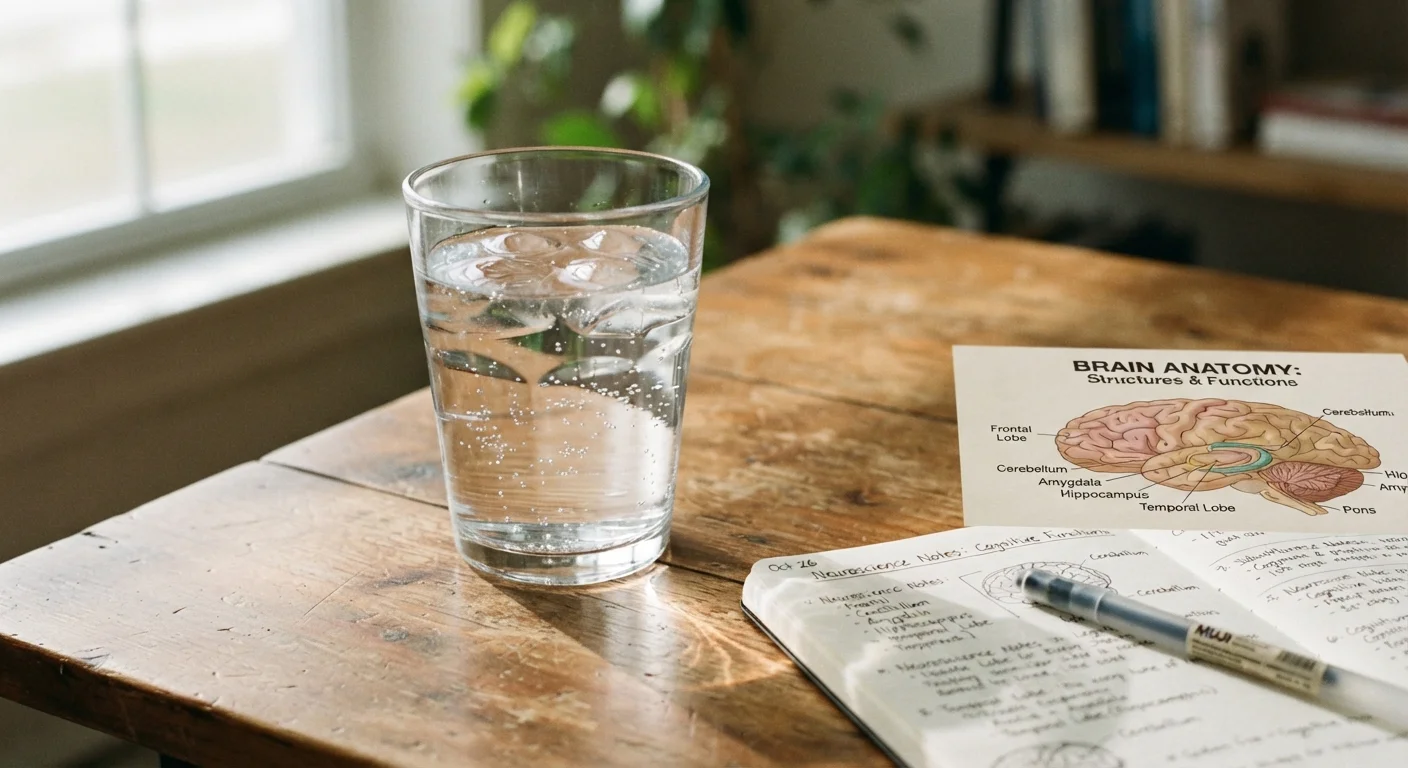

Why Hydration and Cognitive Performance Are Linked
The brain is roughly 75% water by weight, and it is exquisitely sensitive to changes in fluid balance. Research consistently shows that a fluid deficit equivalent to just 1-2% of body weight - often achieved through ordinary daily activity without any obvious thirst - is sufficient to slow reaction time, reduce working memory capacity, and heighten feelings of fatigue and irritability. For a deeper look at the underlying mechanisms, see how water regulates brain function.
What is less commonly understood is that how the brain maintains fluid balance depends not just on water volume but on the concentration of dissolved minerals - electrolytes - on either side of cell membranes. This distinction has real implications for when plain water is sufficient and when it may not be.
1-2%
Fluid deficit that impairs cognition
Research published in peer-reviewed nutrition journals indicates fluid losses as small as 1-2% of body weight are sufficient to measurably reduce attention and working memory.
~75%
Water content of the brain by weight
The brain's high water fraction makes it disproportionately sensitive to shifts in overall body fluid balance compared with other organs.
What Electrolytes Actually Do in the Brain
Electrolytes are minerals that carry an electrical charge when dissolved in fluid. The key players in neural function include sodium, potassium, magnesium, and calcium. Their roles are fundamental rather than supplementary:
- Sodium and potassium maintain the electrochemical gradient across neuron membranes - the engine that powers every nerve impulse and therefore every thought, movement, and perception.
- Magnesium modulates NMDA receptors involved in learning and memory consolidation.
- Calcium triggers neurotransmitter release at synaptic junctions.
When electrolyte concentrations fall outside a narrow range - whether from fluid loss that carries minerals away or from dilution through excessive plain water intake - neural signaling efficiency declines. Symptoms can range from subtle difficulty concentrating to, in severe cases, confusion and muscle weakness. Everyday cognitive effects are almost always mild, but they are measurable under laboratory conditions.
For related reading on how fluid imbalance manifests mentally, the article on mild dehydration and mental fog covers the physiological chain of events in detail.
Electrolyte Fluids vs. Plain Water: A Direct Comparison
The practical question is not which option is universally superior, but which is appropriate for a given context. The table below summarises the key differences across criteria most relevant to cognitive performance.
| Plain Water | Electrolyte-Enriched Fluids | |
|---|---|---|
| Primary cognitive benefit | Restores fluid volume; prevents dehydration-related impairment | Restores both fluid and minerals lost through sweat or illness |
| Best context | Routine daily activity, desk work, low-intensity tasks | Prolonged exercise, heat exposure, illness with fluid loss |
| Relevance for everyday hydration | High - sufficient for most people most of the time | Low to moderate - situationally important, not universally necessary |
| Risk of overuse | Very low; kidneys regulate excess efficiently | Low, but high-sugar products add unnecessary calories |
| Cost and accessibility | Minimal; universally available | Variable; whole-food sources are low cost, commercial drinks vary |
| Speed of neural benefit | Within 20-30 minutes for mild dehydration correction | Similar, with added mineral replenishment over same timeframe |
It is worth noting that commercially prepared electrolyte drinks often contain added sugars or artificial ingredients that are not necessary for electrolyte replacement in most situations. Whole-food sources - a banana, a pinch of salt in water, dairy, or legumes - provide the same minerals without additives. This is general information; anyone managing a medical condition affecting electrolyte balance should consult a healthcare professional before changing their fluid intake strategy.
When Each Approach Is and Isn't Sufficient
Plain water is appropriate - and preferable in its simplicity - for the majority of cognitive work situations: office environments, studying at moderate temperatures, or routine daily activity. In these contexts, electrolyte losses through sweat are minimal, and the kidneys regulate mineral balance efficiently provided overall diet is adequate.
Electrolyte replenishment becomes genuinely relevant in narrower circumstances:
- Exercise lasting longer than 60-90 minutes, particularly at high intensity or in warm conditions, produces sweat volumes sufficient to meaningfully deplete sodium and other minerals.
- Extended heat exposure without exercise - working outdoors in summer, for instance - can produce similar cumulative losses.
- Illness involving fluid loss (fever, vomiting, diarrhea) depletes both water and electrolytes simultaneously and often requires specific replacement.
- Very high plain water intake over a short period can dilute serum sodium, a rare but real condition called hyponatremia that impairs cognition.
Fluid demands also shift across the day based on activity, stress, and sleep debt. The guide on hydration needs across the day maps these variations clearly.
A Practical Rule of Thumb
If your activity is less than an hour, your environment is not unusually hot, and you are eating a varied diet, plain water is almost certainly all you need. Reserve electrolyte-focused strategies for situations involving significant sweat loss or illness. Starting with food-based sources - fruits, vegetables, a small amount of salt - is generally a sensible first step before considering prepared electrolyte products. Speak with a healthcare provider if you have a condition that affects fluid or mineral regulation.
Putting It Into Practice
For most adults engaged in cognitive work, the most impactful habit remains consistent, adequate plain water intake spread across the day - not timed electrolyte supplementation. The cognitive cost of mild dehydration is real and underappreciated, and addressing it does not require anything more sophisticated than drinking before thirst becomes noticeable.
Those who exercise regularly, live in hot climates, or notice persistent mental fog despite adequate water intake may benefit from assessing their overall mineral intake from food first. Dietary patterns rich in vegetables, fruits, legumes, and dairy supply meaningful electrolyte quantities alongside other nutrients that independently support cognition - a point worth reviewing in context of brain vitamins and cognitive nutrients.
For a broader view of how fluid intake intersects with daily mood and focus, hydration, mood, and focus offers a well-rounded starting point. And if you are weighing hydration options against caffeinated drinks for alertness, water vs. caffeinated drinks for mental alertness addresses that comparison directly.
This article is for general informational and educational purposes only and is not a substitute for professional medical advice, diagnosis, or treatment. Always consult a qualified healthcare professional for questions about your individual health needs.