
Why the Gut-Brain Axis Makes Probiotics Plausible
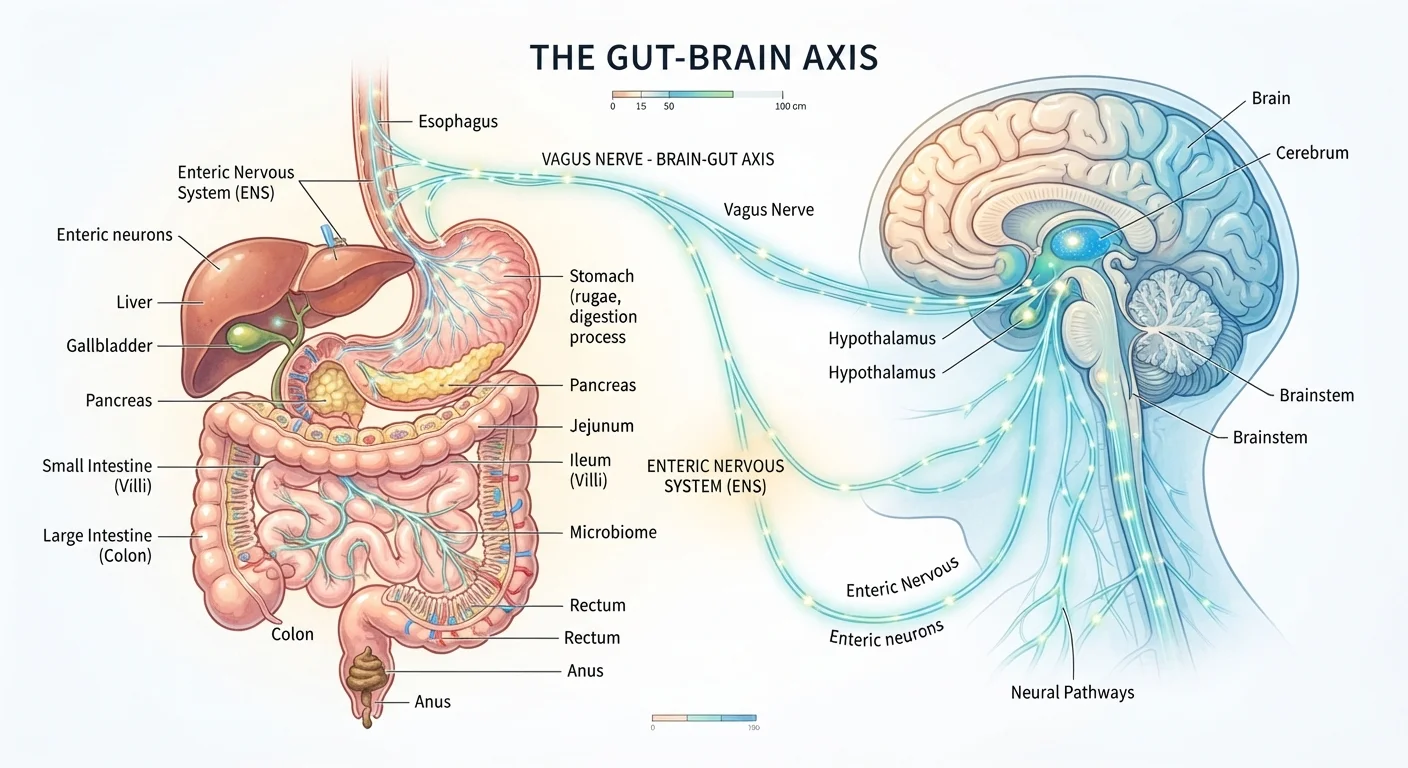
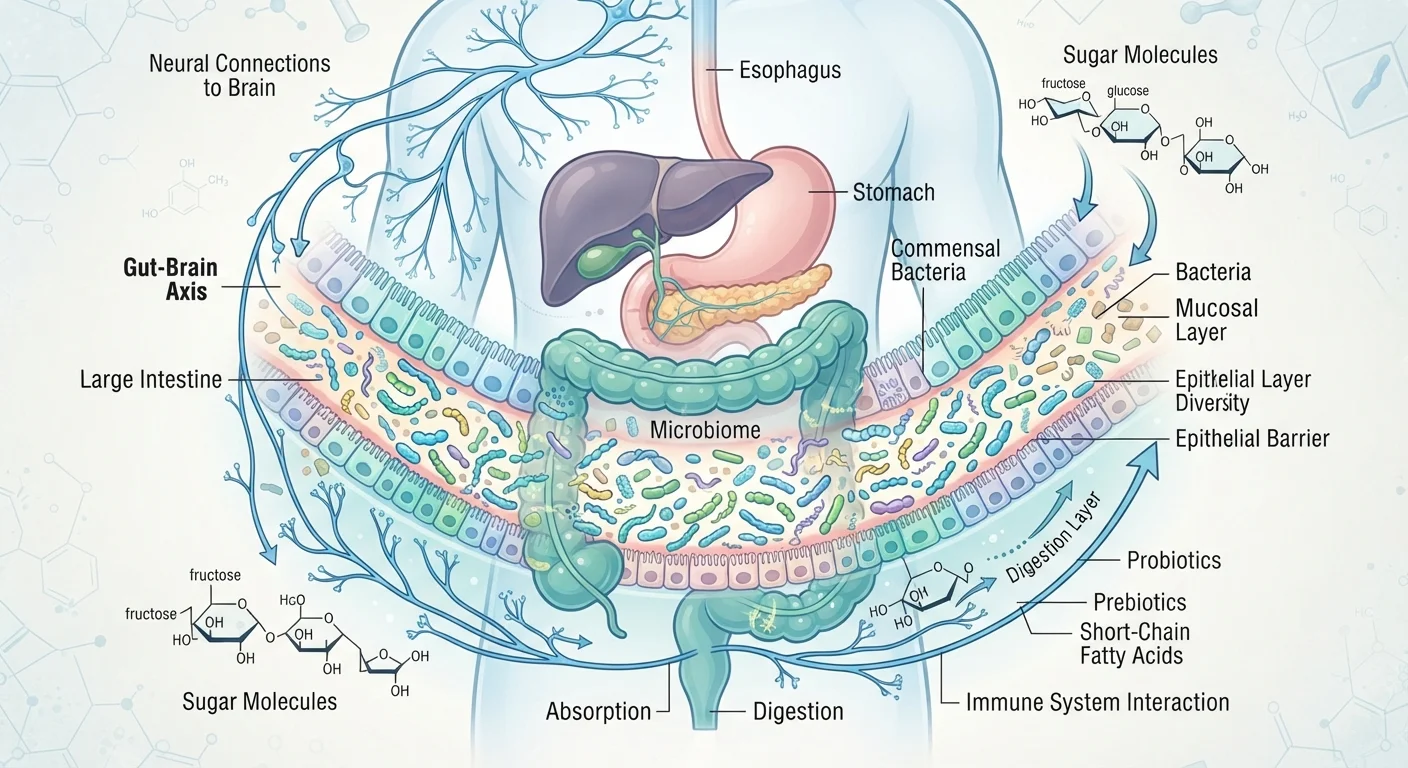
The idea that gut bacteria could influence anxiety is not fringe science. The gut and brain communicate continuously through a bidirectional network - the gut-brain axis - involving the vagus nerve, immune signalling, and microbial metabolites. Gut microbes produce or regulate neurotransmitter precursors, including serotonin precursors and gamma-aminobutyric acid (GABA), both directly involved in mood and stress responses.
This biological plausibility is what has driven researchers toward clinical trials. If microbial balance shapes neurochemical signalling, then introducing specific probiotic strains might, in theory, nudge anxiety-related pathways. For a fuller grounding in the underlying science, see what scientists currently understand about the microbiome and mood.
| Gut-brain communication pathway | Vagus nerve, immune signals, microbial metabolites |
| Typical probiotic trial duration | 4-8 weeks (most published RCTs) |
| Evidence quality classification | Emerging - promising but not conclusive |
| Key variable in strain research | Species and combination used (not all probiotics are equivalent) |
| Primary outcome measures used | Validated scales (e.g., GAD-7, STAI, HADS) |
What Clinical Trials Have Found - and Where They Fall Short
Several randomised controlled trials (RCTs) and systematic reviews have examined probiotic supplementation in people experiencing anxiety symptoms. Some have found modest reductions in self-reported anxiety scores, particularly when using multi-strain formulations and in populations with diagnosable anxiety disorders. Others show no significant effect beyond placebo.
34
RCTs included in a 2023 meta-analysis on probiotics and anxiety
A 2023 systematic review in Nutrients aggregated 34 randomised controlled trials examining probiotic use and anxiety outcomes.
Mixed
Direction of findings across published trials
Results vary considerably by strain, population, and outcome measure - no single consistent signal has emerged across all studies.
~38M
Adults affected by anxiety disorders in the US
According to the Anxiety and Depression Association of America, anxiety disorders are among the most common mental health conditions in the United States.
The inconsistency is not a flaw in individual studies - it reflects genuine scientific complexity. Key limitations researchers acknowledge include:
- Heterogeneity of strains: Trials use different bacterial species and combinations, making cross-study comparison unreliable.
- Short intervention windows: Most trials run 4-8 weeks, which may be insufficient to observe durable microbiome changes.
- Outcome measure variation: Studies use different validated anxiety scales, complicating meta-analyses.
- Population differences: Findings from healthy volunteers may not translate to people with clinical anxiety disorders.
Dietary context also matters. High sugar diets, for example, can disrupt microbiome composition in ways that may counteract probiotic benefits - an interaction explored in depth in our article on how sugar and the gut-brain axis may influence anxiety.
Gut-brain axis
The bidirectional communication network between the gastrointestinal tract and the central nervous system, involving neural, immune, and endocrine pathways. It allows gut microbial activity to influence brain function and vice versa.
Probiotics
Live microorganisms that, when consumed in adequate amounts, may confer a health benefit on the host. In research contexts, specific strains are tested; not all commercial products replicate studied formulations.
Psychobiotics
A research term for probiotics or prebiotics proposed to exert mental health effects via the gut-brain axis. The term is used in the scientific literature but is not a regulated or standardised classification.
Randomised controlled trial (RCT)
A study design in which participants are randomly assigned to an intervention or control group to reduce bias. RCTs are considered the gold standard for testing causal claims in clinical research.
Heterogeneity
In research synthesis, heterogeneity refers to meaningful variation across studies in design, populations, or interventions that makes pooling results statistically or interpretively unreliable.
Comparing the Evidence Landscape
Probiotic research sits within a broader field of nutrition-psychiatry interventions. Omega-3 fatty acids, for instance, have a longer research history in depression but face similar problems of heterogeneity and modest effect sizes - a parallel worth understanding, covered in separating promising omega-3 research from overblown claims. Similarly, whole fermented foods such as yoghurt and kefir are sometimes conflated with probiotic supplements in public discourse, but their evidence base differs; see what research says about fermented foods and mental wellbeing.
A common misconception fuelling unwarranted optimism - or unwarranted dismissal - is treating anxiety as a single uniform condition. In reality, anxiety disorders vary considerably in their neurobiology, and it is plausible that probiotic effects, if real, may be disorder-specific or even subgroup-specific. For context on how anxiety is often misunderstood, see common anxiety myths that delay people from seeking help.
What 'Promising Evidence' Actually Means
When researchers describe probiotic-anxiety findings as 'promising,' they typically mean results exceed chance but are not yet consistent, large, or replicated enough to inform clinical guidelines. This is a normal and important stage of scientific development - it signals a field worth continued investigation, not a reason to act as if efficacy is established. Readers should treat this distinction as meaningful when evaluating health claims.
This article is for general informational and educational purposes only and does not constitute medical advice. If you are experiencing anxiety or considering any supplement, please consult a qualified healthcare professional.