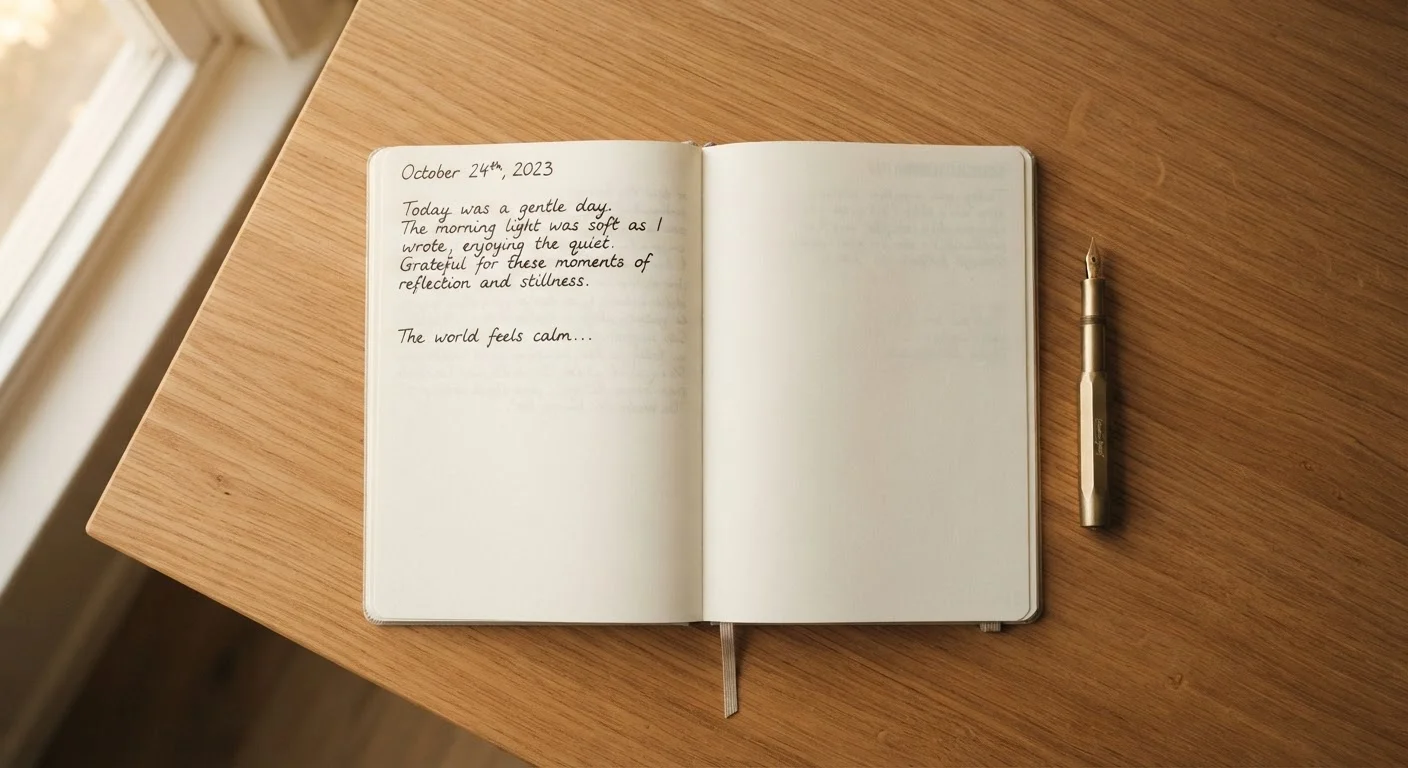

Why Writing It Down Changes Everything
Stress rarely arrives as a clearly labeled package. More often, it builds quietly — an irritable morning here, a tight chest before a meeting there — until you feel overwhelmed without quite knowing why. That's where a stress trigger journal earns its value.
When you write down the circumstances surrounding a stressful moment, you externalize something that lives inside your head and body. Research in psychological science consistently shows that this kind of expressive and reflective writing can help reduce the emotional intensity of difficult experiences over time. More practically, a written record lets you look back across days and weeks and see what your memory would otherwise blur together.
To understand what stress triggers actually are and how they activate the body's stress response, see our introduction to stress triggers. If you're newer to journaling in general, our guide on starting a journaling practice covers formats and realistic expectations for beginners.
What you will need
How to Keep a Stress Trigger Journal
The format below is intentionally simple. Each entry takes between two and five minutes. You don't need a special notebook or app — whatever you'll actually use consistently is the right tool.
Record the situation as soon as you can
Write a brief, factual description of what was happening when you noticed stress. Where were you? What were you doing? Who else was present? Aim for two or three sentences — you're capturing context, not crafting an essay.
Note your thoughts and physical signals
Stress shows up in both the mind and the body simultaneously. Jot down any thoughts that were running through your head — even if they seem irrational — and any physical sensations you noticed: tension in the shoulders, a quickened heartbeat, shallow breathing, or a knot in the stomach. Both layers of experience are useful data.
Rate the intensity on a simple scale
Give the stress a number from 1 (barely noticeable) to 10 (the most intense you can imagine). This single digit, tracked over time, helps you distinguish between chronic low-grade pressure and acute spikes — a distinction that matters when you're deciding what kind of support might help.
Describe how you responded
Write down what you actually did in response to the stress — not what you wish you had done. Did you withdraw from a conversation, reach for your phone, take a walk, or snap at someone? Honest responses here are the most valuable part of the entry because they show your current default coping behaviors.
Review entries weekly to spot recurring themes
At the end of each week, read through your entries looking for patterns: repeated triggers, times of day when intensity is highest, and coping responses that seemed to help versus those that didn't. Highlight or circle anything that appears more than twice. These recurring items are where your attention is best directed.
Consistency Matters More Than Detail
A short entry written every day is far more revealing than a detailed entry written once a week. Even three sentences per day gives you enough material to identify meaningful patterns within two weeks. Think of it as building a data set — each entry adds information the next one can be compared against.
Once you've built a few weeks of entries, use what you find to build a personal picture of your stress patterns — a useful next step in any self-help journey.
What to Do With What You Find
After one to two weeks, set aside ten minutes to read back through your entries. You're looking for clusters rather than isolated events. Ask yourself: Does stress tend to peak at particular times of day? Are certain people, places, or tasks mentioned repeatedly? Do your physical symptoms follow a pattern?
This review transforms a journal from a daily habit into a practical self-awareness tool. You might discover, for example, that your stress intensity spikes on days when you skip a lunch break, or that one specific type of task consistently triggers anxious thoughts. Naming these patterns is the foundation for choosing targeted coping strategies — whether that's a mindfulness practice, a change in routine, or a conversation with a professional.
Seek Professional Support When Needed
If reviewing your journal reveals that stress is near-constant, worsening, or significantly interfering with work, relationships, or health, that is a signal worth taking seriously. A licensed therapist or counselor can help you interpret what you're finding and develop a plan suited to your specific situation. General self-help tools like journaling are most effective when stress is manageable — not when it has become chronic or overwhelming.
For a broader view of habits worth building alongside journaling, explore our beginner's guide to stress relief habits. And if you'd like to explore more structured journaling approaches, the Journaling Methods hub offers several frameworks worth trying.
This article is for general informational and educational purposes only. It is not a substitute for professional mental health advice, diagnosis, or treatment. If stress is significantly affecting your daily life, please speak with a qualified healthcare provider.