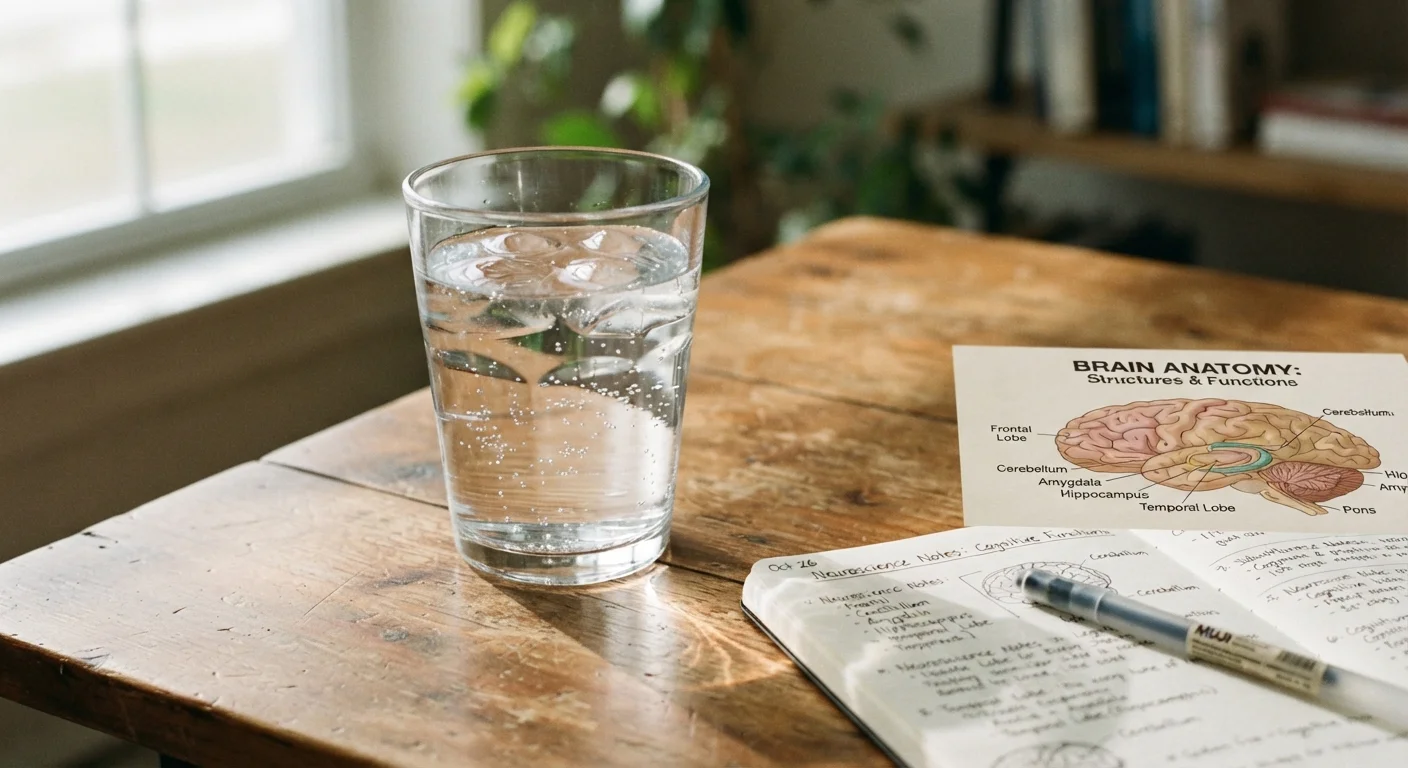

Why the Brain Is Uniquely Vulnerable to Fluid Loss
The human brain accounts for roughly 2% of body weight yet consumes about 20% of the body's energy and requires a tightly regulated internal environment to function well. Approximately 75% of brain tissue is water. This water supports electrical signalling between neurons, helps regulate temperature, and facilitates the transport of nutrients and waste products across cell membranes.
When the body loses fluid - through sweating, breathing, or simply going several hours without drinking - blood volume decreases slightly, and the concentration of dissolved particles in the blood rises. The brain detects these changes almost immediately. Even before the kidneys signal the need to conserve water and before thirst becomes pronounced, the brain's electrochemical environment is already shifting.
This sensitivity is not a design flaw; it reflects how precisely the brain must manage its chemistry. The downside is that small disruptions - far smaller than most people associate with "being dehydrated" - are enough to degrade the quality of thought. For a fuller picture of how water regulates brain function at a cellular level, see our deep dive into the cognitive science of hydration.
What Happens Cognitively at 1-2% Fluid Loss
A body water deficit of 1-2% of total body weight sits squarely in the "mild" dehydration range - easily reached by skipping a morning drink, exercising lightly without replacing sweat, or spending an afternoon in a warm office. At this level, the effects are measurable but often misattributed.
1-2%
Body weight fluid loss linked to cognitive impairment
Multiple controlled studies have found measurable declines in attention and working memory at this level of dehydration, before significant thirst develops.
~75%
Water content of brain tissue
The brain's high water content makes it particularly sensitive to even small shifts in the body's overall fluid balance.
20%
Share of body's energy consumed by the brain
The brain's disproportionate energy demand means disruptions to its operating environment - including fluid balance - have outsized effects on performance.
Research in this area - including studies from University of Connecticut's Human Performance Laboratory - has found consistent evidence that this degree of fluid loss is associated with:
- Reduced attention and concentration: Tasks requiring sustained focus become harder; error rates on attention-demanding tests tend to rise.
- Slower working memory: Holding and manipulating information in mind - essential for reading, calculation, and decision-making - becomes less efficient.
- Increased perception of task difficulty: Mildly dehydrated individuals often report that mental tasks feel harder, even when their objective performance has not yet deteriorated significantly.
- Mood shifts: Irritability, fatigue, and reduced motivation appear alongside - and sometimes before - overt cognitive slowing. Women, in particular, showed pronounced mood effects in some studies, though both sexes are affected.
Critically, these changes often occur before a person feels genuinely thirsty, meaning thirst alone is not a dependable early warning system.
A Simple Hydration Check You Can Do Now
Urine color is one of the most practical everyday indicators of hydration status. Pale straw-yellow generally suggests adequate hydration; dark amber or infrequent urination may signal a deficit worth addressing. Keep a water bottle within arm's reach during mentally demanding work - visible cues are more effective than relying on thirst alone.
The Physiology Behind the Fog
Several overlapping mechanisms explain why a modest fluid deficit translates so directly into cognitive impairment.
Reduced cerebral blood flow: Lower blood volume means the heart must work harder to maintain perfusion. Some research using neuroimaging has shown decreased blood flow to the prefrontal cortex - the region responsible for planning, attention, and impulse control - under mild dehydration.
Elevated cortisol: Fluid loss activates the body's physiological stress response. Rising cortisol levels are associated with impaired memory consolidation and a narrowed attentional spotlight.
Electrolyte imbalance: Sodium, potassium, and magnesium - dissolved in the body's fluids - govern how nerve cells fire. When fluid balance shifts, so does the ratio of these electrolytes, affecting the speed and reliability of neural transmission.
Increased brain effort: Neuroimaging studies have shown that mildly dehydrated participants completing cognitive tasks display greater brain activation - suggesting the brain is working harder to achieve a comparable result, a pattern that is cognitively costly over time.
Together these mechanisms create the subjective sense of mental fog: thinking feels effortful, recall feels sluggish, and attention drifts more easily than usual.
The Evidence Has Limits Worth Knowing
Most controlled dehydration studies involve laboratory conditions that may not perfectly replicate everyday experience. Effect sizes vary across studies, and some research relies on self-reported cognitive difficulty rather than objective performance measures. The scientific consensus supports a meaningful link between mild dehydration and cognitive function, but individual responses differ. Persistent mental fog despite adequate hydration warrants evaluation by a healthcare professional, as many conditions share these symptoms.
Everyday Situations That Quietly Tip the Balance
Mild dehydration rarely arrives dramatically. More often it accumulates gradually through ordinary circumstances that are easy to overlook.
Understanding when fluid needs are elevated is just as important as knowing the baseline. Our article on how hydration demands shift across the day maps these fluctuations in practical detail. For guidance on recognising whether your own fluid intake may be affecting your thinking, see signs your fluid intake may be affecting your thinking.
The broader context of hydration, mood, and mental performance is covered in our grounded overview of hydration and cognitive wellbeing.
This article is for general informational and educational purposes only and does not constitute medical advice. Individual fluid needs vary based on health status, medications, age, activity level, and other factors. Please consult a qualified healthcare professional for guidance specific to your circumstances.