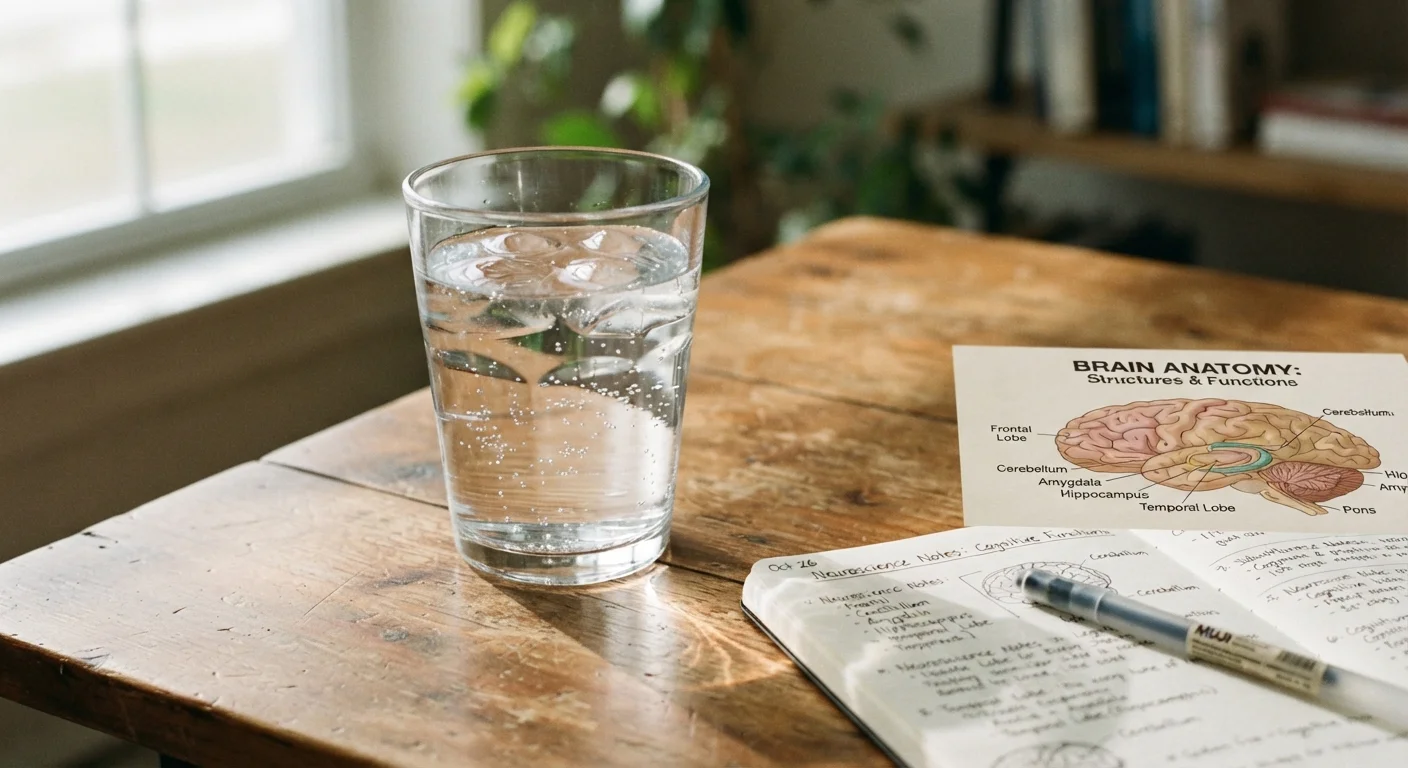

The Cognitive Cost of Mild Dehydration
The brain is approximately 75% water by weight, and it is exquisitely sensitive to even small reductions in fluid availability. Research published in peer-reviewed nutrition and neuroscience journals consistently finds that a fluid deficit of just 1-2% of body weight - achievable during a typical busy morning without deliberate drinking - is enough to impair sustained attention, short-term memory, and psychomotor speed.
What makes this finding particularly significant is that most people do not experience thirst until dehydration has already crossed that threshold. In other words, by the time you feel thirsty, your cognitive performance may already be declining. Mood is also affected: irritability, fatigue, and reduced motivation have all been reported at mild dehydration levels in controlled trials.
For a deeper look at the mechanisms involved, our cognitive science of hydration article explains how water regulates neurotransmission, cerebral blood flow, and cell volume - all foundational to clear thinking.
1-2%
Body water loss that impairs cognition
Multiple controlled trials have found that fluid deficits at this level measurably reduce attention, working memory, and psychomotor speed in healthy adults.
75%
Water content of the human brain by weight
The brain's high water content makes it among the organs most sensitive to fluctuations in overall hydration status.
~400mg
Daily caffeine limit considered moderate for most adults
The U.S. Food and Drug Administration has noted that up to 400 mg of caffeine per day is generally not associated with dangerous negative effects in healthy adults.
What Caffeine Actually Does - and Doesn't Do
Caffeine is the most widely consumed psychoactive substance in the world, and its cognitive effects are real and well-documented. It works primarily by blocking adenosine receptors in the brain. Adenosine is a chemical that accumulates during waking hours and promotes sleepiness; by blocking its effect, caffeine delays fatigue and increases alertness and arousal.
Studies show that moderate caffeine intake - generally cited in the research literature as roughly 40-300 mg per occasion - can improve reaction time, vigilance, and certain aspects of working memory, particularly when alertness is already low. These are meaningful, reproducible effects.
However, caffeine does not replenish fluid. Many caffeinated beverages, particularly coffee, have a mild diuretic effect at higher doses, meaning they can marginally increase urine output. For regular consumers, this effect is often modest and partly offset by the water content of the drink itself - but relying heavily on caffeinated beverages as your primary fluid source can, over time, contribute to a net fluid deficit. Caffeine cannot compensate for the cognitive drag that dehydration produces; they operate through entirely separate mechanisms.
| Criterion | Water | Caffeinated Drinks |
|---|---|---|
| Primary cognitive mechanism | Maintains cell volume, neurotransmission, cerebral blood flow | Blocks adenosine receptors to reduce perceived fatigue |
| Effect on dehydration | Directly corrects fluid deficit | Does not address dehydration; may mildly worsen it at high doses |
| Onset of cognitive benefit | Gradual; sustained with consistent intake | Rapid; typically within 30-60 minutes |
| Duration of effect | Continuous while hydration is maintained | Time-limited; typically 3-5 hours |
| Tolerance development | None | Tolerance to alerting effects develops with regular use |
| Anxiety risk | None | Can elevate anxiety in sensitive individuals |
| Sleep impact | No negative sleep effects | Can disrupt sleep quality if consumed late in the day |
The Underappreciated Interaction Between Hydration and Stimulation
A common pattern in everyday life looks like this: a person skips drinking water in the morning, reaches for coffee to feel alert, experiences a mid-afternoon energy dip, and drinks more coffee. What often goes unnoticed is that chronic mild dehydration is sustaining the cognitive sluggishness that caffeine is being asked to fix.
Research comparing hydrated versus dehydrated participants on cognitive tasks finds that adequate hydration alone can restore performance to baseline levels - without any stimulant. This does not make caffeine redundant; it means the two act on different systems and both matter. The more productive framing is complementary rather than competitive: water maintains the physiological conditions in which the brain operates efficiently, while caffeine can provide a targeted, time-limited boost when needed.
Our overview of hydration, mood, and focus explores daily habits that support fluid balance without requiring radical changes to routine. If you're also curious about how electrolyte content in drinks affects the picture, our article on electrolytes and cognitive performance is worth reading alongside this one.
Caffeine Does Not Equal Hydration
While coffee and tea do contribute to daily fluid intake, they are not equivalent to plain water for hydration purposes. At higher consumption levels, caffeine's diuretic effect can offset some of the fluid delivered by the drink. Public health bodies generally recommend that plain water remain the primary source of daily fluid intake, with caffeinated beverages treated as supplementary. If you are relying on caffeinated drinks as your main source of fluids, it is worth speaking with a healthcare professional about your hydration habits.
Practical Takeaways for Everyday Cognitive Clarity
The evidence does not suggest abandoning caffeinated drinks. For most healthy adults, moderate consumption is safe and cognitively useful. What the evidence does suggest is resisting the habit of substituting caffeinated beverages for plain water entirely.
A few evidence-informed principles are worth keeping in mind. First, drinking water consistently across the day - rather than only when thirsty - helps keep the brain operating above the dehydration threshold. Second, if you notice concentration difficulties or low mood, consider fluid intake before assuming caffeine is the answer. Third, individuals particularly sensitive to caffeine's anxiogenic (anxiety-producing) effects may find that improving hydration provides more reliable cognitive support with fewer side effects; our related article comparing caffeinated and decaffeinated drinks covers this trade-off in detail.
For those interested in the broader nutritional picture of brain health, the brain vitamins hub provides context on the micronutrients that work alongside hydration to support cognition.
This article is for general informational and educational purposes only. It is not a substitute for professional medical advice, diagnosis, or treatment. Always consult a qualified healthcare professional before making changes to your diet, fluid intake, or caffeine consumption, particularly if you have an existing health condition.