
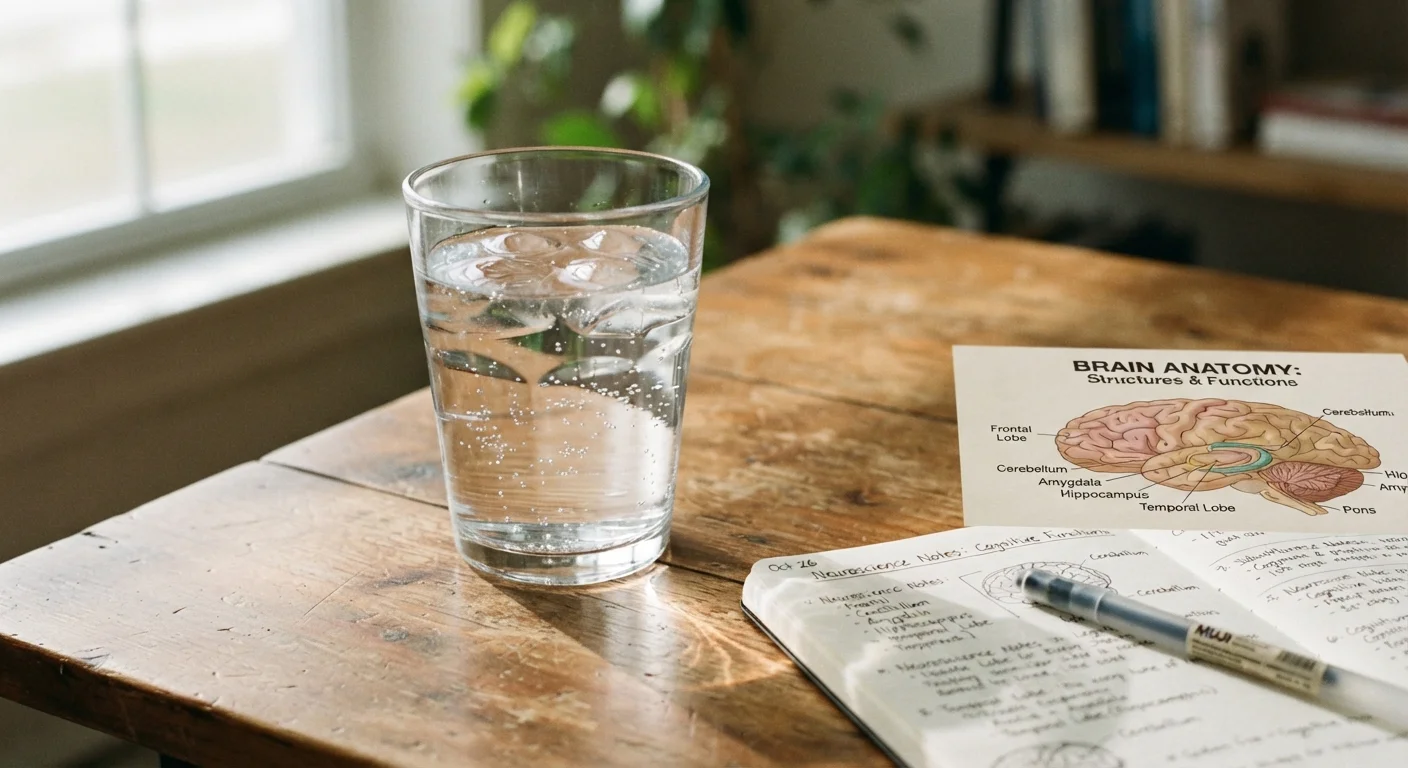
Why Water Is Non-Negotiable for Brain Function
The brain consumes a disproportionate share of the body's resources. Despite representing only about 2% of body weight, it uses roughly 20% of the body's total energy and depends on a tightly regulated biochemical environment to function. Water is central to that environment - it acts as a solvent for neurotransmitters, a medium for electrical signaling across neurons, and a temperature-regulation buffer that protects neural tissue from heat generated by metabolic activity.
Because the brain has no meaningful ability to store water independently of the rest of the body, it is continuously sensitive to systemic fluid status. When total body water drops, cerebrospinal fluid volume decreases, blood viscosity rises slightly, and the delivery of glucose and oxygen to neurons can become less efficient. These are not catastrophic events at mild dehydration levels, but they are sufficient to introduce measurable friction into cognitive processes.
~75%
Water content of brain tissue by weight
Estimates from neuroanatomical research consistently place brain water content at approximately 73-80%, underlining the organ's direct dependence on systemic hydration.
1-2%
Body-water deficit linked to cognitive impairment
Multiple controlled trials have found measurable decrements in attention, memory, and reaction time at fluid losses as small as 1-2% of body mass.
20%
Share of body's energy used by the brain
Despite its modest size, the brain's outsized energy demands make it especially sensitive to disruptions in the delivery of oxygen and glucose - both of which depend on adequate hydration.
The 1-2% Problem: Small Deficits, Real Consequences
A recurring finding in hydration research is that cognitive impairments emerge at fluid losses far smaller than most people expect. Studies published in peer-reviewed nutrition and psychology journals have consistently found that deficits representing 1-2% of body mass - roughly 0.7 to 1.4 kg for a 70 kg adult - are associated with reduced performance on tasks requiring sustained attention, working memory, and psychomotor coordination.
Critically, thirst often does not register until dehydration has already reached or exceeded this range, meaning the signal most people rely on to prompt drinking is already arriving late. Mild dehydration and mental fog explores the underlying mechanisms in detail, but the core point here is practical: by the time you feel thirsty, a measurable cognitive cost may already be accumulating.
Don't Wait for Thirst to Drink
Thirst is a useful but imperfect signal - it tends to activate after a fluid deficit has already begun to affect cognition. Building regular drinking habits into daily routines (for example, a glass of water with each meal and between meals) provides more reliable protection against dehydration-related cognitive dips than reactive drinking alone.
Who Is Most Cognitively Vulnerable?
While dehydration affects cognition broadly, certain populations experience the effects more acutely. Children have a higher body-surface-area-to-volume ratio, making them lose water more quickly relative to their size, and research suggests their attention and short-term memory are particularly sensitive to fluid status. At the other end of the age spectrum, older adults face a blunted thirst mechanism and reduced kidney efficiency, elevating their risk of silent dehydration with cognitive consequences.
Environmental and behavioral factors also amplify risk. Physical exercise, exposure to heat, high-altitude environments, and even psychological stress can accelerate fluid loss. Hydration demands across the day maps how these variables shift fluid needs and what they mean for sustained mental performance. Individuals managing chronic health conditions should discuss their specific fluid requirements with a qualified healthcare provider rather than relying solely on general guidance.
Practical Hydration for Cognitive Support
Effective hydration for brain health is less about hitting a precise daily target and more about maintaining consistency. Spreading fluid intake across the day - rather than drinking large quantities infrequently - keeps body-water levels more stable and avoids the cognitive dips associated with cumulative morning or afternoon deficits.
Water-rich foods, including fruits, vegetables, and soups, contribute meaningfully to total fluid intake and carry additional nutritional benefits relevant to brain health. For readers interested in the broader nutritional picture, brain vitamins and omega-3 and brain health cover complementary nutrients that also support cognitive function. Hydration is not a standalone intervention - it is one foundational element within a broader pattern of nutrition and lifestyle that sustains mental clarity over time.
“Even modest fluid deficits - ones that don't yet produce a strong sense of thirst - can degrade the speed and accuracy of cognitive tasks that we rely on every single day.”
— Lawrence Armstrong, Professor of Physiology, University of Connecticut Human Performance Laboratory
This article is for informational purposes only and does not constitute medical advice. Always consult a qualified healthcare professional for guidance specific to your health needs.