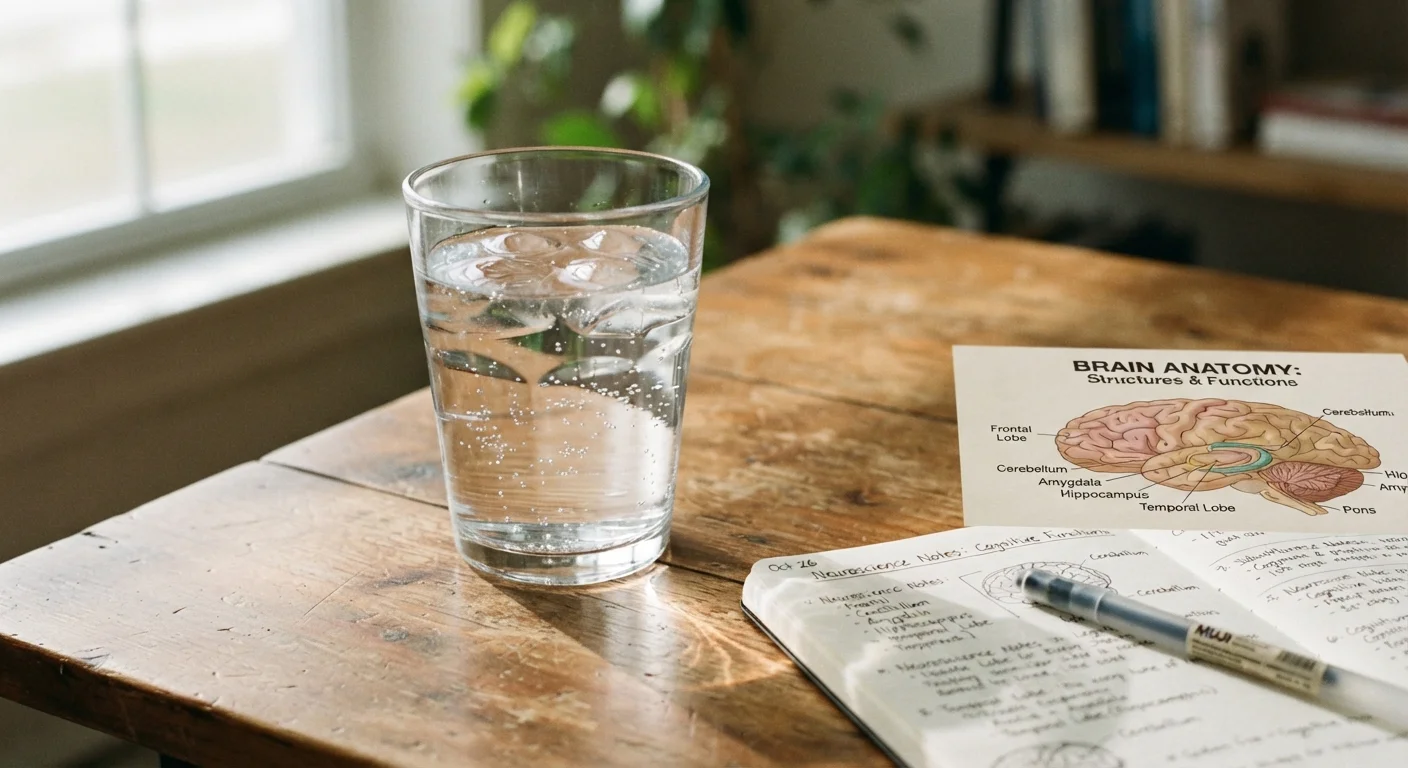

Why Fluid Needs Aren't Constant
Most people think of hydration as a static target - drink eight glasses and move on. In practice, your body's fluid requirements shift continuously across the day, driven by temperature, activity level, stress hormones, sleep quality, and even what you eat. Treating hydration as a fixed number misses the dynamic reality of how your body loses and redistributes water.
Understanding when fluid needs rise - and what happens cognitively when intake doesn't keep pace - gives you a more useful framework than generic daily totals alone. For a deeper look at the brain mechanisms involved, see our cognitive science of hydration guide.
| Body weight that is water | Approximately 60% (National Academies of Sciences, Engineering, and Medicine) |
| Fluid loss triggering cognitive effects | As little as 1-2% of body weight (Multiple peer-reviewed studies, including Lieberman 2012) |
| Daily adequate intake (adult women) | ~2.7 liters total water (beverages + food) (National Academies of Sciences, Engineering, and Medicine, 2004) |
| Daily adequate intake (adult men) | ~3.7 liters total water (beverages + food) (National Academies of Sciences, Engineering, and Medicine, 2004) |
| Water from food sources | Roughly 20% of daily intake (Mayo Clinic, general nutrition guidance) |
| Peak fluid loss window during exercise | Up to 1-2 liters per hour depending on intensity and heat (American College of Sports Medicine) |
Key Windows When Fluid Demands Increase
Certain periods reliably push fluid loss higher. Recognizing them helps you respond before a deficit accumulates.
Morning: Overnight Deficit
During sleep, you lose water through respiration and sweat without replacing it. A typical adult wakes with a mild fluid deficit already established - sometimes equivalent to several hours of passive loss. Starting the day without addressing this baseline shortfall means beginning cognitive work in a subtly compromised state.
Physical Activity
Exercise drives the most dramatic short-term increases in fluid loss. Sweat rate varies widely based on intensity, ambient temperature, humidity, and individual physiology. Even moderate-intensity activity in a climate-controlled gym elevates loss meaningfully. The cognitive effects of exercise-induced dehydration are well-documented: reaction time, working memory, and sustained attention are among the first functions affected.
Heat and Humidity
Ambient heat raises passive sweat rate even without exercise. Spending extended time outdoors in warm weather, or working in warm indoor environments, creates ongoing fluid loss that accumulates through the afternoon. This partly explains the familiar afternoon cognitive slump - heat-related fluid loss compounds any morning deficit that wasn't corrected. Recognizing the signs that hydration is affecting your thinking can help you connect the dots between environment and mental performance.
Stress and Caffeine
Psychological stress activates the hypothalamic-pituitary-adrenal axis, which influences fluid regulation. Separately, caffeine - a common response to fatigue - has a mild diuretic effect at higher doses, though moderate habitual intake is not associated with significant net fluid loss. Still, relying heavily on caffeinated beverages during high-stress periods may not fully compensate for rising fluid needs.
This Is General Information, Not Medical Advice
Fluid needs vary by individual health status, medications, and medical conditions. If you have kidney disease, heart conditions, or other chronic health concerns, consult a qualified healthcare professional before changing your fluid intake habits.
The Cognitive Cost of Everyday Mild Dehydration
The threshold for cognitive impairment is lower than most people assume. Research consistently shows that fluid losses of just 1-2% of body weight - an amount that produces little or no perceptible thirst in many adults - are sufficient to measurably impair attention, short-term memory, and psychomotor speed. This is the central, underappreciated insight: by the time you feel noticeably thirsty, a performance-relevant deficit may already be present.
For a detailed breakdown of what's happening neurologically, read about the mechanisms behind mild dehydration and mental fog. The practical implication is that proactive, spaced fluid intake - not reactive drinking in response to thirst - is more effective for maintaining consistent cognitive function across the day.
1-2%
Body weight fluid loss that impairs cognition
Multiple peer-reviewed studies, including research cited by the European Journal of Nutrition, show that deficits this small reduce attention and working memory.
~20%
Daily water intake sourced from food
According to general nutrition guidance, foods - especially fruits and vegetables - contribute meaningfully to overall fluid intake.
Up to 2L/hr
Sweat rate during intense exercise in heat
The American College of Sports Medicine notes sweat rate depends heavily on exercise intensity, ambient temperature, and individual physiology.
It's also worth noting that plain water is not always the complete picture. When fluid loss is substantial or prolonged, electrolyte balance matters as well. Understanding when electrolytes matter versus when plain water is sufficient can help you make more informed choices during demanding days.
This article is for general informational and educational purposes only and does not constitute medical advice. Please consult a qualified healthcare professional for guidance specific to your health needs.