Why the Gut-Brain Axis Starts With Your Plate
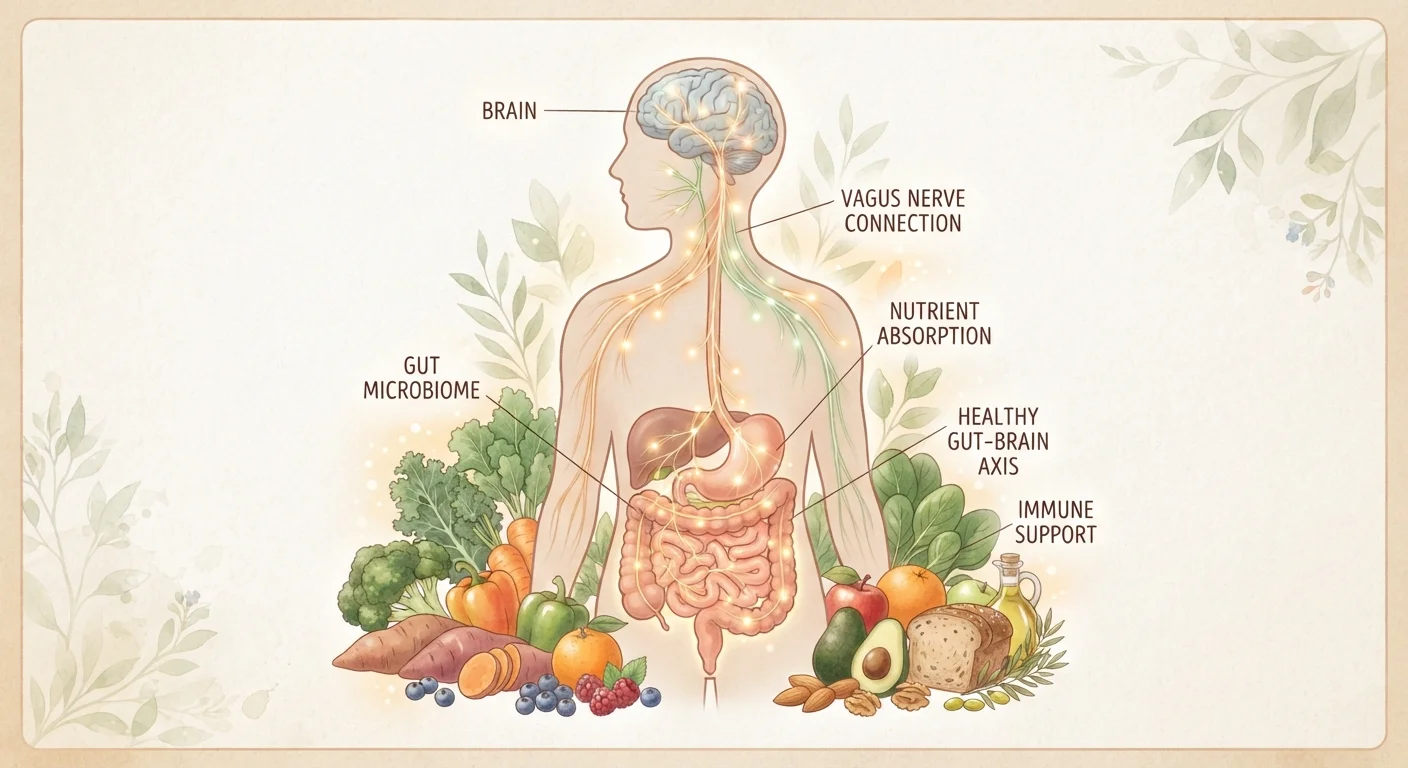
The gut and brain maintain a continuous two-way conversation through the gut-brain axis - a network involving the vagus nerve, immune signals, and microbially produced molecules. What feeds that conversation, in large part, is what you eat. To understand this, it helps to start with the fundamentals of the gut-brain connection.
Gut microbes ferment dietary fibre into short-chain fatty acids (SCFAs) such as butyrate, which support the intestinal lining and influence inflammatory signaling throughout the body, including the brain. Microbial communities also produce precursors to neurotransmitters - notably serotonin precursor tryptophan - meaning the composition of your gut bacteria has downstream relevance to neurochemistry.
The critical insight from current nutritional science is that individual nutrients matter far less than overall dietary patterns. A single prebiotic food cannot compensate for a diet chronically low in fibre and high in additives. The microbiome is shaped by cumulative, habitual food choices over weeks and months.
~30%
Reduction in depression risk associated with Mediterranean eating
A 2019 meta-analysis in Molecular Psychiatry found approximately 30% lower odds of depression among individuals with high adherence to Mediterranean-style dietary patterns, compared to those with low adherence.
57%
Of calories from ultra-processed foods in average US diet
A nationally representative analysis published in BMJ Open estimated that ultra-processed foods account for more than half of total caloric intake in the United States.
~1,000
Bacterial species estimated in the human gut microbiome
According to research published in Nature, the human gut microbiome is estimated to comprise approximately 1,000 distinct bacterial species, with dietary fibre diversity being a key driver of microbial richness.
Mediterranean-Style Eating: The Most Studied Pattern
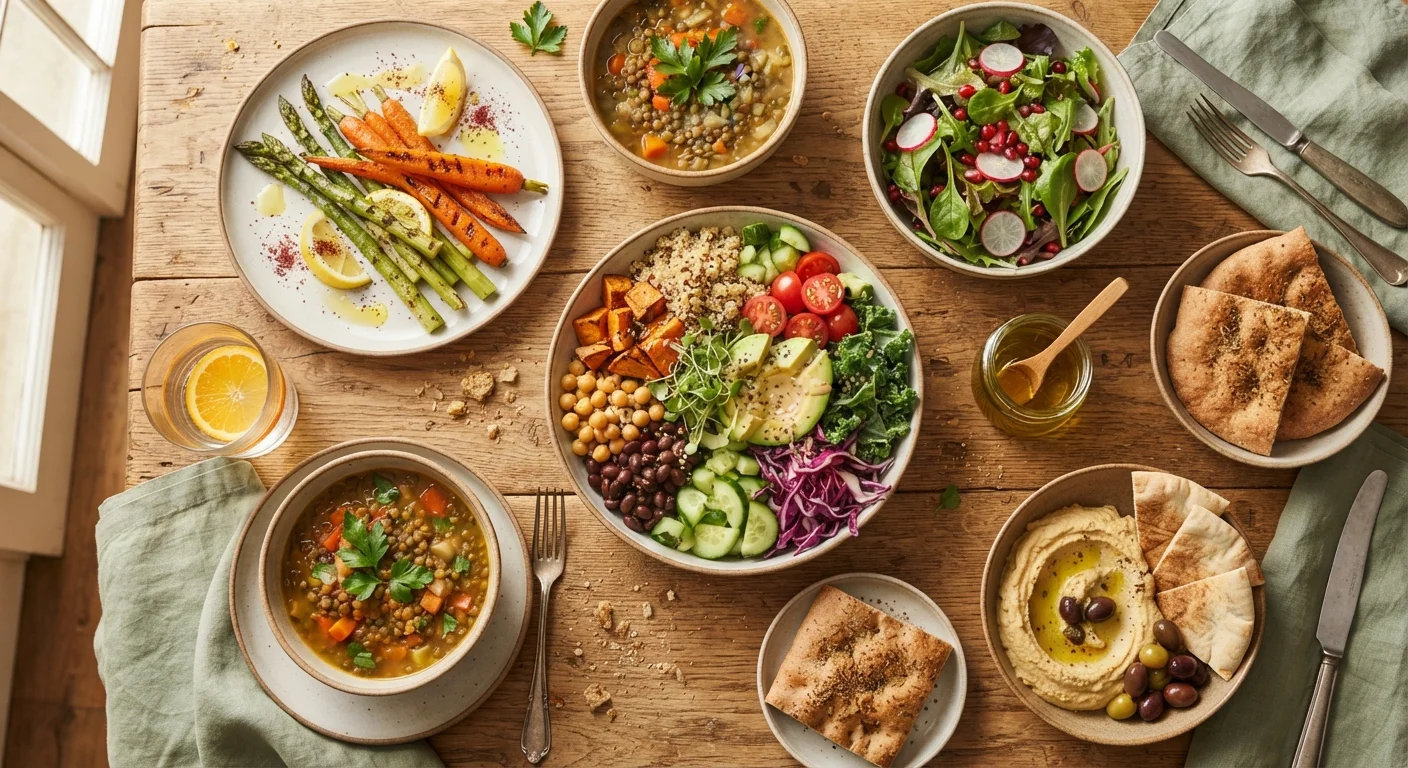
No dietary pattern appears more frequently in gut-brain research than the Mediterranean diet - an eating style characterized by abundant vegetables, legumes, whole grains, olive oil, fish, and moderate fermented dairy, with limited red meat and processed foods.
The landmark SMILES randomized controlled trial, published in 2017, found that participants assigned to a Mediterranean-style dietary intervention reported significantly reduced depressive symptoms compared to a social support control group. While a single trial cannot establish definitive causation, it added important evidence to a growing body of observational data.
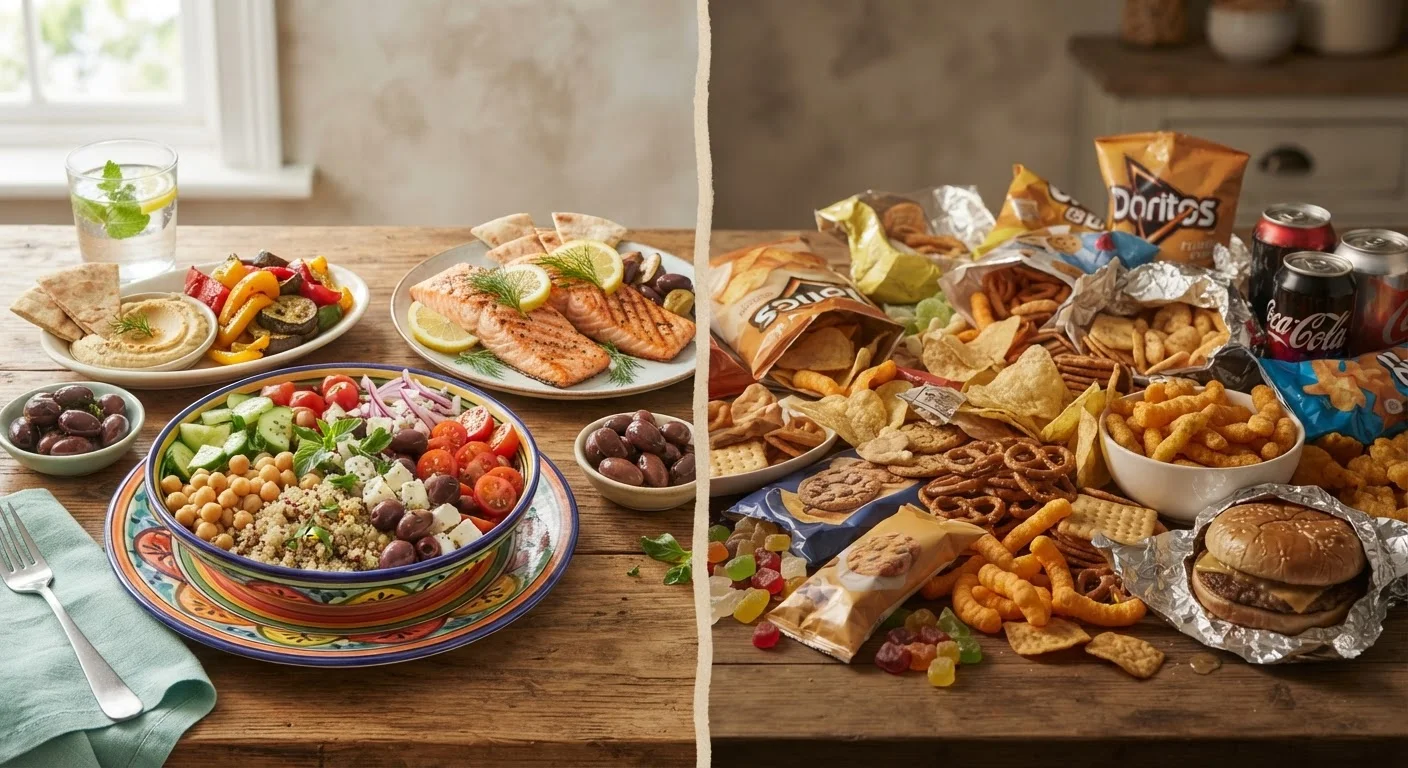
Mechanistically, the Mediterranean pattern delivers high dietary fibre (supporting SCFA production), polyphenols (which act as prebiotics for beneficial bacterial strains), omega-3 fatty acids (with anti-inflammatory properties), and diverse plant foods that promote microbiome diversity. For a side-by-side comparison, see how Mediterranean eating compares to ultra-processed diets in terms of mood-related outcomes.
“The food we eat shapes the microbial communities in our gut, and those communities, in turn, influence our brain chemistry and emotional states. Thinking about diet as a modifiable factor in mental health is one of the most important shifts in nutritional psychiatry.”
— Felice Jacka, Professor of Nutritional Psychiatry, Deakin University; founding president of the International Society for Nutritional Psychiatry Research
Ultra-Processed Foods and Microbiome Disruption
Ultra-processed foods (UPFs) - a category defined by industrial formulation, multiple additives, and minimal whole-food content - now account for a substantial portion of calories in many Western diets. Large cohort studies, including analyses from the UK Biobank and the NutriNet-Santé study, have found associations between higher UPF consumption and increased rates of depression, anxiety, and poorer cognitive outcomes.
The proposed biological mechanisms include disruption of microbiome diversity, promotion of intestinal permeability (sometimes called "leaky gut"), heightened systemic inflammation, and dysregulation of appetite hormones that also interact with mood circuits. Emulsifiers and artificial sweeteners found in many UPFs have attracted particular research interest for their potential effects on gut bacterial populations.
It is important to distinguish association from causation here - people who eat more UPFs often differ from others in sleep, physical activity, stress levels, and socioeconomic factors that independently affect mental health. Researchers are working to untangle these variables. The barriers to reducing UPF intake are real and worth understanding before setting dietary goals.
Start With Addition, Not Elimination
Rather than focusing on removing ultra-processed foods all at once, consider what whole foods you can add to your existing meals - a handful of legumes, an extra serving of vegetables, or a portion of fermented dairy. Adding tends to be more sustainable than restriction, and a more diverse diet gradually crowds out lower-fibre alternatives. Small, consistent additions compound over weeks into meaningful dietary shifts.
Building a Dietary Pattern That Supports Gut-Brain Health
Translating this science into everyday eating does not require a rigid protocol. Research points to a set of dietary principles that appear consistently across multiple gut-brain studies:
- Prioritise dietary fibre diversity - different plant fibres feed different microbial species. Aim for a wide variety of vegetables, legumes, whole grains, nuts, and seeds rather than a single high-fibre food.
- Include fermented foods - yogurt, kefir, kimchi, and sauerkraut introduce live bacterial cultures. For a nuanced view of the evidence, see what research currently supports about fermented foods and mood.
- Limit ultra-processed foods - not through elimination-style restriction, but by gradually increasing whole-food alternatives.
- Think in patterns, not individual meals - consistency over weeks matters more than any single dietary choice.
For a practical overview of how daily habits beyond food - including sleep and movement - interact with gut health, daily habits that may support a healthier gut-brain relationship is a useful next read.
This article is for general informational and educational purposes only and does not constitute medical or nutritional advice. Consult a qualified healthcare professional before making significant changes to your diet, particularly if you have a diagnosed health condition or are taking medication.