What the Gut-Brain Axis Actually Does
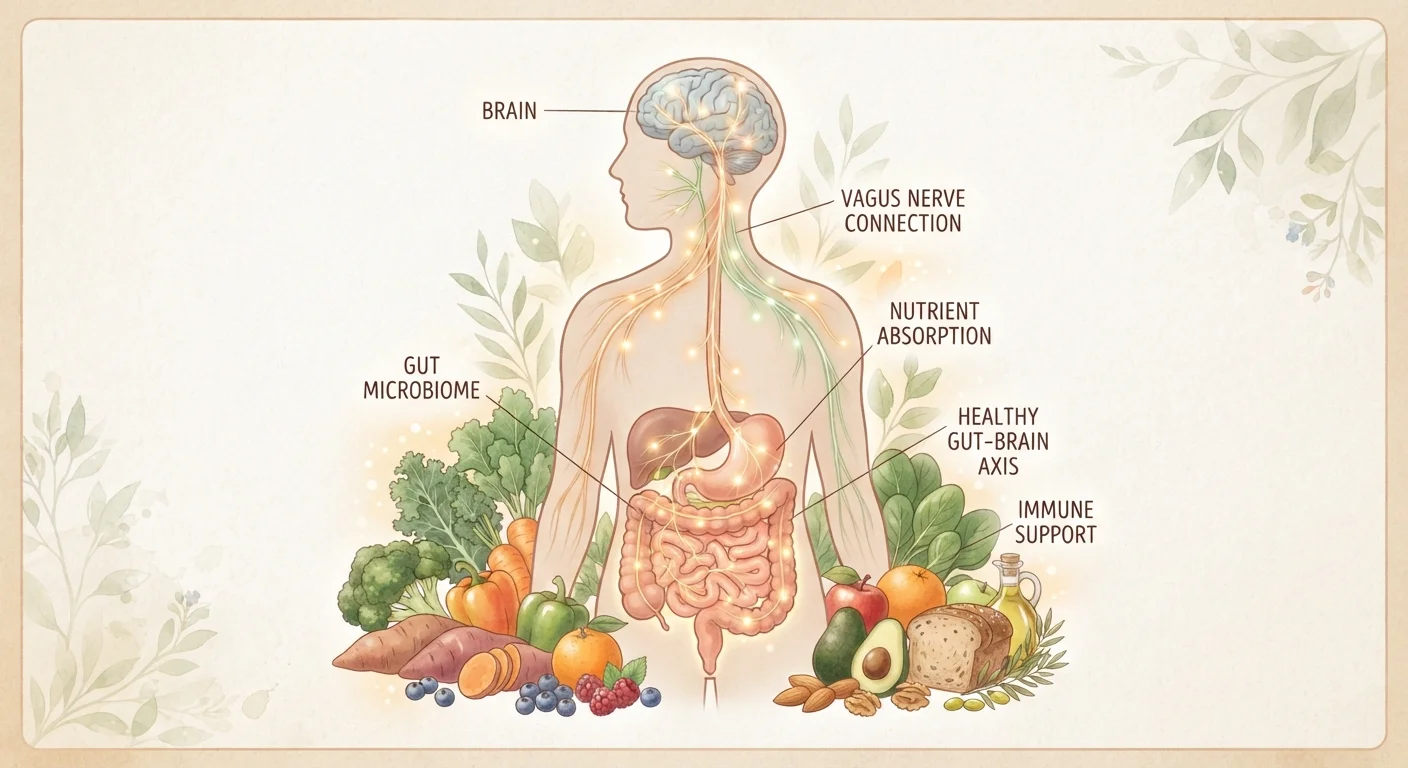
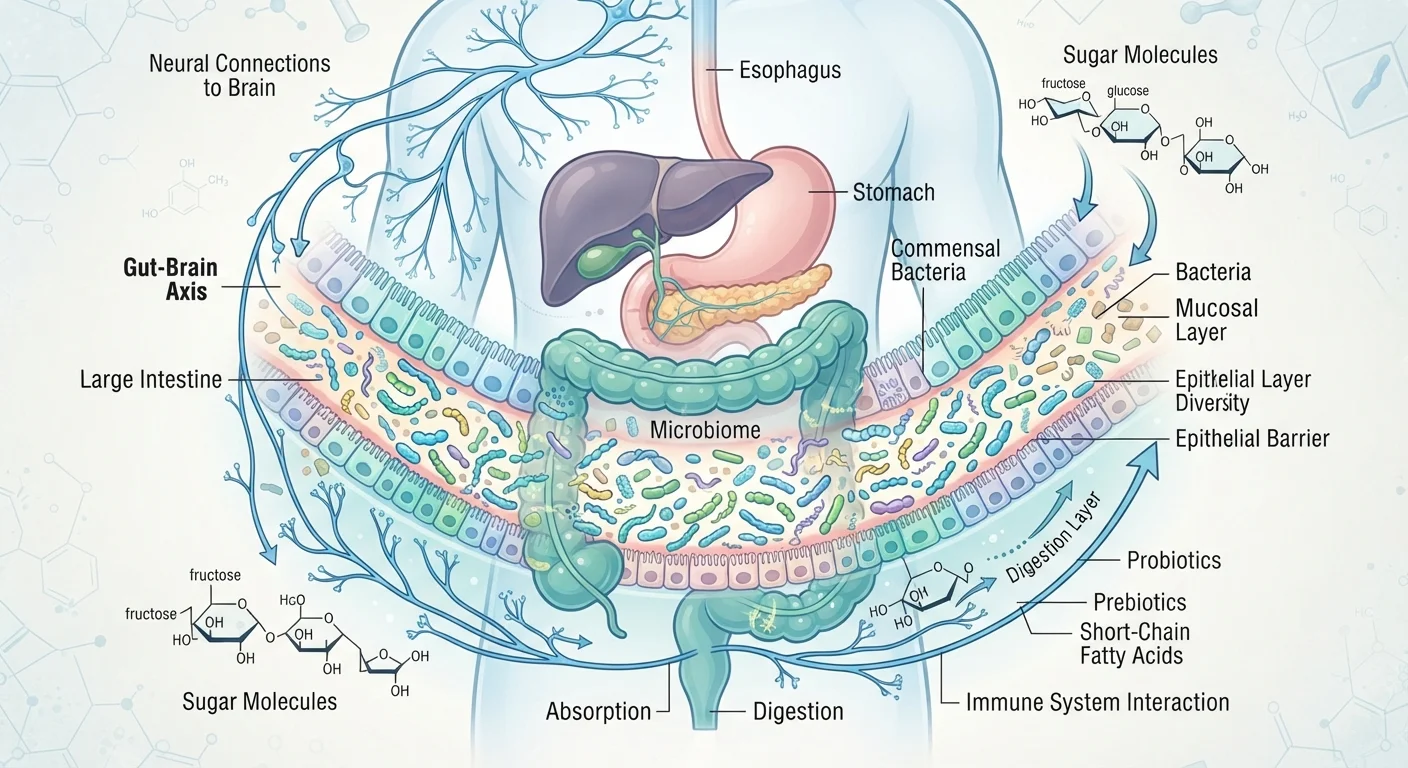
Your gut contains an estimated 38 trillion microorganisms - bacteria, fungi, and other microbes collectively called the gut microbiome. Far from being passive passengers, these organisms actively participate in digestion, immune regulation, and, increasingly, brain function. The gut-brain axis is the structural and chemical network that enables this influence.
Key pathways include the vagus nerve (a direct neural highway from gut to brain), the enteric nervous system (sometimes called the "second brain"), the immune system, and the bloodstream. Through these channels, gut bacteria transmit signals that affect how the brain manages mood, stress, and even anxiety. For a broader overview of how dietary choices feed into this network, see how food can shift how you feel.
“The gut microbiome is increasingly recognized as a key regulator of brain function and behavior. Diet is one of the most powerful tools we have to modulate it.”
— John Cryan, Professor of Anatomy and Neuroscience, University College Cork, and leading gut-brain axis researcher
How High Sugar Intake Disrupts Gut Bacteria
Added sugars - found in sweetened beverages, processed snacks, and many packaged foods - provide a rapid energy source that strongly favors certain bacterial species over others. Specifically, high-sugar diets are associated with a reduction in beneficial bacteria such as Bifidobacterium and Lactobacillus, and an overgrowth of inflammatory species like certain strains of Proteobacteria.
This shift in microbial balance - known as dysbiosis - has downstream consequences. Beneficial bacteria help produce short-chain fatty acids (SCFAs), which support the gut lining's integrity, reduce inflammation, and even influence stress hormone regulation. When sugar crowds out these bacteria, SCFA production can decline, leaving the gut more permeable and the immune system more reactive.
~90%
Of body's serotonin produced in the gut
Research estimates that approximately 90% of serotonin - a key mood-regulating neurotransmitter - is synthesized in the gastrointestinal tract, highlighting the gut's role in emotional regulation.
38 trillion
Microorganisms in the human gut
A widely cited scientific estimate suggests the human gut houses approximately 38 trillion microbial cells, underlining the scale of the ecosystem that dietary choices influence.
57%
Of US adults consume excess added sugars
Dietary data from the CDC indicates the majority of U.S. adults consume more added sugar than recommended by current dietary guidelines.
It's worth distinguishing between added sugars and naturally occurring sugars in whole foods. The context - fiber, phytonutrients, and overall diet quality - matters considerably. For more on this distinction, natural sugars vs added sugars explores these nuances in detail.
The Microbiome-Anxiety Connection: What Research Suggests
A disrupted microbiome can affect anxiety through several overlapping mechanisms. First, gut bacteria influence the production of serotonin - a neurotransmitter central to mood regulation - with an estimated 90% of the body's serotonin synthesized in the gut. Second, dysbiosis can trigger low-grade systemic inflammation via a more permeable gut lining (sometimes called "leaky gut"), and inflammation itself is increasingly studied as a contributor to anxiety symptoms.
Third, disrupted microbial communities may impair the gut's ability to buffer the stress-cortisol response. The gut-brain axis is not one-directional: anxiety and chronic stress can themselves alter microbiome composition, creating a feedback loop. how stress disrupts the gut explains this cycle in detail.
The Research Is Promising but Still Emerging
Most studies linking specific dietary sugars to microbiome changes and anxiety symptoms rely on animal models or observational human data. Controlled clinical trials in humans are growing but remain limited in scale. This means current findings establish plausible biological mechanisms rather than definitive cause-and-effect relationships. Interpreting this science with appropriate caution is important.
To explore what current microbiome science actually demonstrates about mood - and where knowledge gaps remain - what science says about your microbiome and mood offers a rigorous breakdown.
Practical Context: Supporting the Gut-Brain Axis Through Diet
While this research is compelling, it is important to emphasize that it is still evolving. Most mechanistic studies have been conducted in animals, and large-scale human clinical trials are limited. Current evidence supports a general principle: dietary patterns that nourish beneficial gut bacteria may also support a more resilient stress response.
Eating patterns associated with microbiome diversity include higher intakes of fiber-rich vegetables, legumes, whole grains, and fermented foods. Reducing habitual added-sugar consumption is commonly discussed in this context as well. For broader guidance on anti-inflammatory eating patterns and their relationship to stress, our hub covers the current evidence. Practical strategies for managing blood glucose and mood stability can also be found in our guide on eating habits that support steadier blood sugar.
Small Dietary Shifts Can Have Measurable Effects
Research suggests the microbiome can begin responding to dietary changes within days. You do not need a complete dietary overhaul to start supporting gut diversity - gradually increasing fiber intake and reducing reliance on heavily sweetened foods are reasonable first steps. A registered dietitian can help you tailor an approach to your individual needs and health history.
This article is for general informational purposes only and does not constitute medical or dietary advice. If you are experiencing anxiety or have concerns about your diet and mental health, please consult a qualified healthcare professional.