The Gut-Brain Axis: What It Actually Is
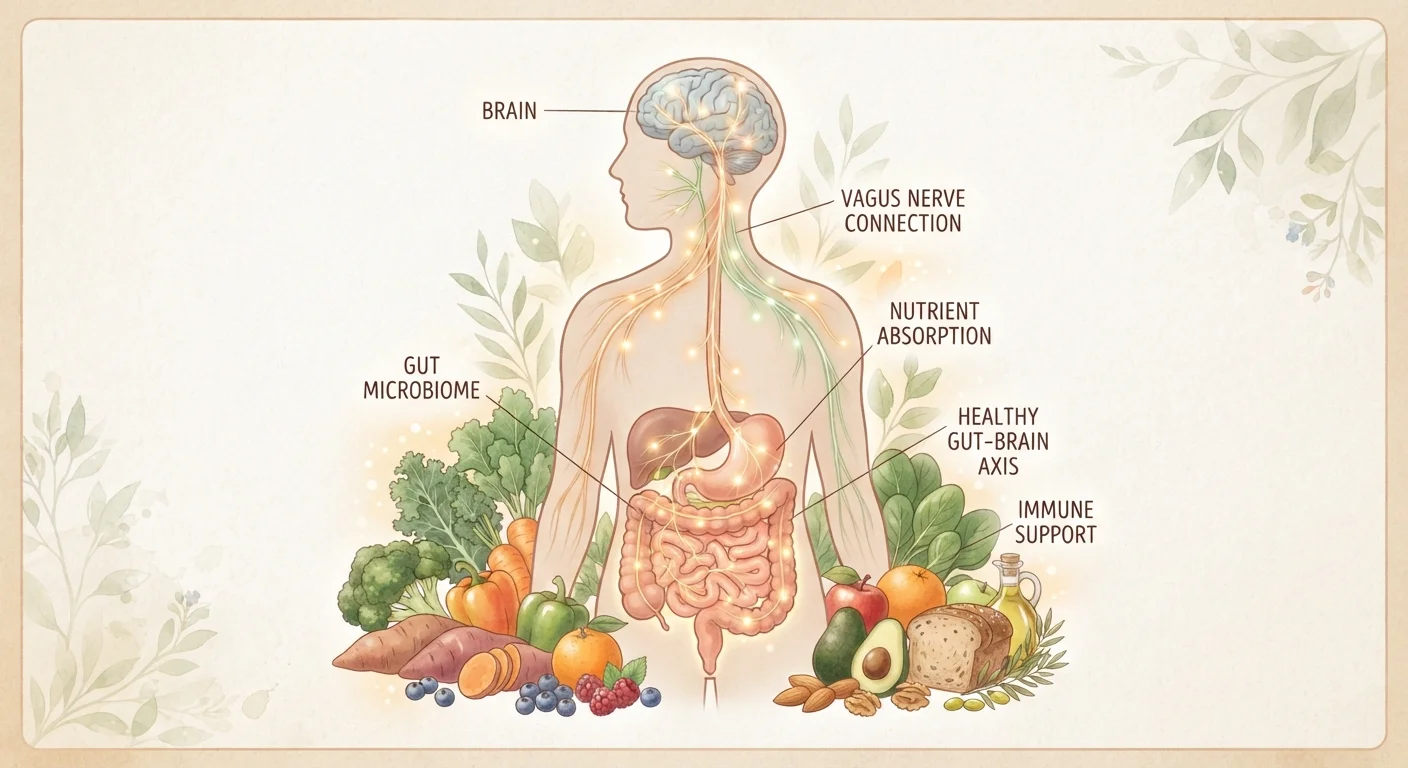
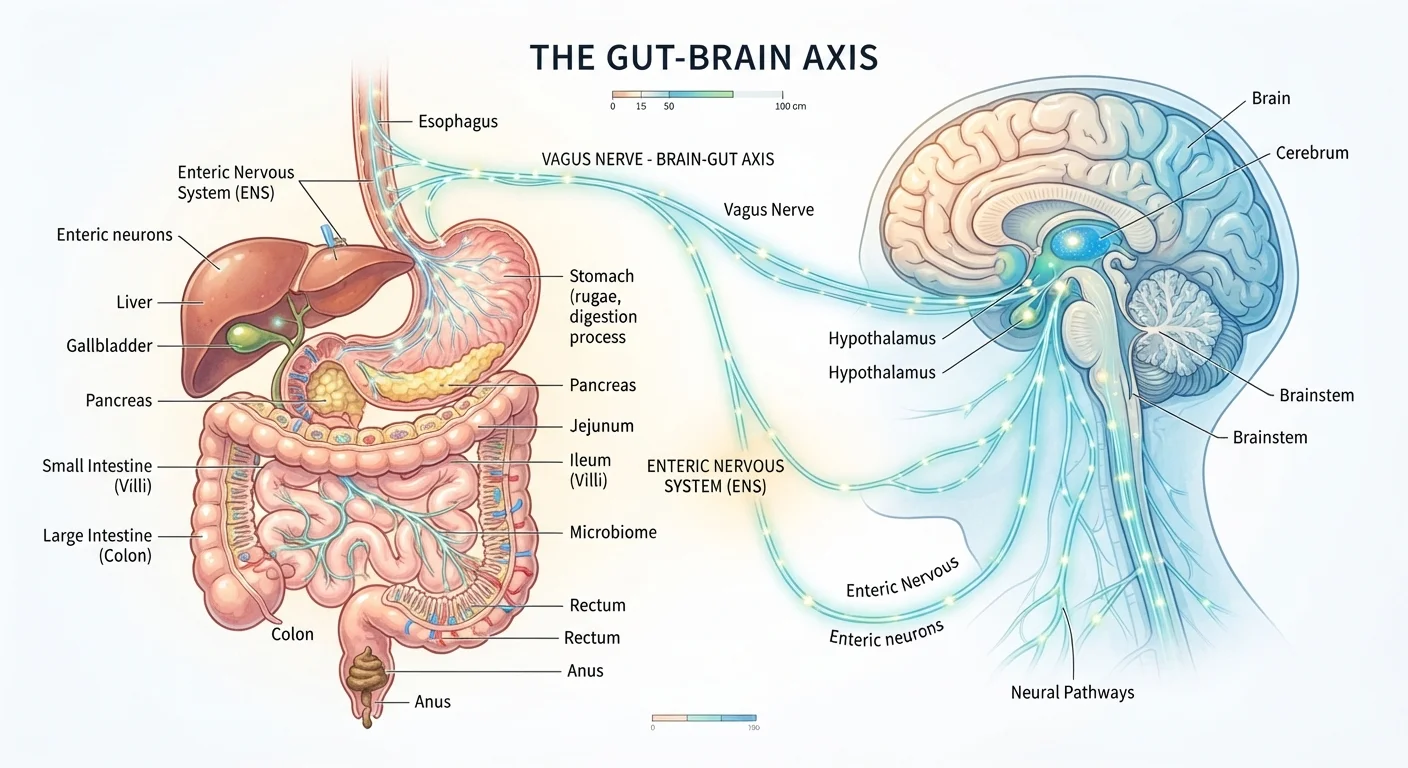
The gut-brain axis refers to the bidirectional communication network linking the gastrointestinal tract and the central nervous system. Signals travel via the vagus nerve, the enteric nervous system (sometimes called the "second brain"), immune pathways, and circulating metabolites. This is established anatomy and physiology - not fringe science.
What is less settled is how much the roughly 38 trillion microorganisms inhabiting the human gut - collectively known as the gut microbiome - influence emotional states and mental health outcomes in clinically meaningful ways. Research in this area has accelerated significantly over the past decade, but much of it comes from animal studies or small human trials, which limits how confidently findings can be generalized. For a broader look at how this connection operates day to day, see The Gut-Brain Axis: Why What You Eat Can Shift How You Feel.
Myth
Your gut produces serotonin, so eating the right foods will directly boost your mood.
Fact
While approximately 90% of the body's serotonin is produced in the gut, this serotonin does not cross the blood-brain barrier and does not directly elevate mood.
Gut-derived serotonin regulates intestinal movement and local gut signalling - it operates in a separate pool from the serotonin involved in mood regulation in the brain. The brain produces its own serotonin from the amino acid tryptophan, which must be obtained from the diet and transported across the blood-brain barrier. While gut health may influence tryptophan availability and metabolism indirectly, the relationship is far more complex than "eat fermented foods → feel happier." Claims that specific foods "boost serotonin" in any clinically relevant mood sense are not supported by direct evidence.
Myth
Taking a daily probiotic supplement will improve depression or anxiety.
Fact
Current evidence does not support probiotics as a standalone treatment for depression or anxiety; they are not approved or established therapies for these conditions.
Some randomised controlled trials have found that certain probiotic strains, taken alongside standard care, may modestly reduce self-reported anxiety or depressive symptoms in specific populations. However, these findings are preliminary, strain-specific, and not yet sufficient to recommend probiotics as a mental health intervention. Mental health conditions have multiple biological, psychological, and social contributors. Anyone experiencing depression or anxiety should discuss evidence-based options with a qualified clinician rather than relying on supplementation alone.
Myth
Everyone's microbiome works the same way, so one diet fix suits all.
Fact
Gut microbiome composition varies considerably between individuals, meaning dietary interventions can produce different microbial - and potentially mood-related - responses in different people.
Research published in journals including Cell and Nature has demonstrated that individuals eating identical foods show markedly different microbiome and metabolic responses. Factors including genetics, geography, early-life exposures, medication history, and existing microbiome composition all influence how the gut responds to diet. This individual variability is one reason why population-level nutritional guidelines offer general principles rather than personalised prescriptions. Diet and Mood: The Whole Picture offers context on realistic expectations from dietary changes.
Myth
Gut health only affects digestion - not the brain.
Fact
The gut communicates with the brain via the vagus nerve, immune signals, and microbial metabolites, influencing stress responses and neuroinflammation in ways researchers are still mapping.
The enteric nervous system contains around 100 million neurons and communicates extensively with the brain. Microbial metabolites - including short-chain fatty acids produced when gut bacteria ferment dietary fibre - can influence the integrity of the gut lining, interact with immune cells, and affect signalling pathways relevant to brain function. Animal studies have shown that microbiome manipulation alters stress reactivity and anxiety-like behaviour; whether these findings translate meaningfully to humans remains an active area of investigation. The gut-brain connection is real, but describing it as simple or fully understood misrepresents the science. What Shapes Mental Health provides useful context on the many factors that contribute to emotional wellbeing.
Myth
Fermented foods are a proven cure for low mood.
Fact
Fermented foods may support microbiome diversity, but evidence that they alleviate clinical mood symptoms is preliminary and not sufficient to classify them as treatments.
Foods such as yoghurt, kefir, kimchi, and sauerkraut contain live microorganisms that may survive transit through the digestive system and transiently influence microbiome composition. A notable 2021 randomised trial published in Cell found that a high-fermented-food diet increased microbiome diversity and reduced certain inflammatory markers - but mood outcomes were not a primary endpoint of that study. The leap from microbiome diversity to clinically meaningful mood improvement in humans requires considerably more evidence. Fermented Foods and Mental Wellbeing examines the hype versus the evidence in more detail.
What the Evidence Can and Cannot Tell Us
The most credible human research to date suggests associations between microbiome composition and mood-related outcomes - not proven causal mechanisms. Observational studies consistently find differences in gut bacterial profiles between people with depression and those without, but correlation does not establish that an altered microbiome causes depression. Confounding factors - diet, exercise, medication use, sleep - complicate interpretation significantly.
~90%
Body's serotonin produced in the gut
This gut-derived serotonin regulates intestinal function and does not directly influence brain mood centres, according to established neuroscience research.
~100M
Neurons in the enteric nervous system
The enteric nervous system, embedded in the gut lining, communicates bidirectionally with the brain via the vagus nerve and other pathways.
>1,000
Bacterial species identified in the human gut
The Human Microbiome Project and subsequent large-scale studies have catalogued enormous microbial diversity across individuals worldwide.
Randomised controlled trials involving probiotic supplements and mood measures are growing in number. Some show modest improvements in anxiety or depressive symptom scores in healthy or mildly symptomatic adults. However, effect sizes are generally small, strain-specific, and not yet replicated at scale. The field of psychobiotics - a term for live organisms with potential mental health benefits - remains promising but preliminary. For a careful breakdown of that evidence, Reading the Research on Probiotics and Anxiety offers a useful companion.
Don't Replace Professional Care With Supplements
If you are experiencing symptoms of depression, anxiety, or any other mental health condition, please consult a qualified healthcare professional. Probiotic supplements and dietary changes are not substitutes for evidence-based mental health treatment. Self-treating a mental health condition without professional guidance may delay appropriate care and could worsen outcomes.
Dietary patterns appear to be among the most tractable influences on microbiome diversity. Research consistently associates higher-fibre, plant-rich diets - such as Mediterranean-style eating - with greater microbial diversity, which is generally considered a marker of gut health. Ultra-processed foods are associated with reduced diversity. Dietary Patterns and Mental Health explores this in greater depth. Stress also plays a bidirectional role - Why Stress Disrupts Your Gut explains how that cycle operates.
This article is for general informational and educational purposes only and does not constitute medical advice. If you have concerns about your mental or physical health, please consult a qualified healthcare professional.