How Stress Gets Under Your Skin - and Into Your Gut
When you encounter a stressor, your body initiates a well-known physiological cascade: the hypothalamic-pituitary-adrenal (HPA) axis activates, cortisol rises, and your sympathetic nervous system shifts into high gear. Most people understand this as a cardiovascular and hormonal event. Fewer realize it is also a gastrointestinal event.
Stress hormones alter gut motility - the rhythmic muscular contractions that move food through your digestive tract - and they change the composition of the mucus layer lining your intestines. They also modulate the local immune cells that police the gut environment. Together, these changes shift the conditions under which your gut microbiome - the vast community of bacteria, fungi, and other microorganisms residing in your intestines - must survive.
Research into how prolonged stress affects the body shows that acute stress may produce transient microbiome shifts, but chronic stress can produce more durable changes - reducing microbial diversity and favoring strains that are less associated with gut stability.
Recognizing Stress-Related Gut Symptoms
Digestive changes - such as altered bowel habits, bloating, or nausea that appear during periods of high stress - may reflect the gut-brain axis at work rather than a purely digestive problem. Tracking when these symptoms arise relative to your stress levels can be a useful starting point for a conversation with your healthcare provider. It also helps distinguish stress-related changes from symptoms that need independent investigation.
The Feedback Loop: When Your Gut Talks Back
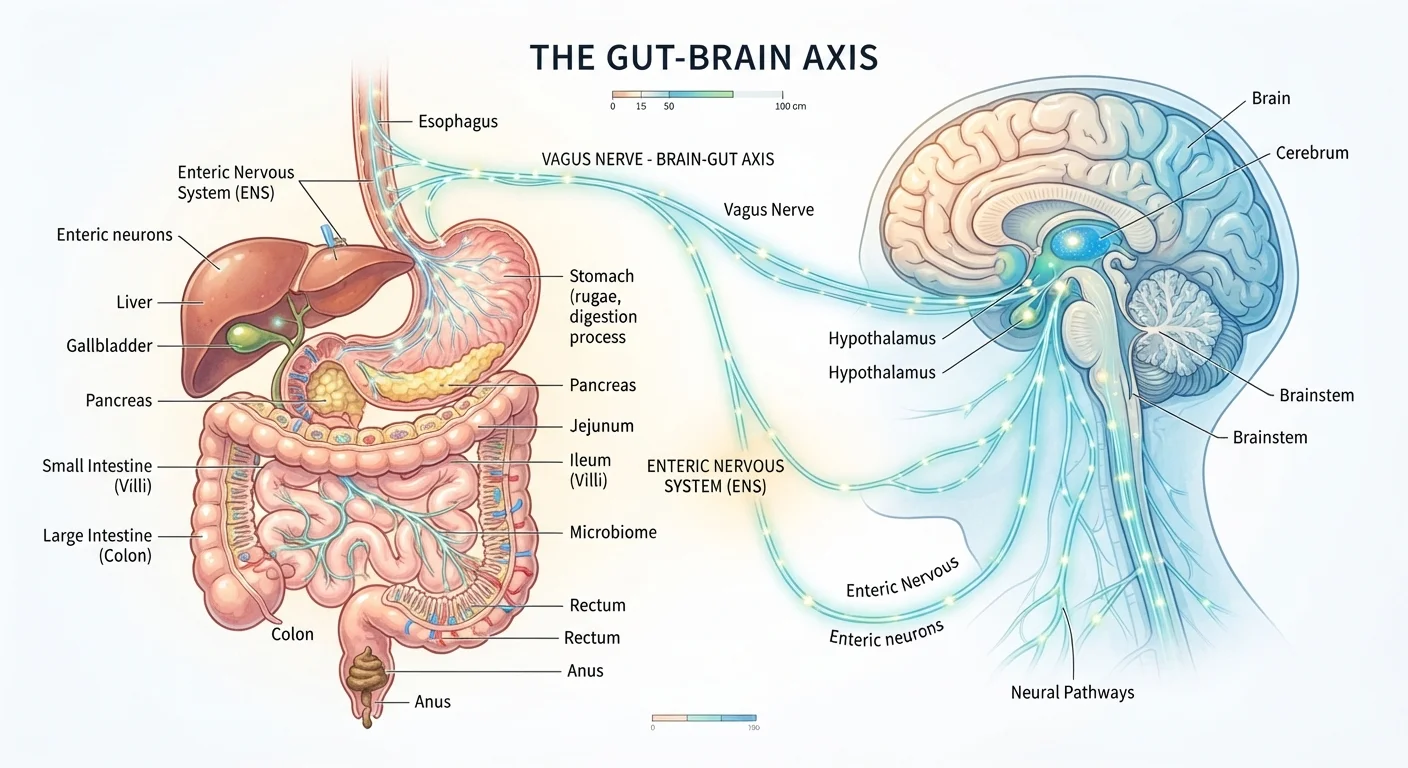
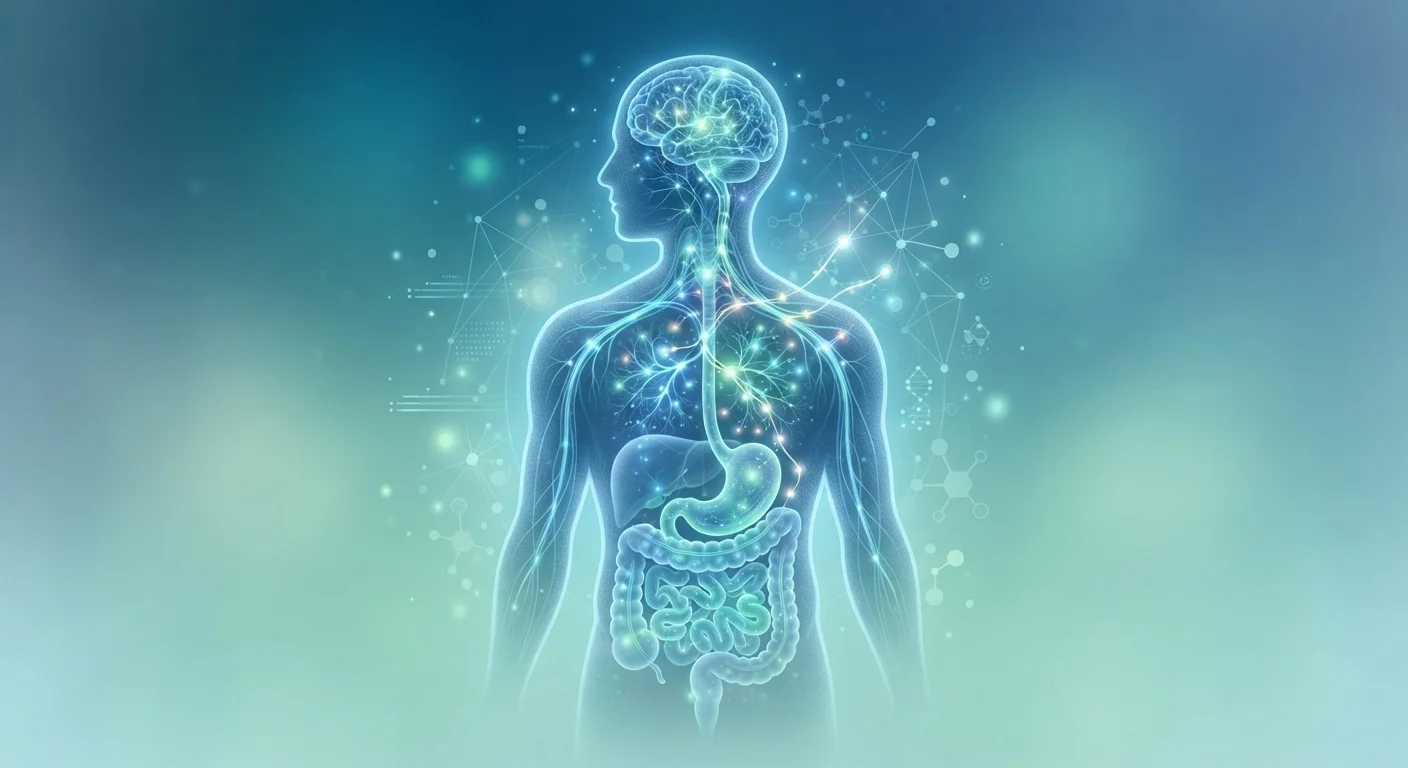
Here is where the science becomes particularly important for mental wellness: the communication between gut and brain is not one-directional. Through the vagus nerve, enteric hormone signals, and immune messengers, your gut continuously reports back to your brain. When the microbiome is disrupted, those reports may change in character.
Certain gut bacteria are involved in producing or modulating precursors to neurotransmitters - including serotonin, much of which is synthesized in the gastrointestinal tract rather than the brain. A less diverse microbiome may produce a different neurochemical signaling environment, which some researchers hypothesize could influence stress reactivity, mood, and even cognitive function. This is emerging science, and causal relationships in humans are still being mapped with care.
~90%
Of vagus nerve signals travel gut-to-brain
Neuroanatomical research indicates that the vast majority of vagus nerve fiber activity carries information upward from the gut to the brain, underscoring the gut's role as an active signaler rather than a passive receiver.
~95%
Of the body's serotonin produced in the gut
Established gastroenterology research identifies the gastrointestinal tract as the primary site of serotonin synthesis in the body, though gut-derived serotonin does not cross the blood-brain barrier directly.
38 trillion
Estimated microbial cells in the human gut
A frequently cited estimate from cell biology research suggests that the human gut microbiome contains roughly as many microbial cells as there are human cells in the entire body.
The result is a potential self-reinforcing loop: stress disrupts the gut; a disrupted gut may amplify or sustain stress responses; those elevated stress responses further destabilize the gut environment. Understanding this cycle is precisely why the link between chronic stress and mental health deserves attention beyond psychology alone.
What the Science Can - and Cannot - Yet Tell Us
The gut-brain axis is real, well-characterized, and the subject of substantial ongoing research. What remains contested is the magnitude of the microbiome's causal influence on human mood and how reproducible dietary or probiotic interventions are across different populations. Most robust human trials are relatively small, and findings from animal models do not always translate cleanly to people.
What researchers do broadly agree on is this: a diverse, stable gut microbiome correlates with markers of better health outcomes, and the relationship between gut bacteria and emotional wellbeing is biologically plausible enough to warrant serious investigation. Diet - particularly fiber-rich foods that feed beneficial bacteria - is one of the most well-supported modifiable factors for microbiome diversity.
Emerging Research: Proceed With Appropriate Caution
Much of the most exciting research on the microbiome-mood connection comes from animal studies or small human trials. While the findings are genuinely promising, the field is not yet at the point where specific probiotic strains or dietary protocols can be confidently prescribed for mental health outcomes. Responsible interpretation of this science means holding enthusiasm alongside appropriate scientific humility.
It is also worth noting that dietary patterns such as high sugar intake can independently alter microbial composition in ways that may feed back into mood and stress reactivity - another entry point into the same loop.
This article is for informational purposes only and does not constitute medical advice. If you are experiencing significant stress, anxiety, or gastrointestinal symptoms, please consult a qualified healthcare professional for guidance tailored to your circumstances.