How the Gut and Brain Talk to Each Other
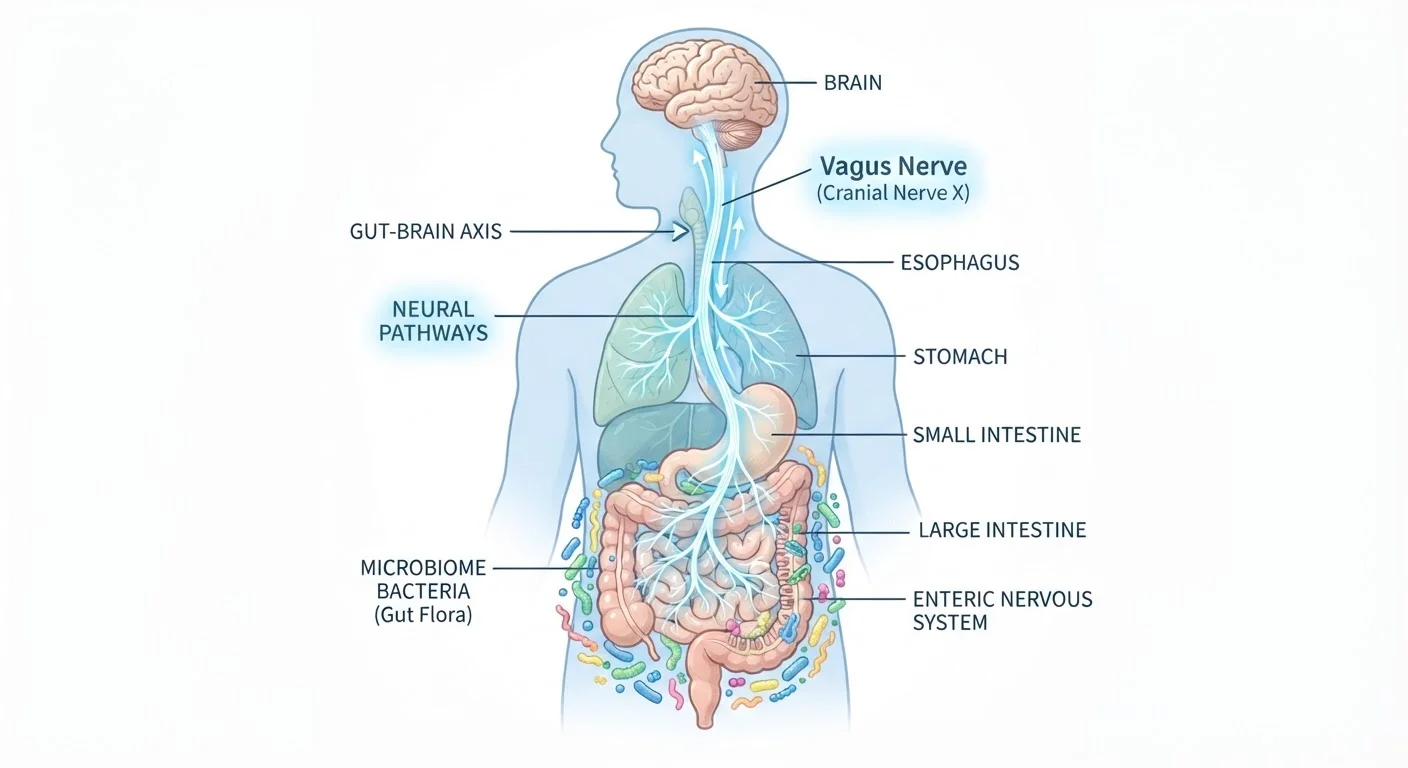
Most people think of the brain as the body's command center, issuing instructions downward. But the relationship between the brain and the gut is far more reciprocal. The gut sends roughly 80-90% of its signals up to the brain via the vagus nerve - meaning your digestive system has a significant voice in how you think and feel.
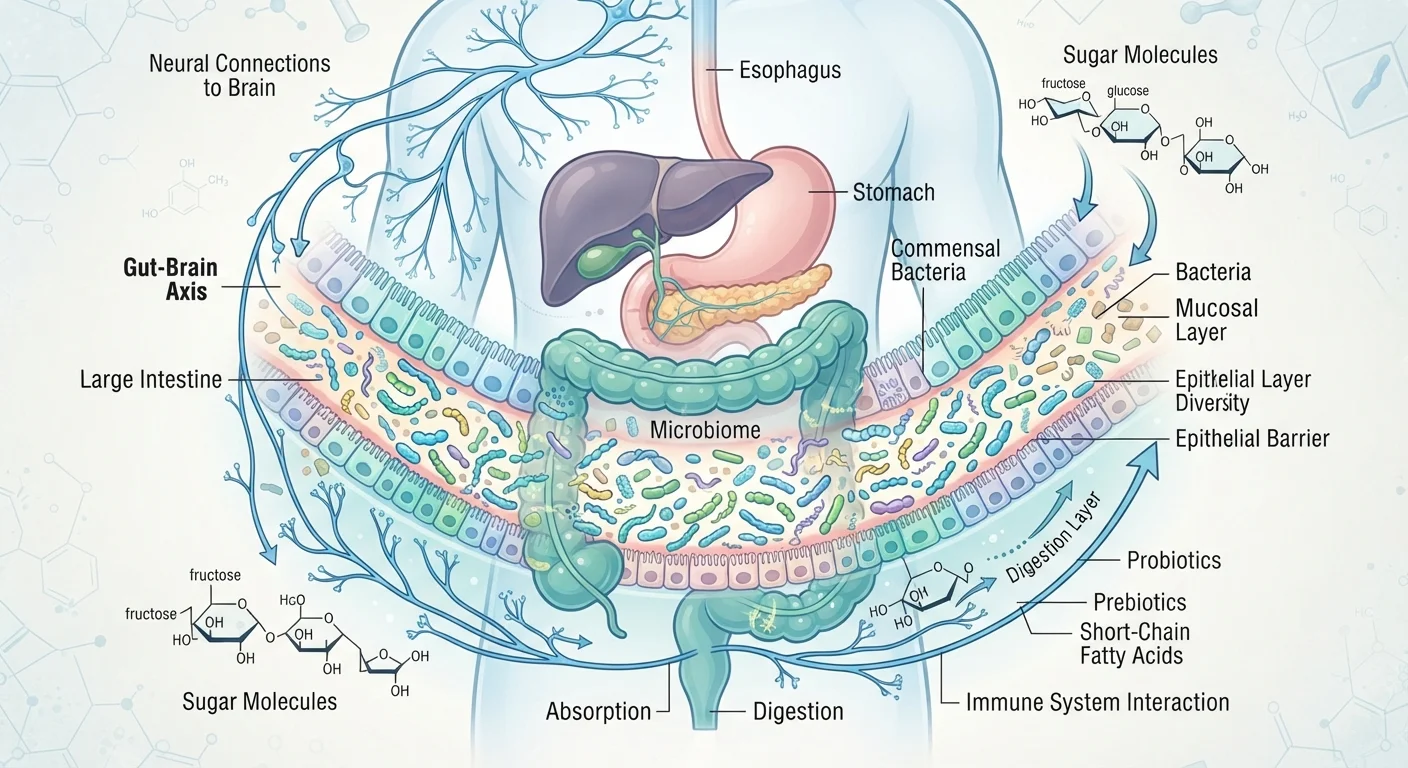
This bidirectional system operates through several overlapping channels: the nervous system, the endocrine (hormonal) system, and the immune system. Gut microbes - the bacteria, fungi, and other microorganisms collectively called the gut microbiome - are active participants in all three. They metabolize dietary compounds into signaling molecules, regulate gut permeability, and influence local immune activity in ways that ripple outward to the brain.
For a deeper look at the underlying biology, see how your digestive system talks to your mind.
The Gut Has Its Own Nervous System
The enteric nervous system - sometimes called the 'second brain' - is a mesh of roughly 500 million neurons lining the gastrointestinal tract. It can operate independently of the central nervous system, regulating digestion without brain input. This autonomy is one reason researchers believe the gut's influence on mood is more substantial than once assumed.
The Role of Gut Microbes in Mood Regulation
Approximately 90% of the body's serotonin - a neurotransmitter closely associated with mood stability - is produced in the gut, not the brain. Gut bacteria influence this production, as well as the synthesis of other neuroactive compounds including GABA and short-chain fatty acids (SCFAs). SCFAs, produced when bacteria ferment dietary fiber, have been shown in research to support the integrity of the gut lining and modulate immune signaling relevant to neuroinflammation.
A less diverse microbiome - often associated with diets low in fiber and high in ultra-processed foods - has been linked in observational studies to higher markers of systemic inflammation and altered stress responses. Conversely, greater microbial diversity is generally associated with more resilient mood regulation, though causality remains an active area of investigation.
~90%
Of the body's serotonin produced in the gut
This figure is widely cited in enteric neuroscience literature and reflects the gut's outsized role in neurotransmitter synthesis.
500+
Bacterial species in a healthy gut microbiome
Research published in journals including Nature Microbiology highlights that greater species diversity is broadly associated with more resilient health outcomes.
80-90%
Of vagus nerve signals traveling gut-to-brain
Studies on vagal nerve anatomy consistently show that afferent (ascending) fibers far outnumber efferent ones, underscoring the gut's communicative role.
Dietary Patterns That May Support the Gut-Brain Axis
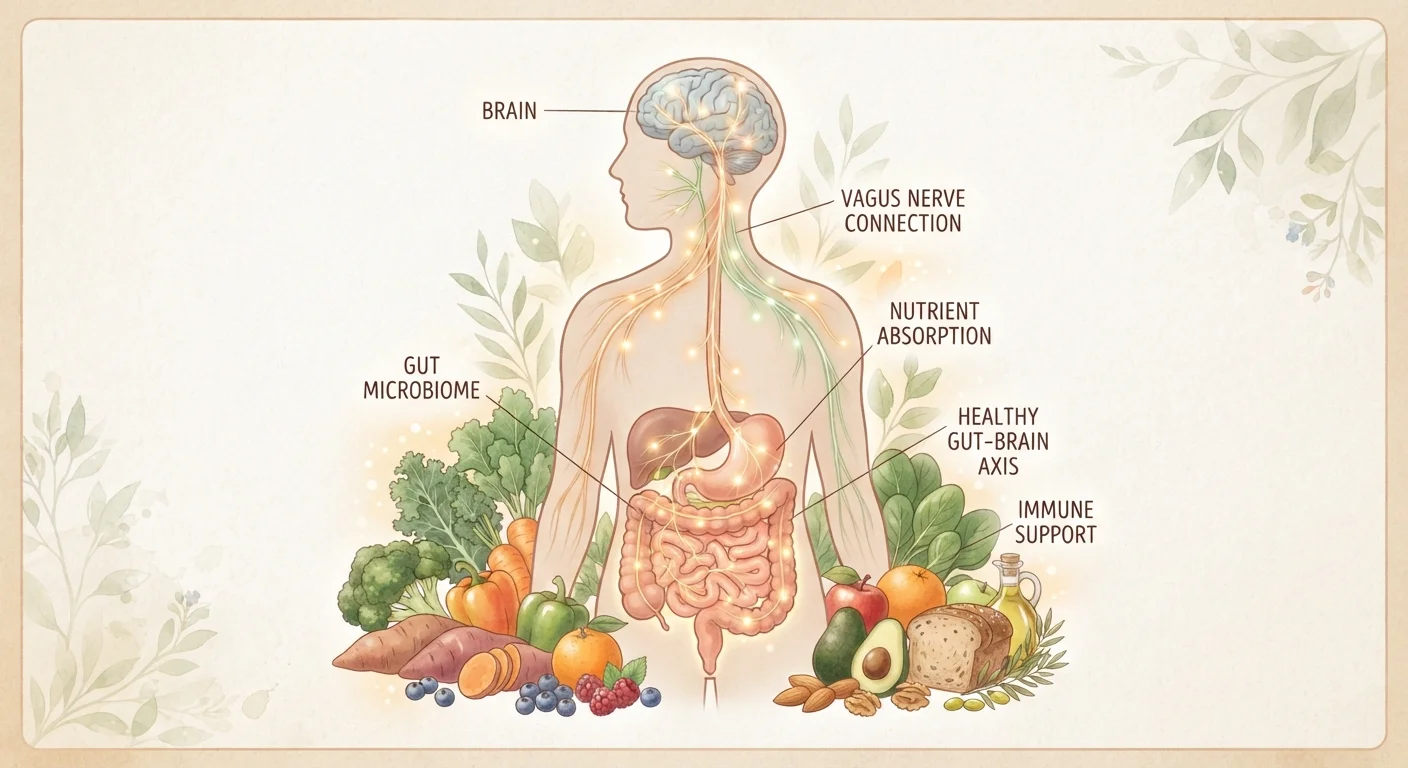
No single food rewires the gut-brain axis, but consistent dietary patterns appear to matter. The research literature points to several evidence-informed approaches:
- Increase dietary fiber: Vegetables, legumes, whole grains, and fruits feed beneficial gut bacteria. Fiber diversity - eating a wide variety of plant foods - appears more important than total quantity alone.
- Include fermented foods: Yogurt, kefir, kimchi, sauerkraut, and miso introduce live microorganisms and have been associated with reduced inflammatory markers in some clinical studies.
- Prioritize omega-3 fatty acids: Found in oily fish, walnuts, and flaxseed, omega-3s are linked to reduced neuroinflammation and may support gut barrier integrity.
- Limit ultra-processed foods: High-sugar, low-fiber diets are associated with reduced microbiome diversity and heightened inflammatory activity. For a detailed look at sugar's specific role, see how your microbiome influences anxiety.
These patterns align broadly with what researchers describe as a Mediterranean-style dietary approach - not a rigid prescription, but a general framework supported by a growing body of evidence.
Diversify Your Plants First
A practical starting point for gut-brain support is aiming for a wide variety of plant foods each week - not just quantity. Research from the American Gut Project found that people who ate 30 or more different plant types weekly had more diverse microbiomes. This doesn't require a dramatic overhaul: adding a new vegetable, legume, or whole grain each week adds up steadily.
What the Evidence Says - and Where It Stops
The gut-brain axis is a legitimate and growing field of scientific inquiry. However, popular media sometimes stretches findings well beyond what the research supports. Associational studies - which make up much of this literature - cannot confirm that dietary changes cause specific emotional outcomes in individuals.
Human microbiome research is complicated by significant individual variation. What shifts one person's microbial profile meaningfully may have little effect on another's. Probiotic supplements, often marketed aggressively, have mixed clinical evidence for mental health outcomes and are not a substitute for a nutrient-rich diet or professional care.
It is also worth noting that mental health conditions have complex, multifactorial causes. Diet is one modifiable factor among many. For a balanced account of common misreads in this space, see misconceptions about the gut-brain link.
Building Habits That Support the Whole System
Diet does not act in isolation. Sleep quality, physical activity, and stress management all interact with gut health and, through it, brain function. A diet rich in fiber and fermented foods will deliver more robust benefits when paired with consistent sleep and manageable stress levels.
Daily habits that may support a healthier gut-brain relationship offers a practical look at how these factors work together. For readers interested in the relationship between eating patterns and stress, the mindful eating hub explores how how you eat - not just what - can influence emotional wellbeing.
If you are experiencing significant mood disturbances, anxiety, or depression, please speak with a qualified healthcare professional. Dietary changes may complement - but should not replace - evidence-based mental health treatment.
This article is for general informational and educational purposes only and does not constitute medical or dietary advice. Always consult a qualified healthcare professional before making significant changes to your diet or health routine.