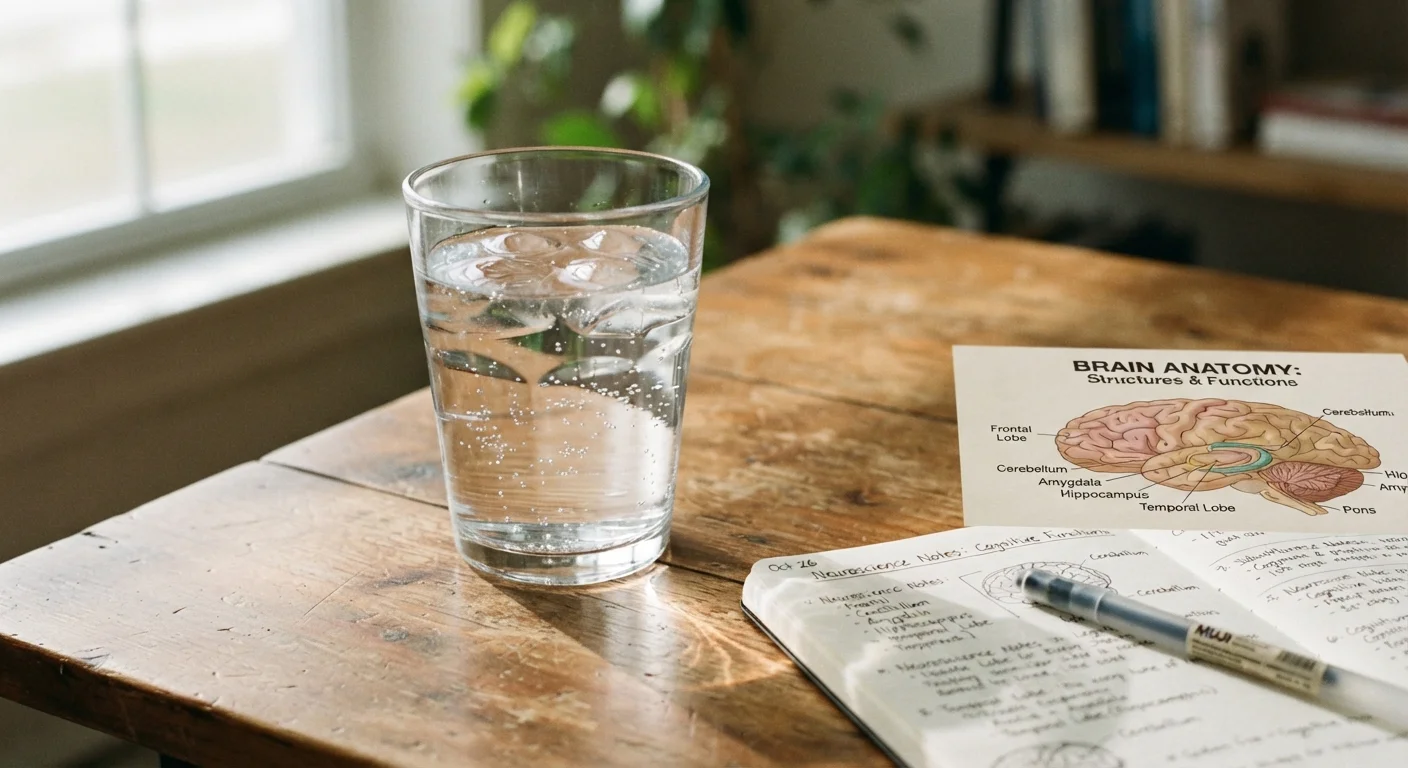

Why Fluid Intake and Thinking Are Closely Linked
Most people associate dehydration with thirst or a headache after outdoor exercise. The subtler cognitive cost of everyday mild fluid deficits is far less recognised - and far more common. Research suggests that a fluid loss of just 1-2% of body weight can reduce attention, slow working memory, and heighten perceived mental effort, even when a person reports no strong sense of thirst. For a detailed look at the underlying neuroscience, see our article Your Brain on Water: The Cognitive Science of Hydration.
The checklist below is an audit tool, not a diagnostic instrument. Use it to notice patterns in your own experience and to start a more informed conversation with a qualified healthcare professional if you have concerns.
Cognitive warning signs
Mood and energy signals
Physical cues that often accompany cognitive effects
Context and intake audit
What to Look for and When
Timing and context are key. A single foggy afternoon proves little; a recurring pattern tied to low fluid intake is more informative. Work through this list with a recent 24-hour window in mind, noting the conditions - meals eaten, how much you drank, activity level, heat exposure, and sleep quality - that surrounded any symptom.
Symptoms May Have Multiple Causes
Cognitive sluggishness, headaches, and mood changes are non-specific - they can arise from sleep disruption, blood sugar fluctuations, medication effects, stress, and many medical conditions. Identifying a hydration pattern in your symptoms is a starting point for awareness, not a diagnosis. If symptoms are persistent, worsening, or interfering with daily life, seek professional medical evaluation promptly.
If any of the symptoms on this checklist are severe, persistent, or new, they may signal conditions unrelated to hydration entirely. Do not use this checklist as a substitute for medical evaluation. Always consult a qualified healthcare professional for personal medical concerns.
Once you have noted your patterns, the article Thirst Is a Late Signal explains why relying on thirst alone is an unreliable strategy for maintaining cognitive performance throughout the day.
Turning Observations Into a Practical Next Step
If you ticked several items in the checklist - particularly those clustered around low-intake periods or warm, busy days - it is worth experimenting with more consistent fluid intake before drawing conclusions. Our companion piece Building a Hydration Routine That Actually Supports Focus offers practical strategies for weaving regular drinking into a busy schedule without obsessing over exact ounce counts.
Special Populations Need Extra Care
Older adults have a blunted thirst response and are at higher risk of fluid imbalance with real cognitive consequences. Children, pregnant or breastfeeding individuals, and those with kidney conditions, heart failure, or diabetes also have distinct fluid needs that general guidance does not cover. If you belong to any of these groups, please discuss hydration needs with your healthcare provider rather than relying on general checklists.
For broader context on how fluid needs shift with activity, stress, and heat - factors that directly affect cognitive performance - see Hydration and Concentration Across the Day.
This article is for general informational and educational purposes only and does not constitute medical advice. Individual experiences vary. Consult a qualified healthcare professional before making changes related to any health concern.