
What Does Emotional Regulation Actually Mean?
Emotional regulation refers to the processes - both conscious and automatic - by which people influence which emotions they experience, when they experience them, and how they express them. It is not the same as suppression. Understanding the difference between regulation and suppression is foundational: genuine regulation involves flexible responses to emotional states, while suppression tends to increase psychological strain over time.
Research in nutritional psychiatry increasingly positions diet as one modifiable factor that may support the biological infrastructure underlying emotional regulation - particularly through neurotransmitter synthesis, inflammatory signaling, and gut-brain communication.
| Field of study | Nutritional psychiatry |
| Key communication pathway | Gut-brain axis (vagus nerve + microbial metabolites) |
| Dietary pattern with strongest mood evidence | Mediterranean diet (Multiple observational cohort studies) |
| Emotional eating trigger | Blood glucose instability, stress hormones, interoceptive dysregulation |
| Mindful eating evidence | Associated with reduced emotional eating in controlled trials (Systematic reviews in appetite and eating behavior journals) |
The Biological Pathways Linking Food to Feeling
Several well-studied mechanisms connect dietary intake to emotional processing:
- Neurotransmitter precursors: Tryptophan, an amino acid found in protein-containing foods, is a precursor to serotonin - a neurotransmitter centrally involved in mood regulation. Adequate dietary tryptophan, alongside cofactors such as vitamin B6, supports this synthesis pathway.
- Inflammation and the brain: Diets high in ultra-processed foods and refined sugars are associated with elevated systemic inflammation. Neuroinflammation, in turn, has been linked in observational research to increased risk of depressive symptoms.
- Blood glucose stability: Sharp spikes and dips in blood glucose - common after high-glycemic meals - are associated with mood variability, irritability, and difficulty concentrating. Steady glucose levels, supported by fiber, protein, and healthy fats, may help buffer these swings.
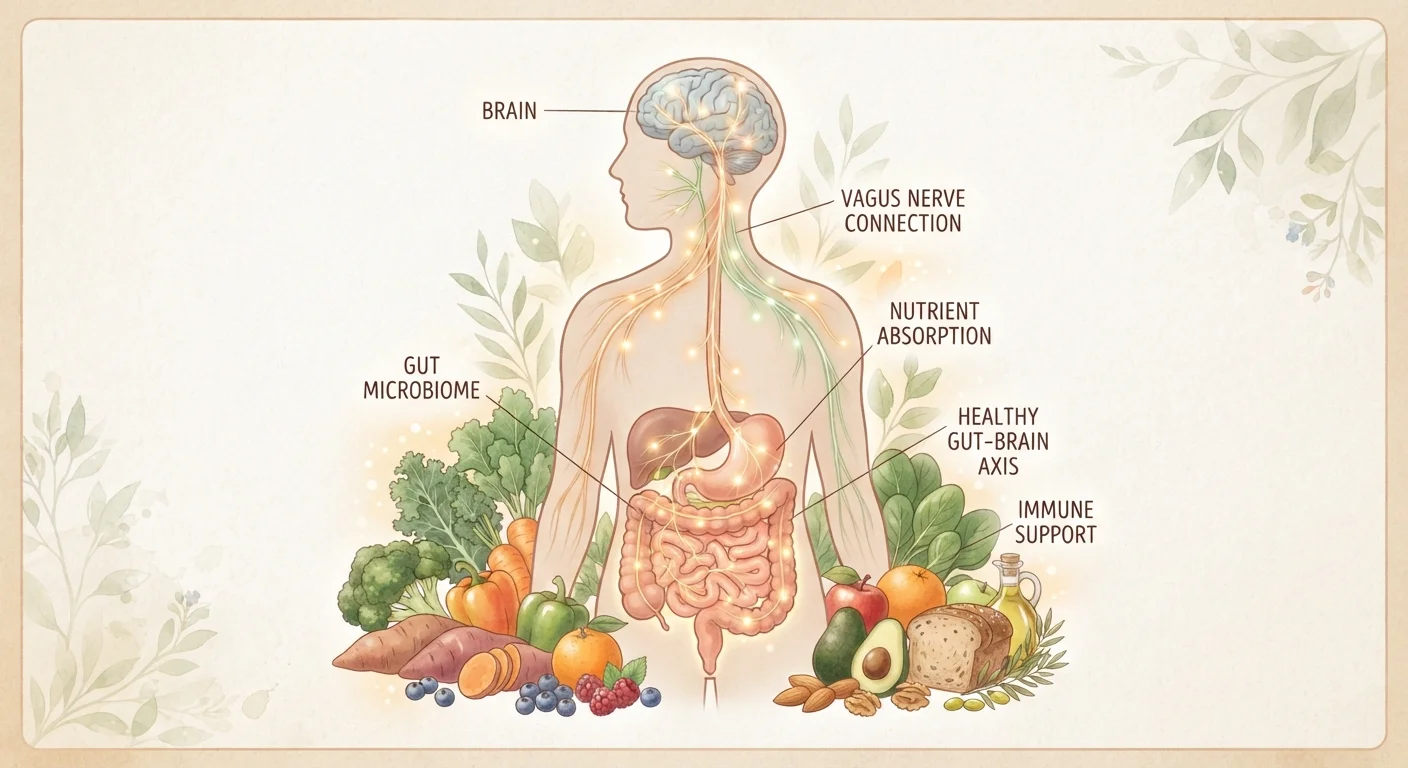
- The gut-brain axis: The vagus nerve and microbial metabolites create a bidirectional communication highway between the digestive system and the brain. Explore how this axis influences emotional wellbeing in our dedicated overview.
~90%
Serotonin produced in the gut
Research estimates approximately 90% of the body's serotonin is synthesized in gastrointestinal cells, underscoring the gut's role in mood chemistry.
33%
Lower depression odds with healthy diet
A meta-analysis published in Molecular Psychiatry found individuals following a healthy dietary pattern had roughly one-third lower odds of depression compared to those with poor diet quality.
2-4 hrs
Post-meal mood window
Research on postprandial mood suggests emotional and cognitive states can shift measurably within two to four hours following a meal, linked largely to blood glucose dynamics.
Mindful Eating as a Mental Health Tool
Mindful eating - paying deliberate, non-judgmental attention to the experience of eating - is supported by a growing body of research as a strategy that extends beyond weight management. It sits within the broader skill set of emotional resilience-building.
Studies suggest mindful eating may reduce emotional eating episodes, lower reactivity to food-related stress cues, and improve awareness of hunger and satiety signals. These effects are thought to operate partly through improved interoceptive awareness - the ability to notice and interpret bodily signals - which itself is a component of emotional regulation capacity.
For readers new to these concepts, a practical primer on eating for emotional balance provides actionable starting points grounded in current dietary science.
Emotional regulation
The ability to monitor, evaluate, and modify emotional reactions in a flexible, adaptive way. It involves both automatic and deliberate strategies and is linked to overall psychological wellbeing.
Nutritional psychiatry
An emerging field of research examining how dietary factors influence mental health outcomes, including mood disorders, anxiety, and cognitive function.
Interoception
The perception of internal bodily states, including hunger, satiety, heart rate, and tension. Strong interoceptive awareness is associated with better emotional self-regulation.
Gut-brain axis
The bidirectional communication network connecting the gastrointestinal tract and the brain, operating through neural, hormonal, and immune signaling pathways.
Mindful eating
A practice of bringing deliberate, non-judgmental attention to the full experience of eating - including taste, hunger cues, and emotional triggers - without restriction or judgment.
Neuroinflammation
Inflammation occurring within the brain or central nervous system. It has been studied as a potential contributor to mood disorders, including depression.
Key Nutrients and the Evidence Base
Individual nutrients have been studied for their roles in emotional health. Magnesium, omega-3 fatty acids, B vitamins, and zinc each interact with neurological and inflammatory systems relevant to mood. Our reference guide to nutrients linked to mood regulation details the specific research behind each.
It is equally important to consider overall dietary patterns rather than isolated nutrients. The Mediterranean dietary pattern - rich in vegetables, legumes, whole grains, fish, and olive oil - has the strongest observational evidence linking it to lower rates of depression and anxiety. The gut microbiome plays a role here too; see what the science actually says about your microbiome and mood for a balanced appraisal of this emerging field.
For a comprehensive view of how all these elements connect, Diet and Mood: The Whole Picture integrates biology, nutrients, and everyday habits in one overview.
This article is for general informational and educational purposes only and is not a substitute for professional medical or nutritional advice. Consult a qualified healthcare professional before making changes to your diet, particularly if you have an existing health condition.