Two Different Tools, Two Different Purposes
When people first consider getting mental health support, two digital options often appear side by side: self-guided apps and live online therapy. They can look similar from the outside — both live on a screen, both involve some form of mental health content — but they operate on fundamentally different premises.
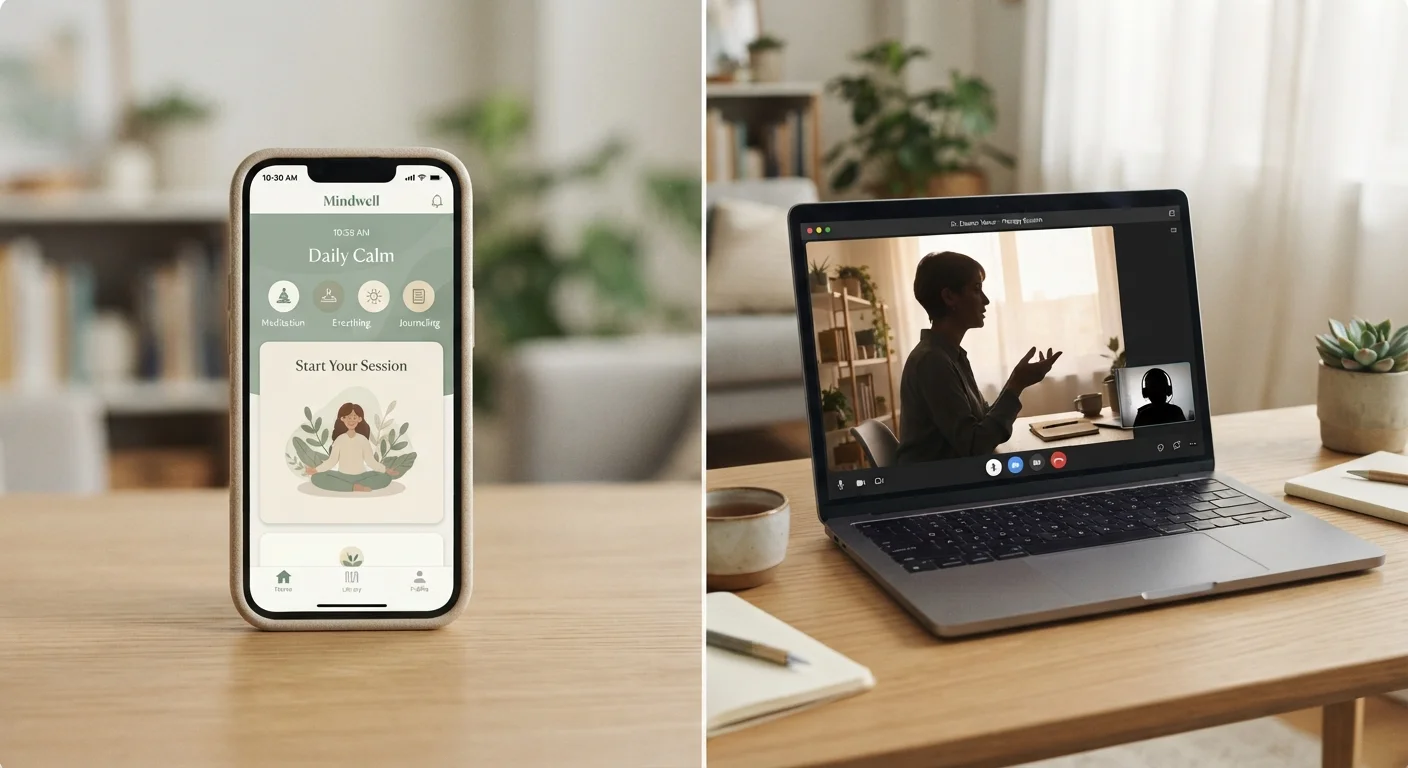
Self-guided mental health apps are software tools that deliver structured content — guided meditations, cognitive behavioural exercises, mood journals, sleep programs — without any live clinician involvement. The user moves through material at their own pace, on their own schedule. There is no assessment, no diagnosis, and no adaptive treatment plan.
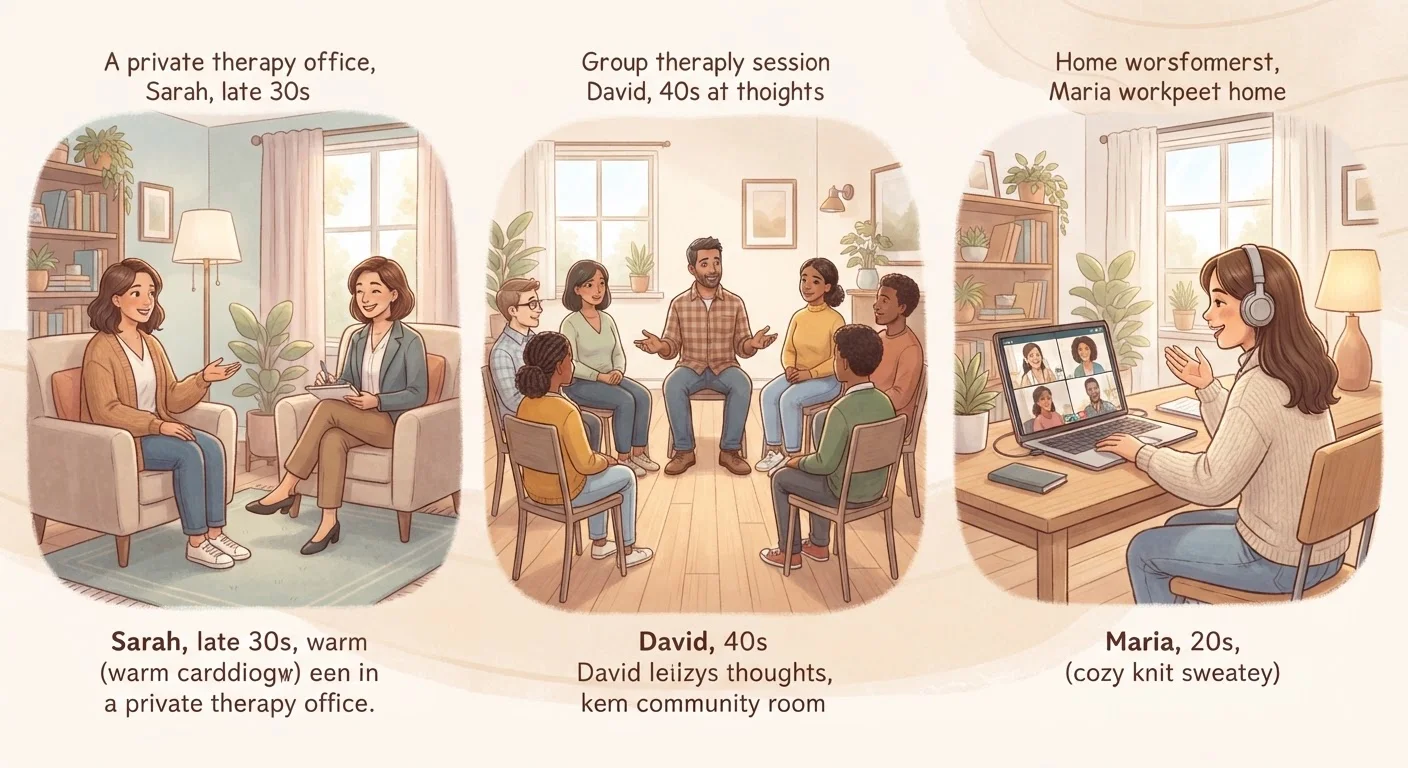
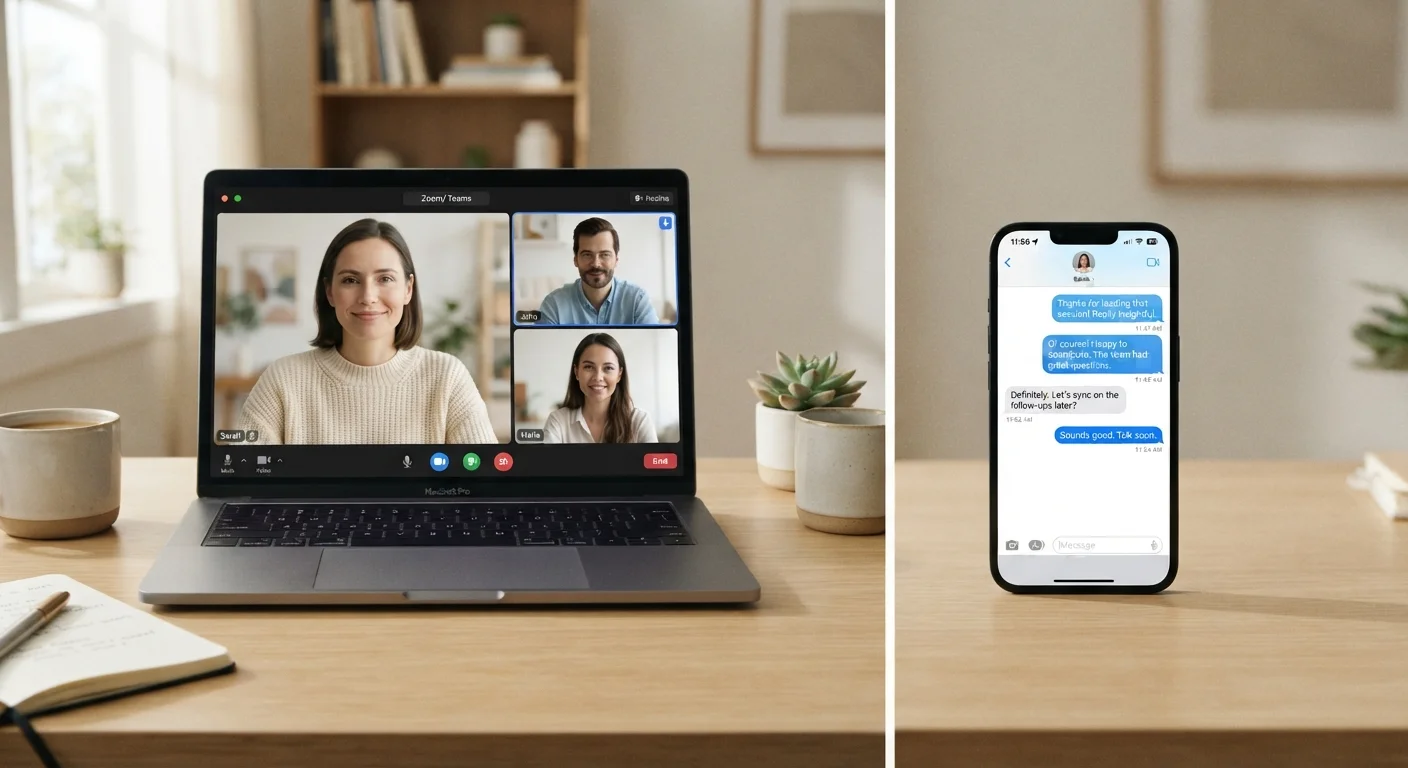
Live online therapy, by contrast, connects a person with a licensed mental health professional — a psychologist, licensed counsellor, or clinical social worker — through video, phone, or messaging platforms. The clinician can assess what the person is experiencing, build a working relationship over time, and adjust the therapeutic approach based on progress. That responsiveness is the core distinction. For a broader look at how therapy formats compare, see how individual, group, and online therapy differ.
| Criterion | Self-Guided Apps | Live Online Therapy |
|---|---|---|
| Clinician involvement | None | Licensed professional |
| Clinical assessment | Not available | Core part of treatment |
| Scheduling | On-demand, flexible | Scheduled appointments |
| Typical cost | Low to moderate | Higher; insurance may apply |
| Appropriate for diagnosed conditions | Supplement only | Yes, primary treatment |
| Crisis support | Not appropriate | Can escalate care |
| Privacy regulation | Variable by product | Legally governed (HIPAA) |
Where Each Format Fits — and Where It Doesn't
Self-guided apps occupy a genuinely useful space for people experiencing mild stress, wanting to build everyday coping habits, or seeking psychoeducation as a starting point. They lower the barriers considerably: no appointment, no waitlist, often low or no cost. For someone who isn't sure whether they need formal support, an app can serve as a low-stakes first step.
However, apps have firm limits. They cannot assess clinical need, identify contraindications, adapt to worsening symptoms, or provide the relational component that research consistently identifies as central to therapeutic change. If you are dealing with moderate-to-severe depression, anxiety disorders, trauma, or any condition that significantly disrupts daily functioning, an app is not a substitute for care — it may at best be a supplement.
~1 in 5
US adults experience mental illness annually
According to the National Institute of Mental Health, approximately one in five US adults lives with a mental illness in any given year, underscoring the scale of unmet care need.
80%+
Teletherapy patients report satisfaction
Multiple reviews of telehealth mental health services have found high patient satisfaction rates, with outcomes comparable to in-person therapy for common conditions such as depression and anxiety.
Live online therapy is clinically equivalent to in-person therapy for many conditions, according to a substantial body of research. The teletherapy platforms that deliver it vary in format — some prioritise video sessions, others asynchronous messaging. Understanding those differences matters too: see how video therapy compares to text-based messaging therapy.
It is worth noting that these options are not mutually exclusive. Many therapists actively encourage clients to use well-designed apps between sessions to reinforce skills and maintain momentum. The question is not always either/or — it is often about sequencing and appropriateness. Understanding the boundary between self-help and professional support can help clarify which role each should play in your situation.
Apps Are Not a Crisis Resource
No self-guided app is designed or equipped to handle mental health emergencies. If you or someone you know is in crisis, contact the 988 Suicide and Crisis Lifeline by calling or texting 988 (US), or go to your nearest emergency department. Crisis situations require human clinical judgment, not software.
Practical Considerations Before Choosing
Beyond clinical fit, several practical factors shape which option makes sense at a given moment. Cost is real: live online therapy involves professional fees, though many platforms accept insurance and some offer sliding-scale rates. Apps are typically far less expensive, though subscription costs vary. Neither format should be chosen purely on price when symptoms are significant.
Privacy is another area worth scrutiny. Licensed therapists operate under strict confidentiality obligations governed by law. App privacy practices vary widely and are not uniformly regulated in the same way — data sharing, retention policies, and third-party access differ by product. Before committing to an app, reviewing its privacy policy carefully is worthwhile. Our guide on questions to ask before committing to a self-guided app covers this in structured detail.
Finally, if you are new to either format and uncertain where therapy fits into the picture more broadly, therapy basics provides a grounded overview of what therapy is, how it works, and what to expect — a useful foundation before making any decisions.
This article is for general informational purposes only and does not constitute medical or clinical advice. If you are experiencing significant distress or a mental health crisis, please contact a qualified healthcare professional or a crisis support service.