
What These Apps Actually Deliver
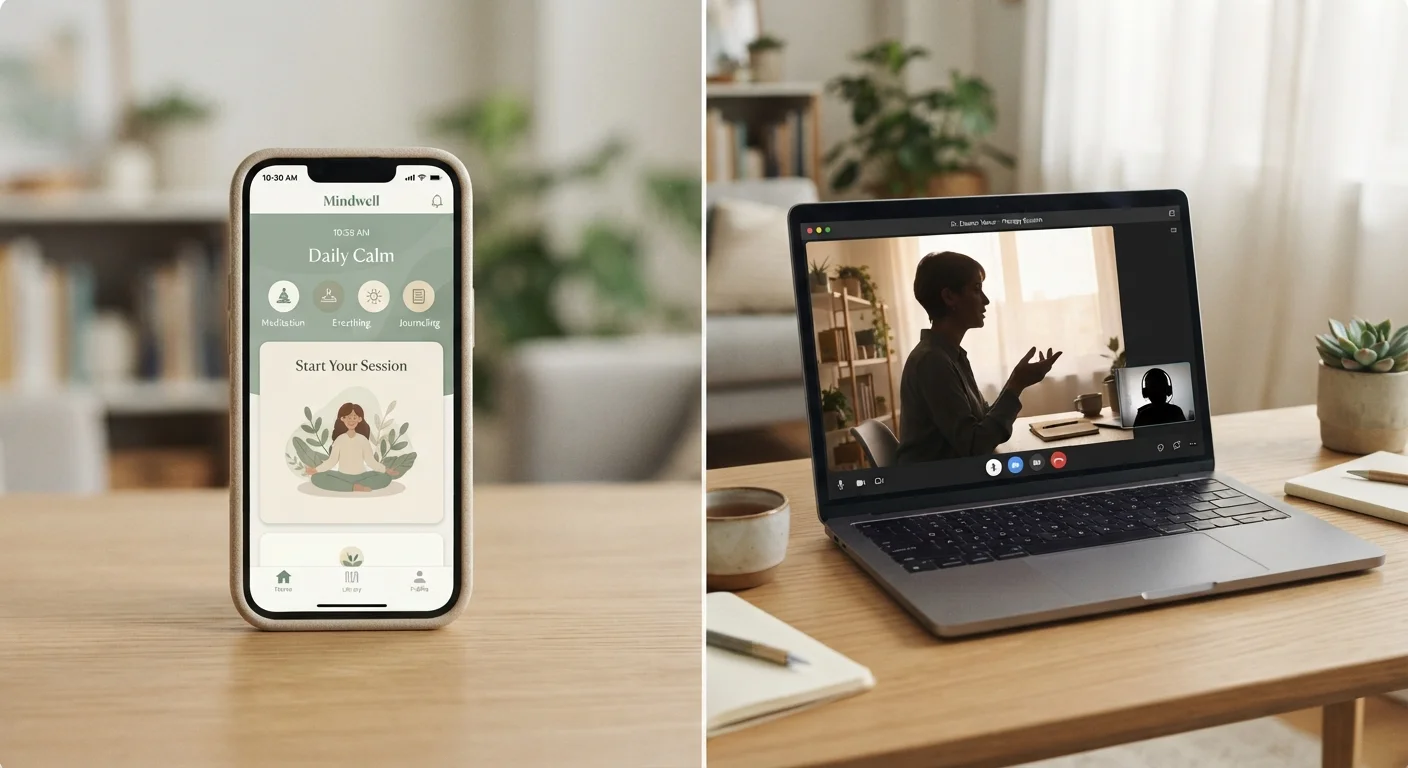
Self-guided mental health apps are digital tools that walk users through structured psychological exercises without any live human on the other end. A typical session might involve a guided breathing exercise, a mood check-in, a short CBT-based worksheet, or a brief psychoeducation module — all completed at the user's own pace.
The core offering is skill practice and self-awareness, not clinical evaluation or treatment. If you open one of these apps, you will not receive a diagnosis, a care plan, or a therapeutic relationship. What you may gain is a low-friction way to practice techniques that mental health professionals often teach in session — things like identifying cognitive distortions or building a daily mindfulness habit.
For a broader orientation to how these tools work in practice, the beginner's guide to mental health apps covers expectations and how to get started.
Look for Clinical Involvement in App Design
When evaluating a self-guided app, check whether licensed mental health professionals were involved in its development and whether it links to peer-reviewed research. Apps developed with clinical input tend to deliver techniques more accurately than those built primarily as consumer wellness products.
What They Are Not
The distinction that matters most: self-guided apps are not therapy. Therapy involves a licensed clinician conducting an individualized assessment, forming a treatment relationship, and adapting an approach to your specific history and needs. Apps do none of that.
They also differ substantially from teletherapy platforms, which connect users with real therapists via video or messaging. If you're weighing the two, self-guided apps versus live online therapy lays out how they compare across structure, accessibility, and appropriate use.
It's also worth noting that some popular assumptions about these tools don't hold up well under scrutiny. The article examining common assumptions about mental health apps addresses several widespread misconceptions, including whether apps are only useful for minor issues.
Not All Apps Are Regulated the Same Way
Most consumer mental health apps are not classified as medical devices and are not subject to FDA oversight or HIPAA privacy rules in the same way clinical tools are. This means data handling, feature accuracy, and safety claims can vary significantly. Reviewing an app's privacy policy before entering personal health information is a reasonable precaution.
Where Apps Fit in a Broader Care Picture
Self-guided apps occupy a specific — and limited — place in mental health support. They may be genuinely useful in several contexts: helping someone build foundational coping skills before starting therapy, extending practice between appointments, or offering low-barrier access for someone not yet ready to seek professional care.
They are not well-suited for people in acute distress, crisis, or managing conditions that require clinical oversight. For those situations, connecting with a qualified mental health professional is the appropriate step. Information on what professional therapy involves and what to expect is available through therapy basics.
10,000+
Mental health apps available in major app stores
Estimates from researchers and health technology analysts suggest tens of thousands of mental health-related apps exist, though the quality and evidence base vary widely across them.
~20%
Apps with published peer-reviewed research
A review published in the journal World Psychiatry found that only a small proportion of commercially available mental health apps have been evaluated in rigorous peer-reviewed studies.
Before committing to any app, it's worth asking practical questions about its evidence base, data practices, and how it was designed. The checklist of questions to ask before choosing a self-guided app provides a structured way to evaluate your options.
This article is for informational purposes only and is not a substitute for professional medical or mental health advice. If you are experiencing a mental health crisis or significant distress, please contact a licensed healthcare provider or a crisis service.