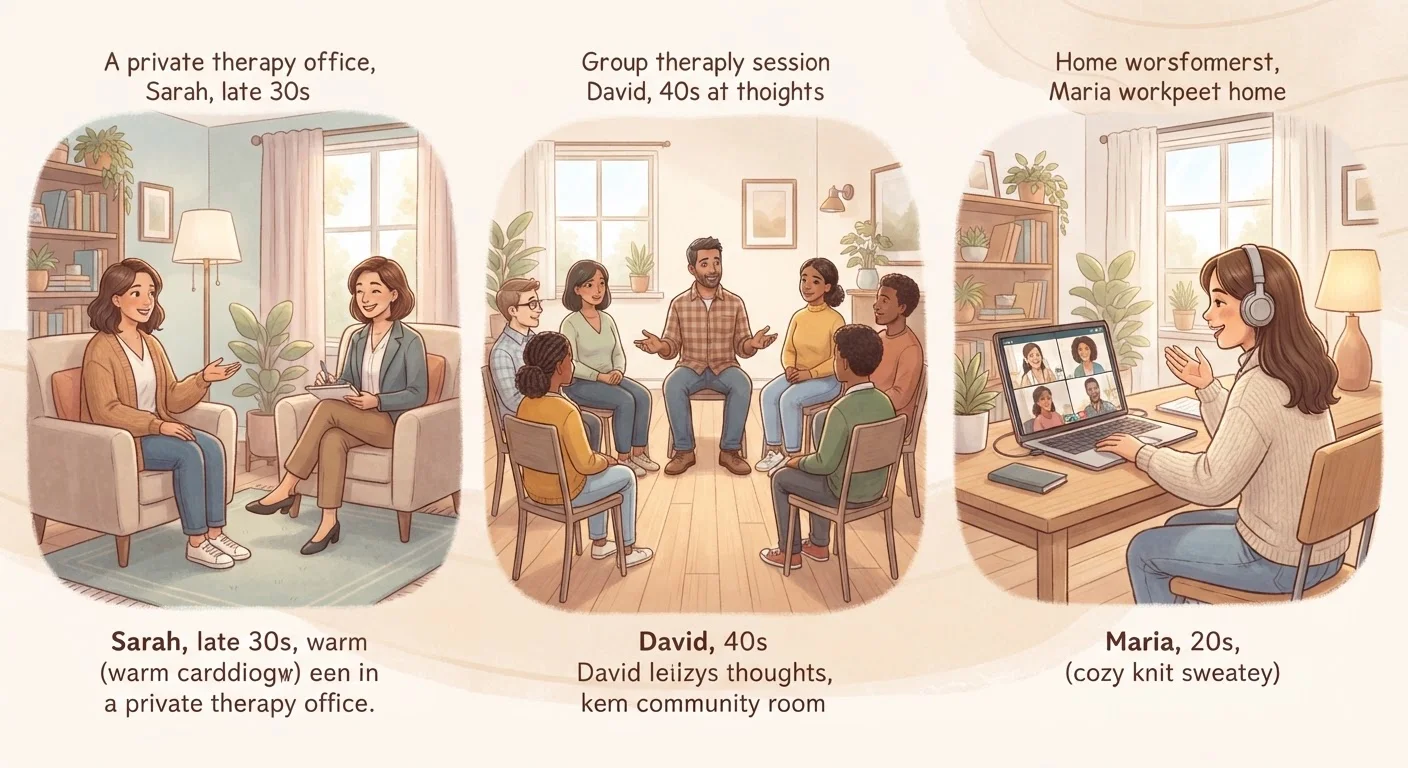

What Each Format Actually Involves
Individual therapy — sometimes called one-on-one or talk therapy — is a private arrangement between a single client and a licensed mental health professional. Sessions typically run 45 to 60 minutes and are structured around that person's specific concerns, history, and therapeutic goals. The therapist's attention is undivided, and the pace is set collaboratively between clinician and client.
Group therapy is a clinically structured format in which a trained therapist (sometimes two co-therapists) facilitates sessions with a small number of participants — commonly between five and twelve people. It is not the same as a peer support group; a licensed professional leads the process, applies therapeutic techniques, and maintains the group's clinical focus. Groups may be organized around a shared diagnosis, life circumstance, or therapeutic approach such as cognitive-behavioral or dialectical behavior therapy.
Both formats are legitimate, evidence-informed components of mental health care, and both can be used independently or alongside each other depending on what a clinician recommends.
| Criterion | Individual Therapy | Group Therapy |
|---|---|---|
| Session participants | Client and one therapist | 5–12 clients, one or two therapists |
| Privacy level | Full clinical confidentiality | Confidentiality norms, but peer-dependent |
| Therapist attention | Entirely focused on one person | Shared across all participants |
| Typical cost per session | Generally higher | Generally lower |
| Interpersonal skill-building | Limited in-session practice | Real-time peer interaction |
| Peer support element | Not present | Central to the format |
| Pacing and agenda | Set by client and therapist | Shared group focus and structure |
| Best-studied for | Trauma, depression, anxiety, personal history | Social anxiety, addiction, grief, interpersonal issues |
Key Differences: Structure, Privacy, and Cost
The structural differences between the two formats matter practically as well as therapeutically. In individual therapy, every session is dedicated entirely to one person's material — there is no shared agenda or peer dynamic to navigate. This makes it well suited for working through personal history, trauma, or highly specific concerns that require consistent, focused attention.
Group therapy introduces a relational dimension that individual work does not replicate. Participants witness each other's progress, offer perspective, and practice interpersonal skills in real time under clinical supervision. Research consistently shows this can be particularly effective for concerns rooted in social experience — loneliness, relationship difficulties, social anxiety, or behaviors tied to group identity, such as substance use disorders.
~75%
People who benefit from psychotherapy
The American Psychological Association notes that approximately 75% of people who enter psychotherapy show some benefit, across both individual and group formats.
7–12
Typical group therapy size
Clinical guidelines generally recommend groups of seven to twelve participants to balance cohesion and diverse perspective.
Privacy operates differently in each setting. Individual sessions are governed by standard confidentiality rules between therapist and client. In a group, confidentiality expectations extend to all members, and while therapists establish clear norms around this, participants cannot guarantee absolute discretion from peers. This is worth considering before committing to group work, particularly for sensitive disclosures.
Cost is a practical differentiator. Group sessions are generally less expensive per session than individual appointments, partly because the therapist's time is shared across participants. For those navigating limited coverage or out-of-pocket expenses, this can meaningfully affect access to consistent care. For a broader look at format and cost considerations, see how individual, group, and online therapy compare.
Choosing Based on Your Circumstances
Neither format is universally superior. Clinical guidelines generally suggest that the presenting concern, personal comfort with self-disclosure, and practical constraints — such as availability in a given area — should all factor into the decision. A mental health professional can help assess which format, or which combination, aligns with a person's goals and readiness.
Some people begin with individual therapy to build foundational trust and insight, then transition into group work as part of continued treatment. Others begin in a group setting and later pursue individual sessions to deepen specific areas of work. There is no single correct sequence.
Using Both Formats Together
Concurrent individual and group therapy is a recognized clinical approach. Some treatment programs, particularly for substance use, eating disorders, or complex trauma, actively incorporate both. If you're considering combining formats, discuss the timing and focus of each with your treatment provider to avoid duplication and ensure the approaches complement each other.
It's also worth distinguishing group therapy from peer support groups, which are typically facilitated by people with lived experience rather than licensed clinicians. Both can be valuable, and they are not mutually exclusive. The distinction between support groups and individual therapy is explored in more detail in a related article.
If you're weighing how format intersects with setting — for example, whether to pursue sessions in person or remotely — the comparison of online and in-person therapy may also be useful context.
This article is for general informational and educational purposes only and does not constitute medical or mental health advice. Please consult a qualified mental health professional for guidance tailored to your individual circumstances.