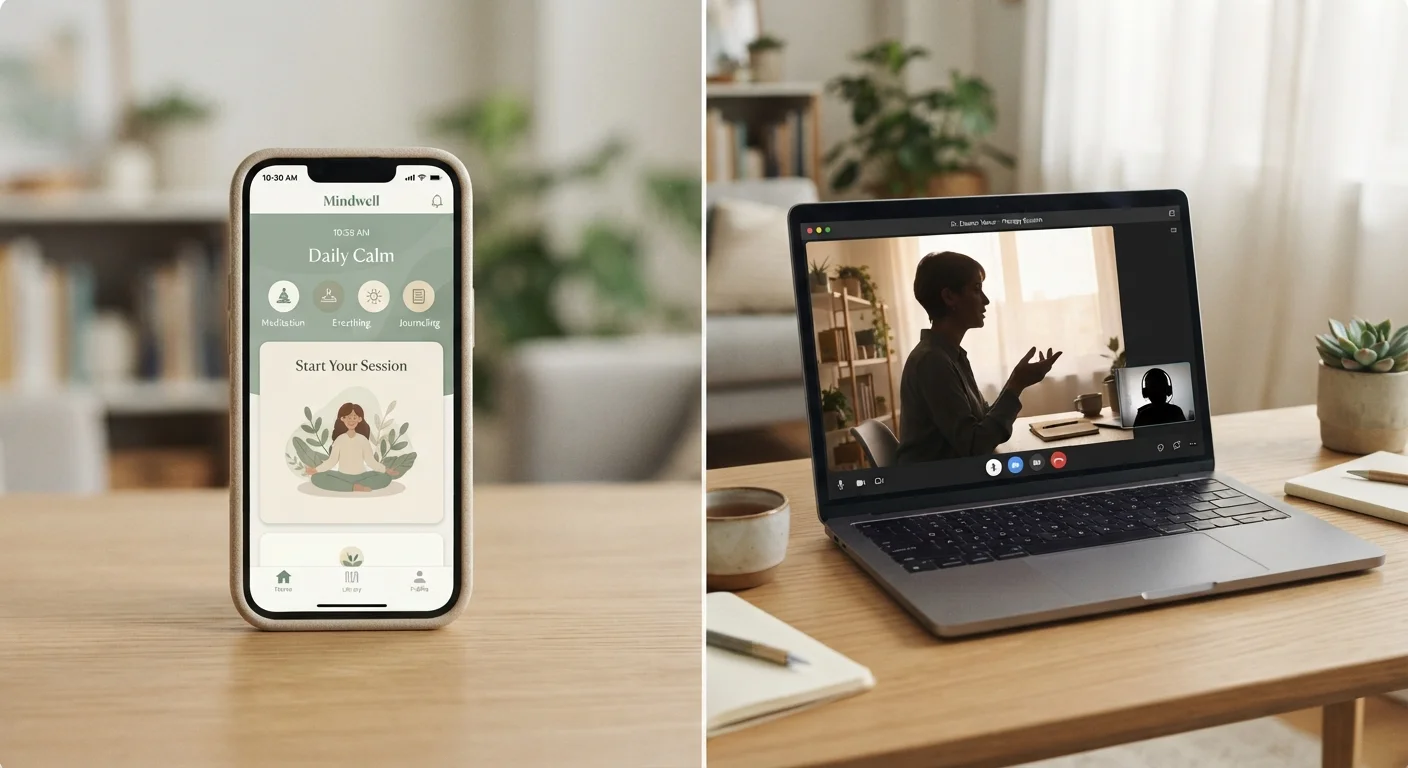
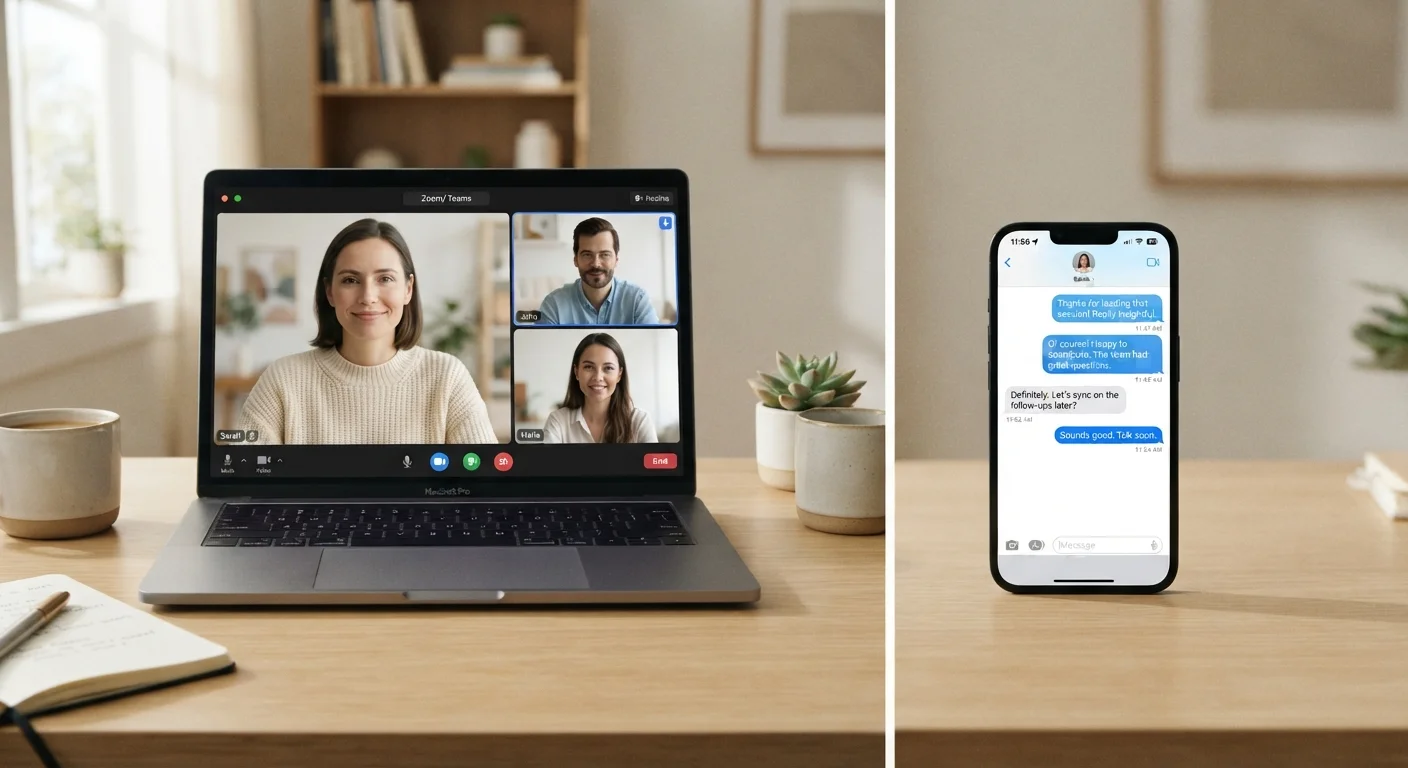
How Each Format Works
Understanding the structural difference between these two teletherapy formats is the clearest starting point. For a broader overview of how digital therapy platforms are organised, see Teletherapy Platforms Explained.
Video therapy is synchronous — both you and your therapist are present at the same time. Sessions typically last 45 to 60 minutes and follow a similar structure to in-person appointments. Your therapist can pick up on vocal tone, pacing, and visible emotional cues in real time, which many clinicians consider clinically significant.
Text-based messaging therapy is asynchronous. You send written messages when it suits you, and your therapist reads and responds within an agreed window — often once or twice a day. There is no shared clock; both parties engage on their own schedule. This distinction in timing shapes almost every other aspect of how care unfolds. For a deeper look at what synchronous and asynchronous delivery mean for therapeutic depth, see Synchronous vs. Asynchronous Teletherapy.
| Criterion | Video Therapy | Text-Based Messaging Therapy |
|---|---|---|
| Session timing | Synchronous (real-time) | Asynchronous (send and wait) |
| Typical duration | 45–60 minutes per session | Ongoing daily message exchanges |
| Nonverbal communication | Visible facial cues, tone of voice | Text only; no vocal or visual cues |
| Scheduling flexibility | Fixed appointment required | Write and respond at any time |
| Crisis responsiveness | Immediate therapist response possible | Delayed; not suitable for crises |
| Privacy requirements | Private space with camera needed | Lower; any private device suffices |
| Evidence base | Substantial, comparable to in-person | More limited; emerging research |
| Best clinical fit | Moderate to complex presentations | Mild to moderate, low-crisis situations |
Clinical Suitability and Limitations
Format is not a neutral choice — it can affect the quality and appropriateness of care depending on what you are working through.
Video therapy supports a wider range of clinical presentations. Therapists can deliver structured, evidence-based protocols such as cognitive behavioural therapy (CBT) or exposure-based work with greater fidelity in a live setting. Real-time interaction also allows for immediate crisis responsiveness — something asynchronous messaging cannot reliably offer. For context on how some therapeutic approaches specifically depend on in-session dynamics, see EMDR Therapy: What Happens in a Session.
Text-based messaging therapy may suit people dealing with milder stress, adjustment difficulties, or those who benefit from the reflective process of writing. However, research on its clinical efficacy remains more limited compared to video or in-person modalities. It is generally considered less appropriate for acute mental health crises, active suicidal ideation, or conditions that require careful ongoing assessment. If you are unsure where messaging fits relative to other formats, Individual, Group, and Online Therapy: How They Compare offers a useful reference point.
~80%
Patient satisfaction with video therapy
A review published in the Journal of Telemedicine and Telecare found patient satisfaction rates for video-based therapy broadly comparable to in-person care across multiple studies.
1 in 3
Adults preferring written over verbal communication
Research on communication preferences suggests a significant minority of adults find written expression easier than verbal — a factor that may influence engagement in messaging-based formats.
This content is general health information and is not a substitute for professional medical or mental health advice. Please consult a licensed mental health professional to discuss which therapy format may be appropriate for your individual circumstances.
Access, Comfort, and Practical Considerations
Practical factors often shape format choice just as much as clinical ones. Video therapy requires a private space, a reliable internet connection, and comfort appearing on camera — conditions that are not equally available to everyone. For those managing social anxiety or camera shyness, the video format itself can feel like an obstacle at the outset.
Messaging therapy removes several of those friction points. It can be accessed from any device at any time and does not require a dedicated private space in the same way. People who process emotion more readily through writing, or who have difficulty with verbal expression, may find the text format genuinely easier to engage with — at least initially.
That said, messaging therapy has its own limitations. The absence of a therapist's voice, facial expression, and immediate presence means a great deal of clinical information is simply absent from the exchange. Nuance can be lost in text, and misunderstandings may take longer to resolve. It is also worth noting that messaging therapy is not the same as a self-guided mental health app; a licensed therapist is still involved, though the interaction is structured differently. For clarity on that distinction, see Self-Guided Apps vs. Live Online Therapy.
If neither format feels like a complete fit, it may also be worth exploring how other therapeutic approaches could complement or inform your care. When Talk Therapy Feels Like It Isn't Enough outlines some alternatives worth knowing about.