
The Core Idea: Helping Through Shared Experience
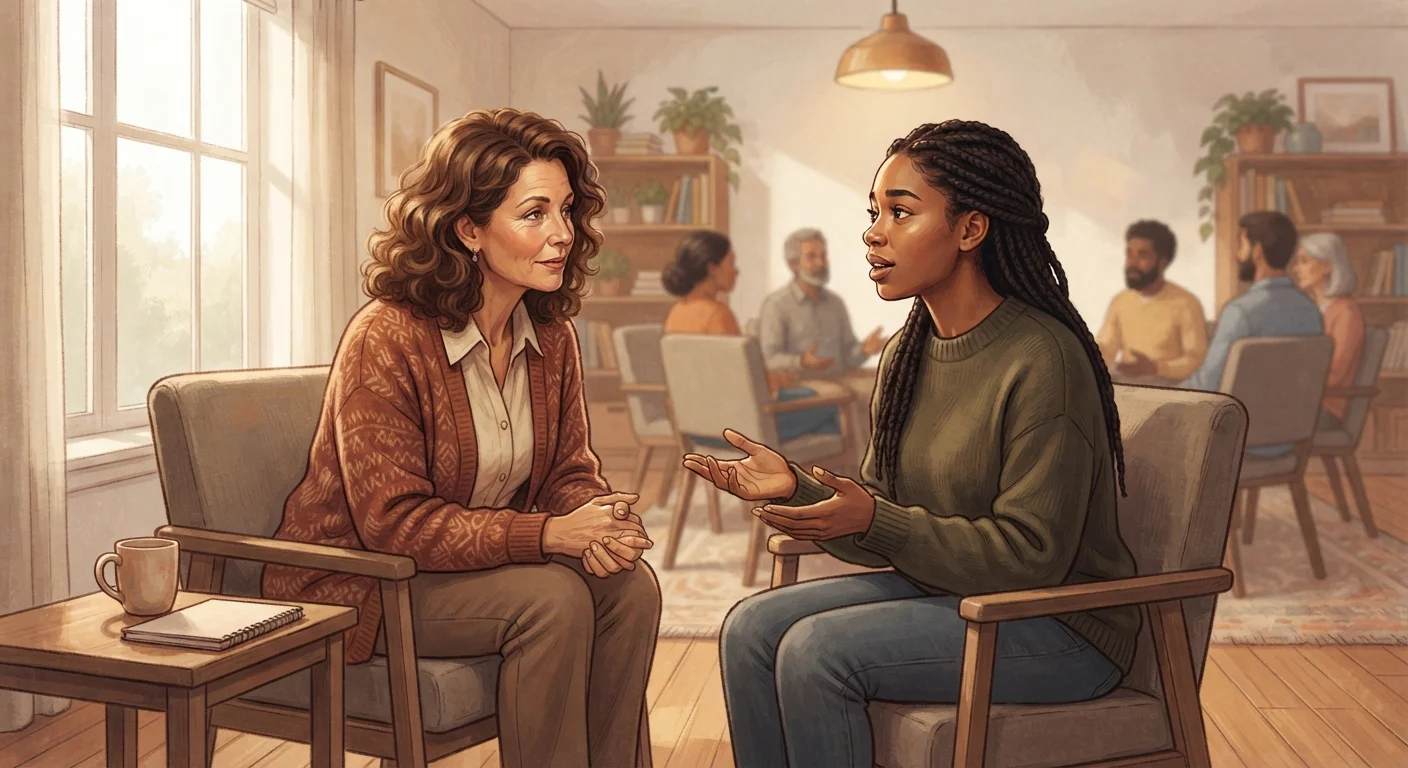
At the heart of every peer support group is one simple premise: people who have been through something similar are uniquely positioned to understand and support each other. This is not a new idea — community-based mutual aid predates formal mental health care — but research has helped clarify why it works.
When someone in a group says "I've felt exactly that way," it does something that professional guidance alone often cannot: it breaks isolation. The awareness that you are not the only person navigating a particular struggle has measurable psychological value. Studies have associated peer support participation with reduced feelings of loneliness, greater self-efficacy, and improved engagement with broader health care.
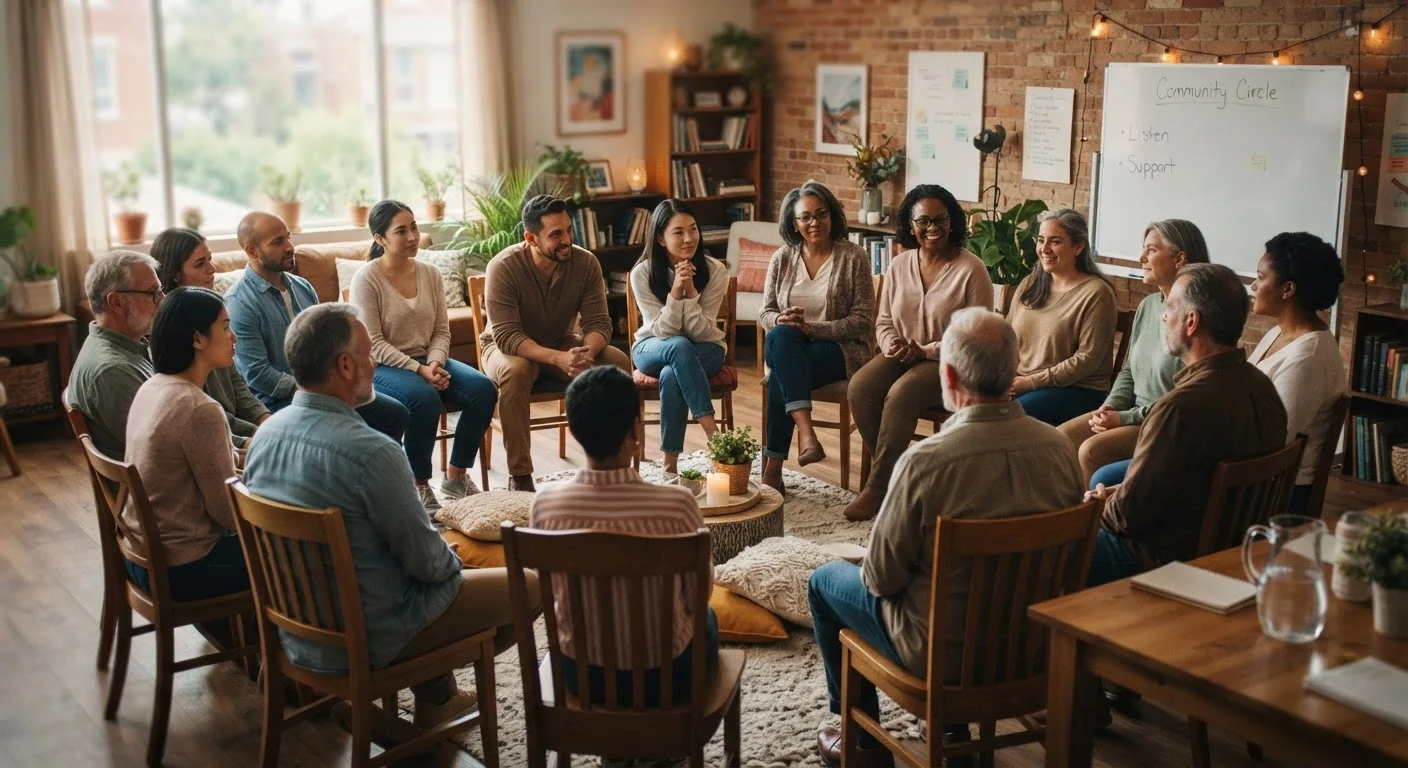
Peer support groups are organized around a shared thread — a mental health condition, a life circumstance like grief or caregiving, a recovery journey, or an identity. That common ground is the foundation. Everything else — structure, frequency, size — varies considerably from group to group.
70%+
of peer support participants report reduced isolation
A review of peer support programs in community mental health settings found that the majority of participants reported feeling less isolated after regular group attendance.
~500
NAMI peer support groups active across the US
The National Alliance on Mental Illness operates a nationwide network of free, peer-led support groups for people affected by mental health conditions.
What Peer Support Groups Are Not
Clarity about what peer support groups are requires equal clarity about what they are not — because confusion on this point can lead to mismatched expectations on both sides.
They are not therapy. A peer support group is not a clinical setting. The facilitator — if there is one — is typically a trained peer, not a licensed mental health professional. Sessions are not designed to diagnose, treat, or manage clinical symptoms. For a detailed comparison, see how peer support and individual therapy differ.
They are not crisis services. Peer groups are structured around ongoing mutual support, not acute intervention. Someone experiencing a mental health emergency needs immediate professional help — calling or texting 988 (the Suicide and Crisis Lifeline in the US) or going to an emergency room.
They are not advice-giving sessions. The most effective peer groups emphasize listening and sharing over prescribing. Members speak from their own experience rather than telling others what to do.
Peer Support Is Not a Crisis Resource
If you or someone you know is in immediate emotional distress or danger, peer support groups are not the appropriate first response. In the US, you can call or text 988 to reach the Suicide and Crisis Lifeline at any time, 24 hours a day. Emergency services (911) should be contacted when there is immediate risk of harm.
Structure, Facilitation, and What to Expect
Peer support groups exist on a wide spectrum. Some are highly structured — with rotating topics, trained facilitators, and organizational backing from groups like NAMI or DBSA. Others are informal gatherings that evolve organically from shared need. Neither model is inherently superior; what matters is whether the group's norms foster psychological safety.
A well-run group typically establishes ground rules from the outset: confidentiality agreements, expectations around listening, and clarity that members share from personal experience rather than giving clinical advice. These structures protect everyone in the room — or on the call.
Facilitation can be peer-led (a trained member who has lived experience) or professionally supported (a clinician who helps organize but does not provide therapy within the group). Curious about how facilitation works in practice? Learn the core principles of safe peer group facilitation.
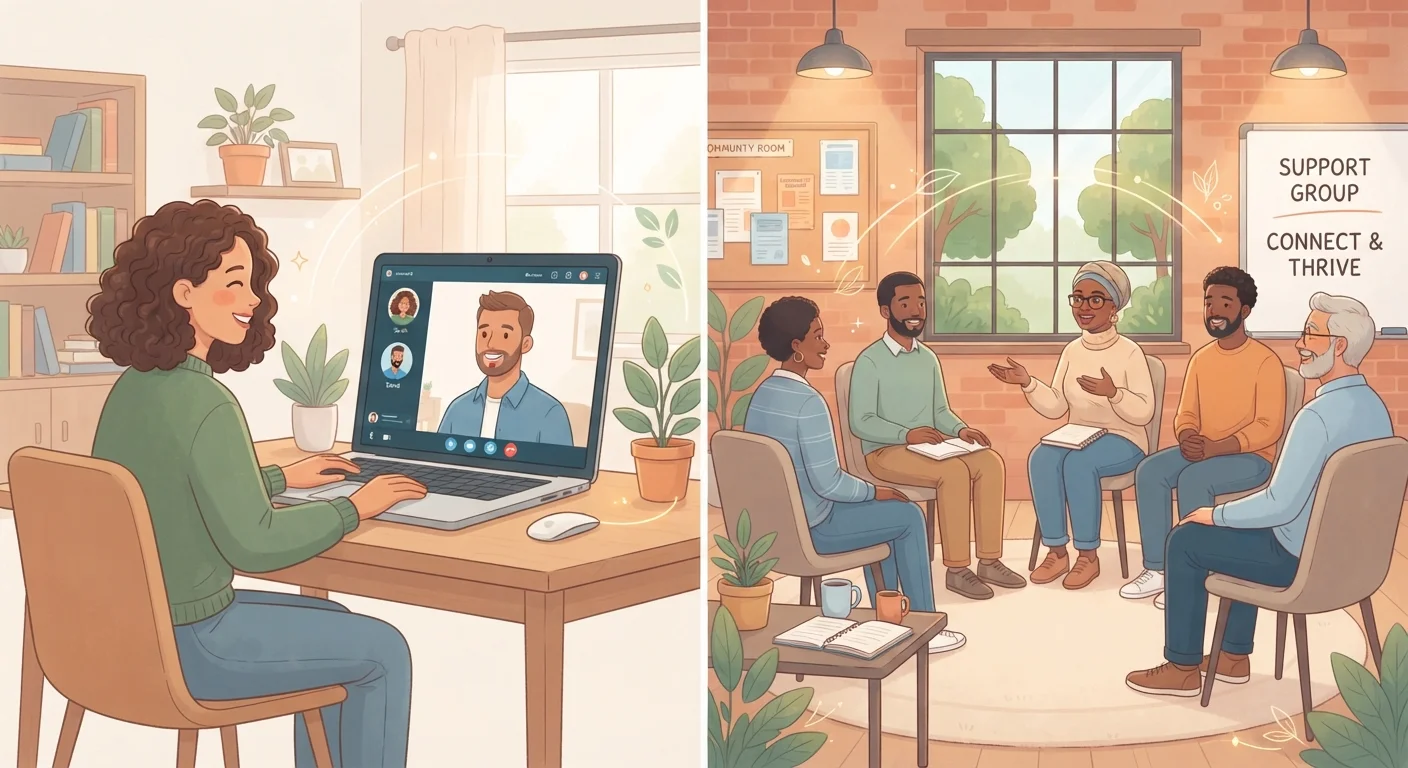
Format matters too. Whether a group meets in person or online affects accessibility, anonymity, and the kind of connection it can build. Explore how online and in-person formats compare before deciding which suits you.
The Evidence — and the Honest Limits
Research supports peer support as a meaningful complement to mental health care. A range of studies, including a systematic review published in Psychiatric Services, has found that peer support is associated with improvements in recovery outcomes, hope, and quality of life for people with serious mental illness. Similar findings exist for addiction recovery groups and grief support settings.
That said, peer support is not a universal solution. Group dynamics can sometimes be unhelpful — if confidentiality is breached, if a group lacks adequate structure, or if members inadvertently reinforce unhealthy patterns. Not every group will be the right fit, and it may take trying more than one before finding a community that feels safe and generative.
If you've hesitated because of preconceptions about what these groups look like, common myths about support groups may be worth examining. The reality is often quite different from the stereotype.
“Recovery is not a solo journey. The presence of others who truly understand — not because they read about it, but because they lived it — can shift something profound in a person's sense of what's possible.”
— Shery Mead, Pioneer in peer support theory and founder of Intentional Peer Support
This article is for informational purposes only and is not a substitute for professional mental health advice, diagnosis, or treatment. If you are experiencing a mental health crisis, please contact a qualified professional or call 988.