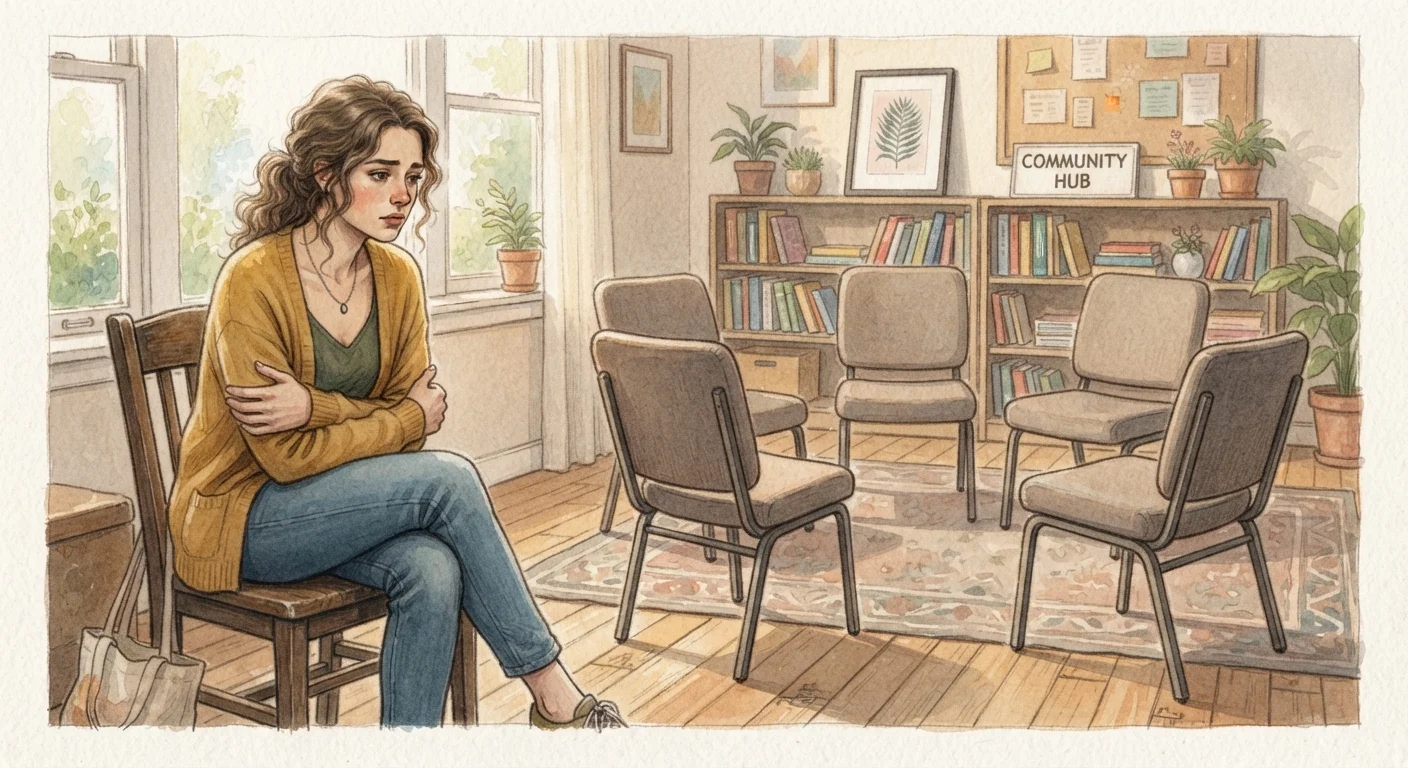

Why Myths About Support Groups Matter
For many people, the decision to try a peer support group gets stopped before it ever really starts — not by a genuine bad experience, but by a story they've heard, a scene from a TV show, or a vague discomfort about what walking through that door might mean. Misconceptions about support groups are surprisingly persistent, and they carry a real cost: people who might benefit greatly from peer connection stay away.
Research consistently shows that social support plays a meaningful role in emotional resilience and recovery from a wide range of mental health challenges. Yet stigma, misunderstanding, and a lack of accurate information keep the barrier high. This article addresses the most common myths — and what the evidence and lived experience actually show. For a broader look at how misinformation shapes help-seeking, see our overview of mental health self-help myths.
Common Myths — Corrected
Below, we examine the misconceptions most likely to put people off attending — and replace them with grounded, honest answers.
Myth
You have to share your deepest secrets the moment you walk in.
Fact
Participation is entirely at your own pace. Listening is a valid and valued form of involvement.
Many people avoid groups because they imagine being put on the spot — expected to reveal vulnerable details to strangers from the first session. In practice, well-run peer support groups operate on a consent-based model: you share what you choose, when you choose. Sitting quietly, listening, and simply being present are fully accepted ways to participate, especially early on. Group facilitators typically set this expectation at the outset. Over time, many members find that sharing becomes natural — but it is never compelled.
Myth
Support groups are only for people with serious mental illness.
Fact
Groups exist for a vast spectrum of experiences, from grief and caregiving stress to general life transitions.
The word "group" has become associated in popular culture with crisis-level need — but the reality is far broader. Peer support groups exist for people navigating divorce, job loss, chronic physical health conditions, parenting challenges, loneliness, bereavement, and everyday anxiety, among many other experiences. You do not need a diagnosis to benefit from structured peer connection. The role of community belonging in emotional resilience applies regardless of clinical status.
Myth
Support groups replace therapy or professional treatment.
Fact
Peer groups are a complement to professional care, not a substitute for it.
This myth cuts in two directions: some people avoid groups because they think they're only for people who can't access therapy; others worry that joining a group means they don't need professional help. Neither is accurate. Peer support and professional mental health care address different needs and work well together. A therapist provides clinical assessment and evidence-based treatment; a peer group provides lived-experience connection and community. Many clinicians actively encourage group participation alongside therapy. For clarity on how the two differ, see what peer support groups actually offer.
Myth
Everything shared in a group will spread beyond the room.
Fact
Confidentiality norms are a foundational feature of most peer support groups.
Confidentiality is not just an expectation — it is typically an explicit, agreed-upon group norm introduced at the very first session and reinforced regularly. While no group can offer the legal protections of a clinical relationship, members are expected to keep what is shared within the group. Research on group dynamics suggests that perceived confidentiality is strongly tied to how safe members feel, and effective facilitators take that seriously. If confidentiality norms are not clearly stated in a group you're considering, that's worth asking about before you join.
Myth
Online support groups are impersonal and don't really work.
Fact
Research suggests online peer support can be as effective as in-person formats for many participants.
The expansion of online and hybrid support groups has opened peer connection to people who face geographic, mobility, or scheduling barriers. Studies examining online peer support for conditions including depression and anxiety have found meaningful benefits comparable to in-person participation for many individuals. Online formats also lower the initial anxiety of attending — joining from a familiar environment can make a first session feel less exposing. The key factors in effectiveness are the quality of facilitation and the consistency of attendance, not the medium.
If you're unsure whether a particular group is the right fit, our article on when a support group might not feel right can help you think it through without pressure.
What the Evidence Actually Shows
70%
Participants reporting reduced isolation
A review published in Psychiatric Services found that roughly 70% of peer support group participants reported feeling less isolated after regular attendance.
~500
Peer support group types in the US
The Substance Abuse and Mental Health Services Administration (SAMHSA) recognizes hundreds of distinct peer support program models operating across the United States.
2x
Greater likelihood of sustained engagement
People with social support structures — including peer groups — are roughly twice as likely to sustain engagement with mental health self-care practices, according to social support research.
Peer support has been studied across conditions including depression, anxiety, grief, addiction, and chronic illness. While results vary by group type and individual, a consistent finding is that participants report feeling less alone — and that sense of connection has documented effects on motivation and emotional regulation.
For a clear picture of how these groups are actually structured, what peer support groups are and are not is a useful starting point. And if you'd like to understand the range of formats available, types of peer support groups explained in plain language maps the main categories.
Not Every Group Will Feel Right — And That's Okay
A poor experience with one group does not mean peer support isn't for you. Groups vary significantly in culture, facilitation quality, and focus. If a particular group feels unsafe, dismissive, or simply not a fit, you have every right to stop attending and look for a different option. Trust your instincts about the environment.
This article is general health information and is not a substitute for professional advice. If you are experiencing a mental health crisis or need clinical support, please contact a qualified healthcare provider or crisis line.
Taking a First Step Without Overcommitting
You don't have to dive in. Many groups welcome observers — people who sit in for one session just to get a feel for the space before deciding whether to return. Most group facilitators understand that trust is built gradually, and good groups are designed with that in mind.
Practical guidance on pacing yourself in a support group can help you participate in ways that feel manageable. Peer connection also fits into a wider picture of support — exploring how to build a personal support network may help you see where a group could complement the relationships you already have.
Peer Support Is Not a Crisis Substitute
If you or someone you know is in immediate distress or experiencing thoughts of self-harm, please contact a crisis line such as the 988 Suicide and Crisis Lifeline (call or text 988 in the US) or go to the nearest emergency room. Peer support groups are not equipped to manage acute mental health crises and are not a replacement for emergency care.
This article is for informational and educational purposes only. It is not medical advice, and it does not replace assessment or treatment by a qualified mental health professional.