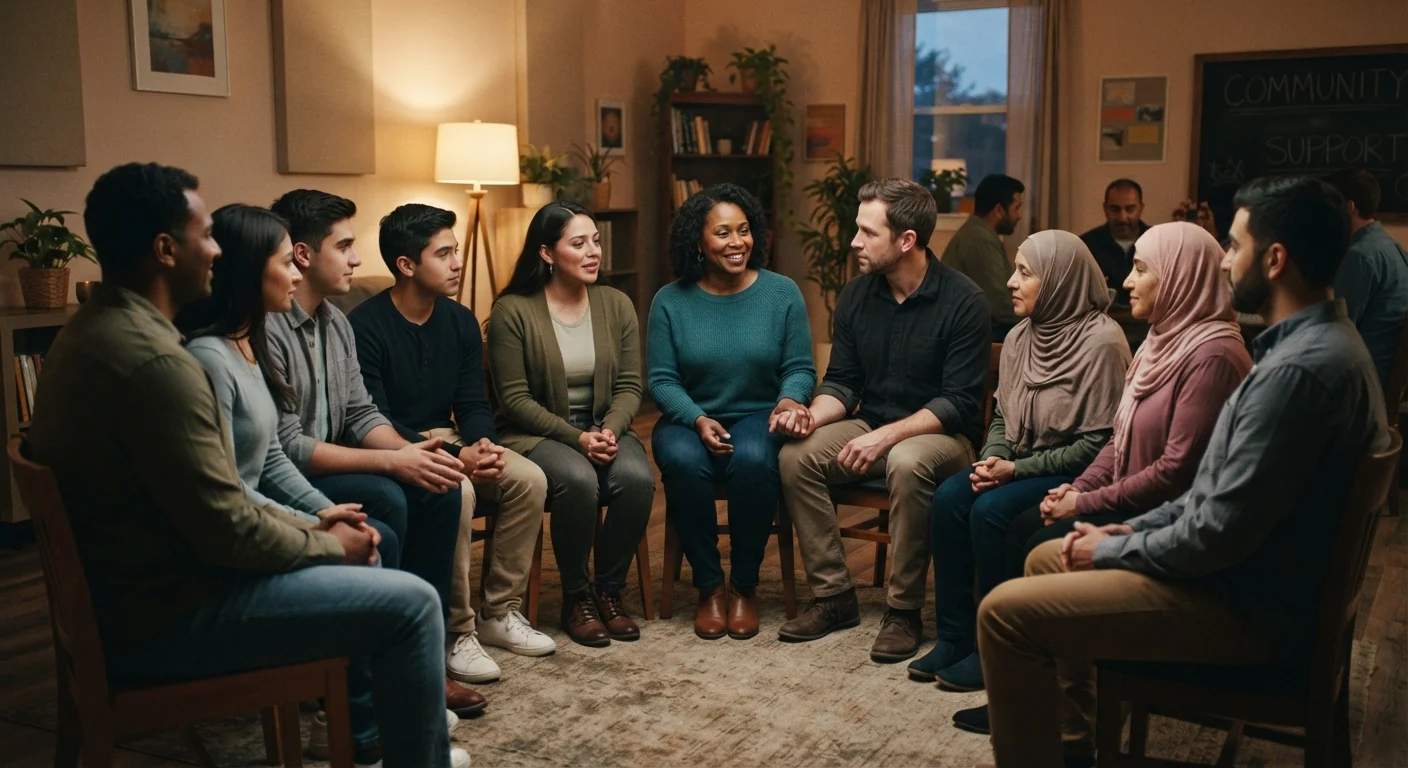
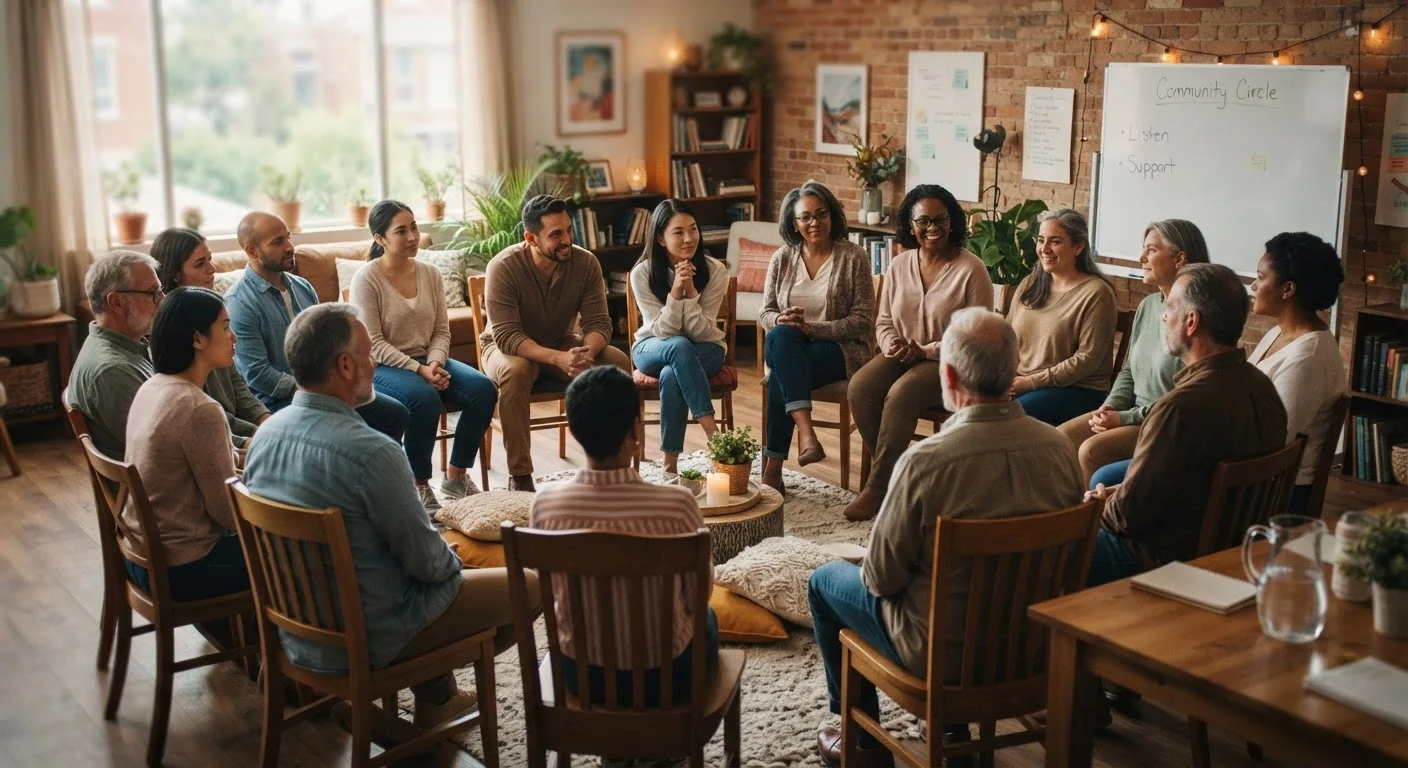
The Facilitator's Role: Holding Space, Not Leading Therapy
Stepping into a peer support facilitation role can feel both meaningful and uncertain. Understanding what the role actually involves — and what it doesn't — is the foundation everything else builds on. Before exploring specific practices, it helps to be clear on how peer support groups work. Our article explaining what peer support groups actually are covers this in detail.
A facilitator's job is to create and maintain conditions where mutual support can happen — not to counsel, diagnose, or fix. That distinction matters enormously. When facilitators drift into advice-giving or problem-solving, the dynamic shifts from peer exchange to something closer to informal therapy, which is neither appropriate nor safe in this context. Staying in a facilitative stance means asking open questions, reflecting what you hear, and gently redirecting when discussions lose their way.
Establishing Safety: Norms, Confidentiality, and Belonging
Safety in a group isn't automatic — it's built deliberately through consistent practices. Confidentiality is the cornerstone. Every group should establish a clear confidentiality agreement at the outset, and new members should hear it explained before their first session. Reminding the group of this norm periodically (not just once) reinforces that it's a living commitment, not a formality.
Beyond confidentiality, psychological safety depends on members feeling they won't be judged, corrected, or compared. Facilitators can model this by validating emotions without evaluating them. Phrases like "that sounds really difficult" or "thank you for sharing that" signal that the space is one of witness, not verdict.
Inclusion requires active attention. Research in group dynamics consistently shows that dominant voices — whether due to personality, cultural background, or familiarity — can inadvertently crowd out quieter members. Facilitators can redistribute participation by specifically inviting those who haven't spoken, without putting anyone on the spot.
Navigating Difficult Moments Without Losing the Group
Even well-run groups encounter moments of tension: a member sharing a crisis, conflict between participants, or disclosures that touch on self-harm or suicidal ideation. Having a plan before these moments arise is essential.
When a member discloses immediate risk, the facilitator's responsibility is clear: provide crisis resources, such as the 988 Suicide and Crisis Lifeline, and encourage the person to connect with professional support. Peer groups are not equipped to manage acute mental health crises — acknowledging this honestly protects everyone. It's worth revisiting the common myths about support groups that sometimes blur these boundaries.
Interpersonal tension can be redirected by naming the dynamic without assigning blame: "I notice there's some strong feeling in the room right now — let's take a breath and come back to listening." Keeping the group's shared purpose visible helps members re-anchor.
Sustaining Yourself as a Facilitator
Facilitation is emotionally demanding work. Compassion fatigue — a gradual erosion of empathy from sustained exposure to others' distress — is a real occupational risk for anyone holding space for vulnerable people. Facilitators benefit from regular supervision or peer consultation, clear limits on their facilitation hours, and deliberate self-care practices.
It also helps to remember that the group's progress is not the facilitator's personal responsibility. Members bring their own resilience and capacity for change; the facilitator's role is to support conditions, not manufacture outcomes. For broader strategies on building your own support infrastructure, the practical guide to building support networks offers useful framing.
Members, too, benefit when facilitators model healthy boundaries. When you demonstrate that it's acceptable to acknowledge limits and practice self-care, you give the group permission to do the same — a quiet but powerful act of facilitation in itself. For members exploring how to engage sustainably, our article on participating without oversharing or burning out addresses this from the member's perspective.
This article is for general informational and educational purposes only. It is not a substitute for professional mental health training, supervision, or clinical guidance. Anyone facilitating a peer support group is encouraged to seek appropriate training and consult qualified professionals when needed.