What This Reference Covers
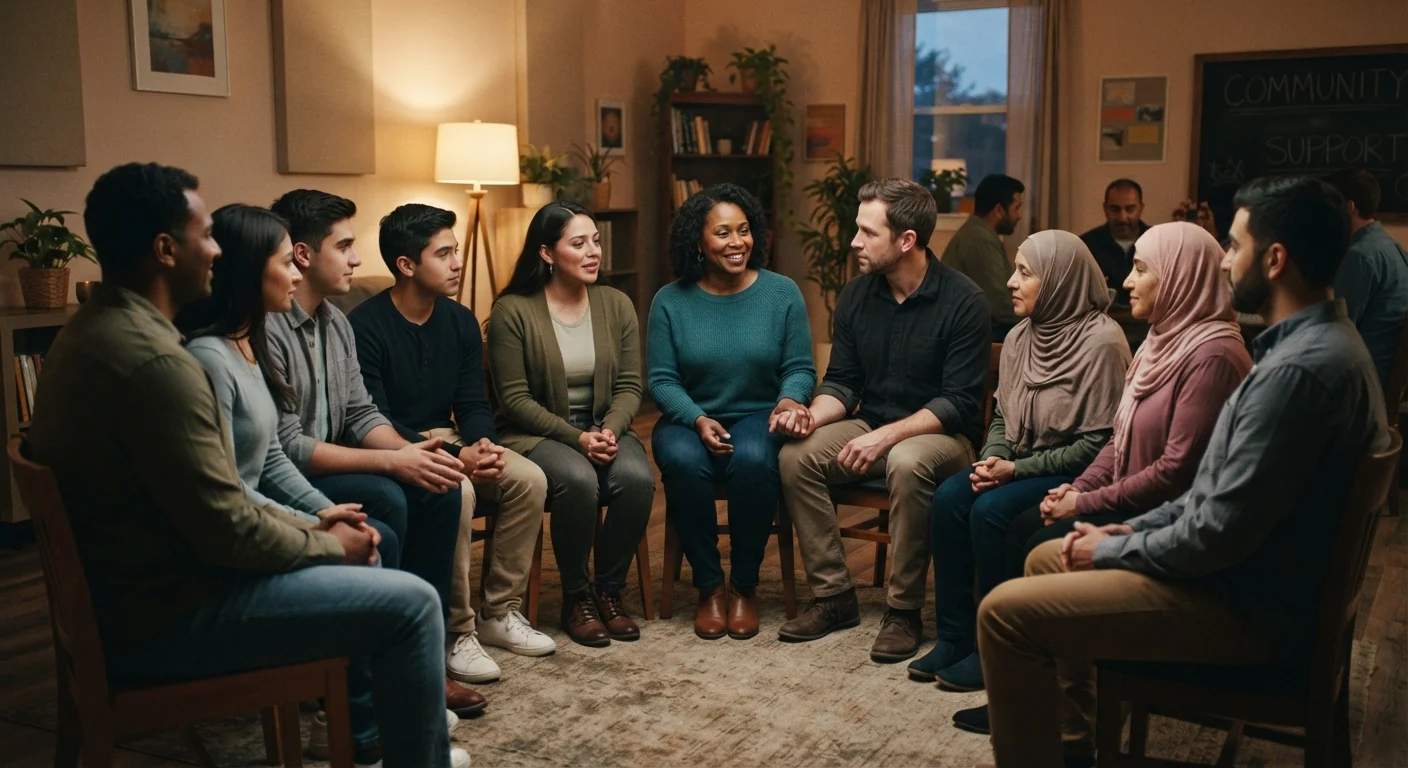
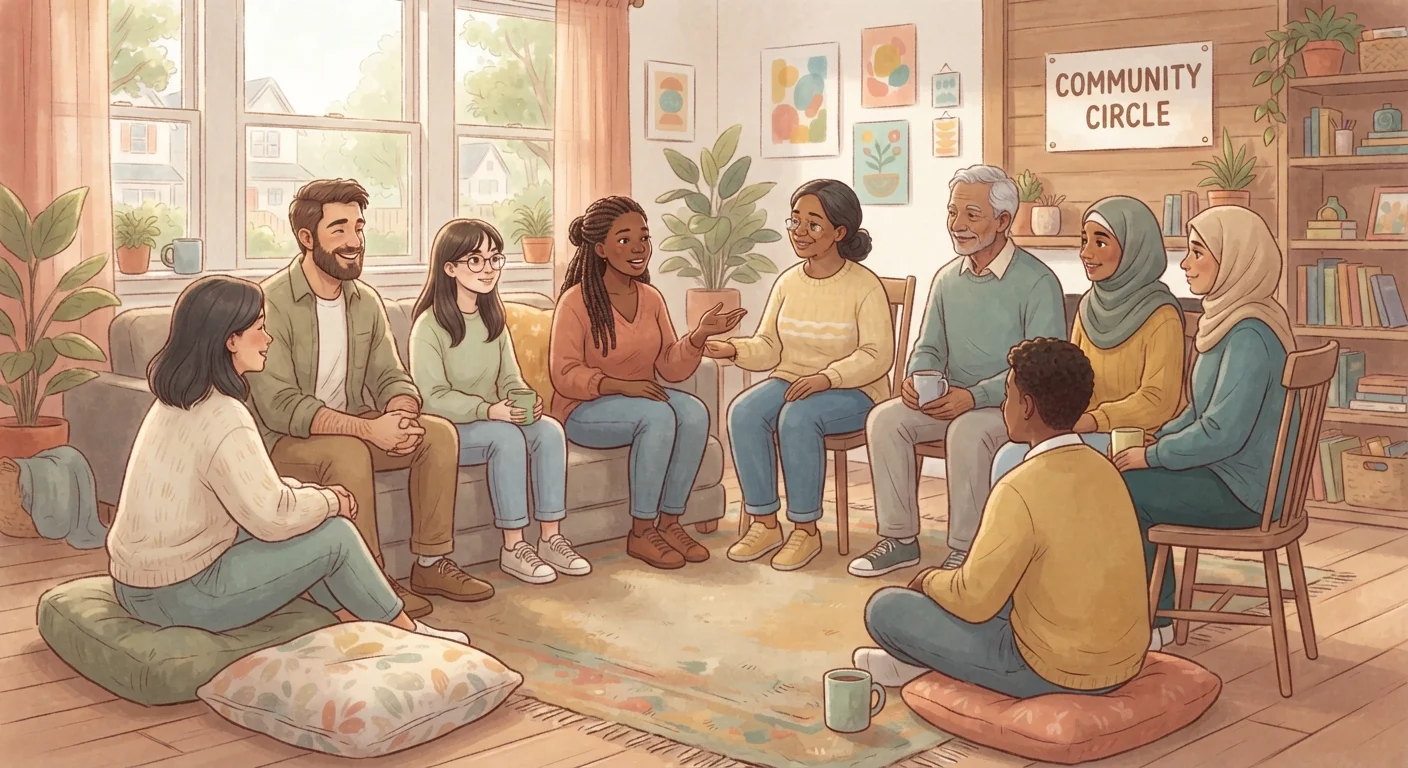
Not all peer support groups work the same way. Some are structured around a specific diagnosis; others welcome anyone navigating stress, grief, or life transitions. Before exploring which type might suit you, it helps to have a clear map of the landscape. This reference defines the main categories, describes how each is typically structured, and notes who tends to find each format most useful.
For a deeper look at what peer support groups are — and what they are not — see What Peer Support Groups Actually Are (And What They're Not).
| Primary Group Types | Condition-specific, identity-affirmative, life-event, general wellbeing |
| Facilitator Models | Peer-led, trained-facilitator-led, or rotating facilitation |
| Meeting Formats | In-person, video, or text-based online |
| Membership Structures | Open (drop-in) or closed (fixed cohort) |
| Clinical Treatment? | No — peer support complements but does not replace professional care |
The Main Categories of Peer Support Groups
Condition-Specific Groups
These groups are organized around a shared diagnosis or health condition — for example, groups for people living with depression, bipolar disorder, substance use disorders, chronic illness, or eating disorders. Members share lived experience of the same condition, which can reduce the need to explain symptoms and create an immediate sense of being understood. Many well-known mutual-aid organizations, such as Alcoholics Anonymous and the Depression and Bipolar Support Alliance (DBSA), follow this model.
Identity-Affirmative Groups
These groups center a shared aspect of identity — such as gender, sexual orientation, ethnicity, immigration status, or faith background — and address how that identity intersects with mental health and wellbeing. They often operate in culturally specific language and with norms shaped by community values, which can make them more accessible to people who feel underserved by mainstream mental health resources.
Situation or Life-Event Groups
Rather than focusing on a diagnosis, these groups gather people facing a common life experience: grief and bereavement, caregiver burnout, divorce, job loss, or parenting challenges. Membership may be time-limited, with participants moving through similar stages together. The shared context rather than a shared condition is the connective tissue.
General Wellbeing and Resilience Groups
Open to a broad audience without a specific diagnosis or life event requirement, these groups focus on emotional support, stress management, and social connection. They are often a good starting point for people unsure where to begin. Social support networks built through these groups can strengthen everyday resilience even outside a formal mental health context.
Peer Support Group
A gathering of people with shared experiences who offer mutual understanding and encouragement. It is not a clinical treatment and is not led by a licensed therapist in most cases.
Peer Specialist
A person with lived experience of a mental health or substance use condition who has received formal training to support others. Many states in the US certify peer specialists as a recognized workforce role.
Closed Group
A peer group with a fixed membership that begins and ends together, allowing relationships to deepen over a defined period rather than welcoming new members at every session.
Mutual Aid
A model of voluntary, reciprocal support in which members both give and receive help. Most peer support groups operate on mutual-aid principles rather than a helper/recipient structure.
Identity-Affirmative Group
A peer group organized around a shared cultural, social, or demographic identity, designed to address how that identity shapes mental health experiences and needs.
Format Variations Across Group Types
Facilitator-Led vs. Peer-Led
Some groups are guided by a trained peer specialist or lay facilitator — someone with lived experience who has received structured training. Others rotate facilitation among members or operate with no designated leader. Facilitator-led formats tend to provide more consistent structure; peer-led formats can feel more egalitarian. For more on how facilitation affects group safety, see core principles for facilitating a peer support group.
In-Person vs. Online
Both modalities exist across all group types. In-person meetings offer nonverbal connection and a shared physical space; online groups (video or text-based) reduce geographic and mobility barriers. Research suggests online peer support groups can be effective, particularly for people in rural areas or those with limited mobility, though the quality of moderation matters significantly in digital settings.
Open vs. Closed Membership
Open groups allow anyone to join at any meeting. Closed groups admit members at a defined start date and meet as a fixed cohort, which can deepen trust over time. Condition-specific and situation-based groups more commonly use closed formats; general wellbeing groups are often open.
Peer support groups serve a different purpose than individual therapy. If you're weighing both options, Support Groups vs. One-on-One Therapy explains the distinctions clearly.
70%+
Adults who report benefit from peer support programs
A SAMHSA review of peer support research found consistent evidence of reduced isolation, improved coping, and greater engagement with care across multiple studies.
4 in 5
Peer support participants who say feeling understood mattered most
Consumer surveys collected by the National Alliance on Mental Illness (NAMI) consistently highlight shared lived experience as the primary value of peer group participation.
Finding the Right Fit
There is no single "best" type of peer support group — the right fit depends on what you're looking for right now. If you're navigating a specific diagnosis, a condition-specific group may offer the most direct resonance. If you're feeling isolated without a clear clinical label, a general wellbeing group or an identity-affirmative group might be a gentler entry point. Persistent myths about support groups often discourage people from trying any type — understanding the reality can make it easier to take that first step.
Peer support is one strand of a broader support network. For practical ways to identify and build that wider web of connection, explore Building Support Networks.
This article is for general informational and educational purposes only. It is not a substitute for professional mental health advice, diagnosis, or treatment. If you are in crisis or need immediate support, please contact a qualified healthcare provider or a crisis helpline such as the 988 Suicide and Crisis Lifeline (call or text 988 in the US).