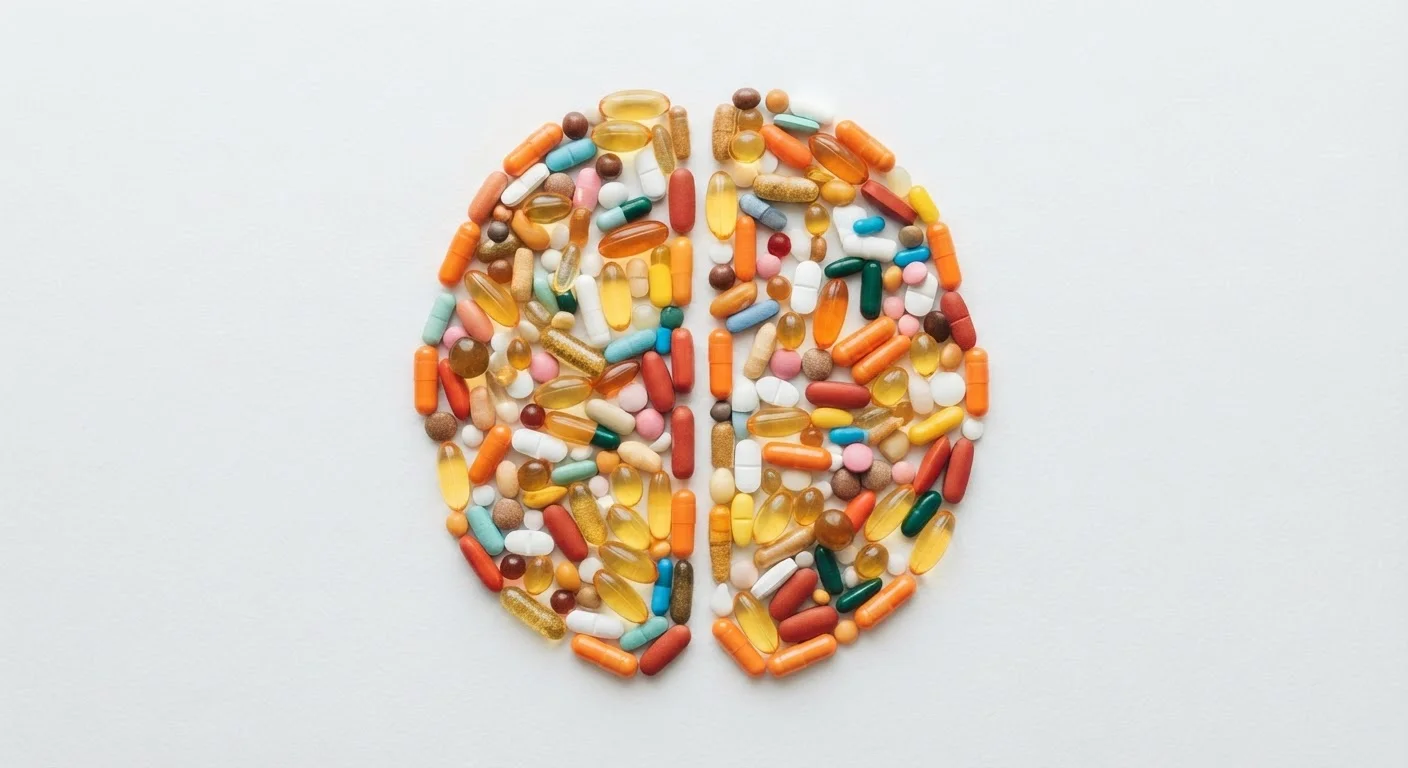

When Good Eating Isn't Enough
Most conversations about brain nutrition begin and end with food choices: eat more leafy greens, oily fish, and whole grains. That advice is sound - but incomplete. The brain's supply of critical vitamins and minerals depends not just on what you eat, but on how effectively your body extracts and delivers those nutrients.
Absorption is a complex, multi-step process influenced by gut integrity, stomach acid levels, the presence of other foods or medications, and individual physiology. When any step is compromised, even a well-planned diet can leave the brain quietly under-resourced. Subtle vitamin gaps can erode cognitive performance over months or years before symptoms become obvious.
Understanding the most common absorption errors - and how to correct them - is a meaningful step toward supporting mental clarity and long-term brain health.
Diet Alone Doesn't Tell the Full Story
Tracking food intake can give a misleading picture of nutritional status. Even people eating diverse, balanced diets can have clinically low levels of B12, folate, iron, or vitamin D - all critical for brain function. If you're experiencing persistent cognitive symptoms such as brain fog, poor memory, or low mood, speak with a healthcare provider about testing nutrient levels directly rather than assuming your diet is sufficient.
Common Absorption Mistakes That Undermine Brain Nutrition
The mistakes below represent the most clinically relevant and frequently overlooked ways that nutrient absorption fails - even in people who consider themselves health-conscious eaters. Each one has practical, evidence-informed solutions that don't require overhauling your lifestyle.
Assuming a varied diet automatically means adequate nutrient levels.
Why it happens: Most nutritional guidance focuses on food choices, which leads people to equate dietary variety with nutritional sufficiency - overlooking what happens after food is consumed.
Ignoring how medications can interfere with nutrient absorption.
Why it happens: Medication-nutrient interactions are rarely discussed at the point of prescription, so patients are often unaware that common drugs can deplete or block certain vitamins and minerals.
Overlooking poor gut health as a root cause of nutrient shortfalls.
Why it happens: Gastrointestinal symptoms and cognitive symptoms often feel unrelated, so the connection between gut integrity and brain nutrition is rarely made without professional guidance.
Consuming nutrient combinations that compete for absorption.
Why it happens: Food-nutrient interactions are not intuitive. People naturally combine foods for taste and convenience without realizing some pairings reduce bioavailability of key micronutrients.
Underestimating how aging reduces the body's ability to absorb certain vitamins.
Why it happens: Absorption decline is gradual and symptomless at first, so older adults - and those caring for them - often attribute cognitive changes to aging rather than correctable nutrient gaps.
~6%
Adults aged 18-39 with B12 deficiency
Research published in the American Journal of Clinical Nutrition found B12 deficiency affects a meaningful proportion of younger adults, not just older populations.
Up to 40%
Older adults with low vitamin D status
Studies suggest a substantial proportion of adults over 65 have insufficient vitamin D levels, a nutrient linked to mood regulation and cognitive function.
~1 in 4
Long-term PPI users with B12 insufficiency
Research indicates that prolonged proton pump inhibitor use is associated with significantly reduced B12 absorption due to suppressed gastric acid production.
If you're noticing symptoms such as persistent brain fog, difficulty concentrating, or unexplained low mood, our guide to cognitive symptoms that may indicate a nutritional gap outlines what nutritional science currently suggests - and when to involve a doctor.
Dietary patterns also matter beyond individual nutrients. Habits like skipping meals or over-restricting food groups can compound absorption issues; see how everyday nutrition habits can undermine emotional wellbeing for a broader picture.
For those looking to build sustainable nutritional habits, building a diet for long-term brain vitamin adequacy offers practical principles grounded in current dietary science.
This article is for general informational purposes only and does not constitute medical advice. If you have concerns about nutrient deficiencies or cognitive symptoms, please consult a qualified healthcare professional.