
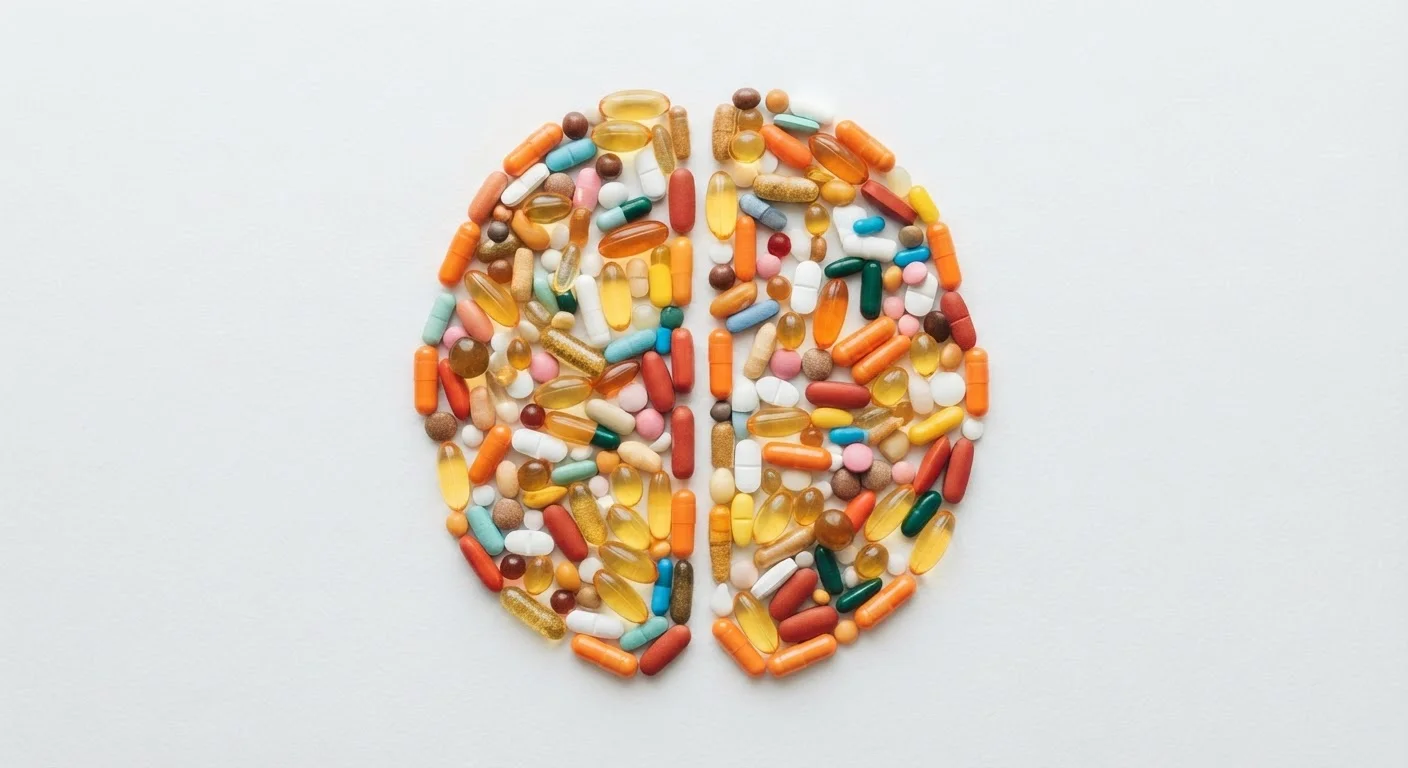
When Nutrition and Brain Function Quietly Diverge
Most people associate vitamin deficiencies with dramatic physical symptoms - bleeding gums from scurvy, bone pain from rickets. But the brain's distress signals are rarely so obvious. Instead, they tend to surface as a gradual dulling: slower recall, difficulty sustaining attention, a mood that flattens for no clear reason. Because these changes unfold incrementally, they're consistently underestimated.
This is the nature of cognitive erosion driven by nutritional shortfalls. The brain is metabolically expensive - it consumes roughly 20% of the body's energy despite accounting for only about 2% of body weight - and it depends on a steady supply of micronutrients to maintain neurotransmitter production, protect neurons, and preserve the fatty sheaths that allow nerve signals to travel efficiently.
When those micronutrients are consistently scarce, the brain adapts, but at a cost. Performance degrades in ways that feel more like personality or age than biology.
Suboptimal vs. Deficient: An Important Distinction
Clinical deficiency - as flagged on standard blood tests - represents one end of a spectrum. Research increasingly suggests that vitamin levels technically within the 'normal' range can still be suboptimal for brain function. This gray zone is harder to detect and rarely treated, yet may account for the kind of subtle cognitive symptoms many people dismiss. This is an area of active scientific investigation, and interpretations vary among clinicians.
The Key Vitamins Linked to Mental Performance
Not all vitamins influence cognition equally. Research has identified a cluster of nutrients whose absence reliably disrupts brain function:
- Vitamin B12 is essential for maintaining the myelin sheath around nerve fibers and synthesizing neurotransmitters. Even low-normal levels - technically within range but toward the bottom - have been associated with cognitive slowing in some studies. See our deep dive on B12 and the brain for a detailed look at the mechanisms involved.
- Folate (Vitamin B9) works alongside B12 in a pathway that regulates homocysteine - an amino acid that, when elevated, is associated with accelerated cognitive decline and increased dementia risk in older adults.
- Vitamin D functions more like a hormone than a classical vitamin, and its receptors are distributed throughout the brain. Low vitamin D levels have been linked in observational research to depression, impaired memory, and slower processing speed, though the causal picture is still being clarified.
- Vitamin B6 is involved in the synthesis of serotonin, dopamine, and GABA - neurotransmitters that regulate mood, motivation, and stress response.
- Vitamin E acts as a lipid-soluble antioxidant in brain tissue, helping to neutralize oxidative damage that accumulates over time and may contribute to age-related cognitive decline.
~6%
Adults under 60 with B12 deficiency
Data from large population studies suggest approximately 6% of adults under 60 are B12-deficient, rising to nearly 20% in those over 60, according to research published in nutritional epidemiology literature.
35-40%
U.S. adults with insufficient vitamin D
National Health and Nutrition Examination Survey (NHANES) data indicate that a substantial proportion of the U.S. adult population has vitamin D levels below recommended thresholds.
~20%
Brain's share of the body's energy use
Despite being roughly 2% of body weight, the human brain consumes approximately 20% of the body's total resting energy, underscoring its exceptional nutritional sensitivity.
Why These Gaps Go Unnoticed for So Long
The insidious quality of nutritional cognitive decline is that it mimics ordinary life. A 45-year-old who's slower to recall names might assume it's stress or the natural aging process. A college student experiencing persistent difficulty concentrating might attribute it to their sleep schedule. In both cases, a gradual vitamin shortfall could be contributing - yet neither person would have reason to suspect it without prompting.
Several factors make deficiencies easy to miss. Dietary insufficiency builds over months, not days. Absorption problems - common with aging, gastrointestinal conditions, or certain medications - can cause deficiency even when dietary intake looks adequate. And standard medical check-ups don't always include comprehensive micronutrient panels.
It's also worth noting that cognitive symptoms can have many overlapping causes. Recognizing which symptoms might point to a nutritional gap - and which need other explanations - requires careful evaluation, ideally with a healthcare provider.
Track Patterns, Not Just Symptoms
If you're experiencing cognitive symptoms that feel persistent and unexplained, keeping a brief daily log - noting sleep, diet, energy, and mental clarity - can help your doctor identify patterns over time. Bringing this record to an appointment gives a clinician more to work with than a single snapshot and can make nutritional investigations more targeted.
Who Is Most Vulnerable?
While anyone can develop a vitamin shortfall, certain groups face substantially higher risk. Older adults absorb B12 less efficiently as stomach acid production declines with age. People following strict vegan or vegetarian diets may under-consume B12, which is found almost exclusively in animal-derived foods. Those with conditions affecting the gut - including celiac disease, Crohn's disease, or a history of gastrointestinal surgery - may struggle to absorb vitamins regardless of what they eat.
Individuals with limited sun exposure are at heightened risk of vitamin D insufficiency, particularly in higher latitudes or among those who spend most of the day indoors. Alcohol use disorder significantly disrupts absorption and utilization of B vitamins. Certain medications, including long-term proton pump inhibitors and metformin, are also known to affect micronutrient status.
Nutrition is only one piece of the cognitive puzzle, of course. Hydration also plays a meaningful and often underestimated role - the relationship between hydration and mental focus is a separate but complementary dimension of daily cognitive maintenance worth understanding alongside vitamins.
Taking Stock: What to Do With This Information
This article is general health information - it is not a substitute for personalized medical advice. If you recognize the pattern described here - cognitive symptoms that feel vague, persistent, and difficult to explain - the appropriate first step is a conversation with a qualified healthcare provider. They can assess your history, evaluate risk factors, and determine whether targeted testing is warranted.
Self-diagnosing a deficiency and supplementing without guidance can, in some cases, cause harm - either by masking a more serious diagnosis or, with fat-soluble vitamins like D and E, by accumulating to toxic levels. The goal of understanding how vitamin gaps affect cognition is to become a more informed patient, not to replace clinical judgment.
What the science does clearly support is this: the brain is a biological organ with specific nutritional dependencies, and those dependencies deserve the same attention we give to other pillars of health - sleep, movement, and stress management. When any pillar quietly degrades, the mind tends to be the first place we feel it.
This article is for informational and educational purposes only. It does not constitute medical advice and is not a substitute for consultation with a qualified healthcare professional. If you have concerns about your cognitive health or nutritional status, please speak with your doctor.