Why Vitamin E Keeps Coming Up in Brain Health Conversations
Vitamin E is a fat-soluble antioxidant that protects cell membranes - including those in the brain - from oxidative damage. Because oxidative stress is implicated in neurodegenerative processes, researchers have long investigated whether vitamin E might slow cognitive ageing. The concept is scientifically coherent, which is partly why popular health media amplifies it. But plausible mechanisms don't automatically translate into proven benefits, and the vitamin E story is a clear illustration of why that gap matters.
This article is part of a broader series examining how nutritional science intersects with mental performance. For a wider look at how common vitamin shortfalls erode cognition over time, see how vitamin deficiencies quietly erode cognitive performance. For context on how to evaluate nutrition and mental health claims critically, see separating established nutrition science from overstated claims.
Myth
Taking vitamin E supplements will protect your brain from age-related cognitive decline.
Fact
Clinical trial evidence does not consistently support supplementation as a preventive strategy for cognitive decline in healthy adults.
The antioxidant rationale for vitamin E in brain health is scientifically coherent, but randomised controlled trials - the highest standard of evidence - have not reliably shown that supplementing with vitamin E prevents cognitive decline or dementia in cognitively healthy older populations. Large-scale trials, including components of the Women's Health Study and AREDS2, have not demonstrated clear cognitive protection from supplemental alpha-tocopherol alone. Observational associations between dietary vitamin E and better cognition exist, but these cannot be straightforwardly attributed to vitamin E in isolation.
Myth
Most people are deficient in vitamin E, which explains widespread cognitive problems.
Fact
True vitamin E deficiency is uncommon in adults with adequate dietary fat intake and no malabsorption conditions.
Vitamin E requires dietary fat for absorption, and deficiency is primarily seen in people with fat-malabsorption syndromes (such as Crohn's disease or cystic fibrosis) or rare genetic disorders affecting vitamin E transport. In the general population consuming a varied diet, outright deficiency is not common. Subclinical insufficiency may be more prevalent, particularly among older adults with restricted diets, but routine deficiency is not an established driver of widespread cognitive difficulties. Attributing general cognitive complaints to vitamin E deficiency without clinical assessment oversimplifies a complex picture.
Myth
More vitamin E is always better - higher doses mean stronger brain protection.
Fact
High-dose vitamin E supplementation carries documented health risks and does not confer proportionally greater cognitive benefit.
Unlike water-soluble vitamins, excess fat-soluble vitamins accumulate in tissue. High-dose vitamin E supplementation (above 400 IU daily) has been associated with an increased risk of haemorrhagic stroke and may interfere with blood-thinning medications such as warfarin. A meta-analysis published in the Annals of Internal Medicine raised concerns about all-cause mortality at doses of 400 IU or more per day, though interpretation remains debated. The principle that more is better does not apply here, and doses well above dietary reference values should only be used under medical supervision.
Myth
Vitamin E in supplements works the same as vitamin E from food.
Fact
Food sources provide a full spectrum of tocopherol and tocotrienol forms, whereas most supplements contain only alpha-tocopherol.
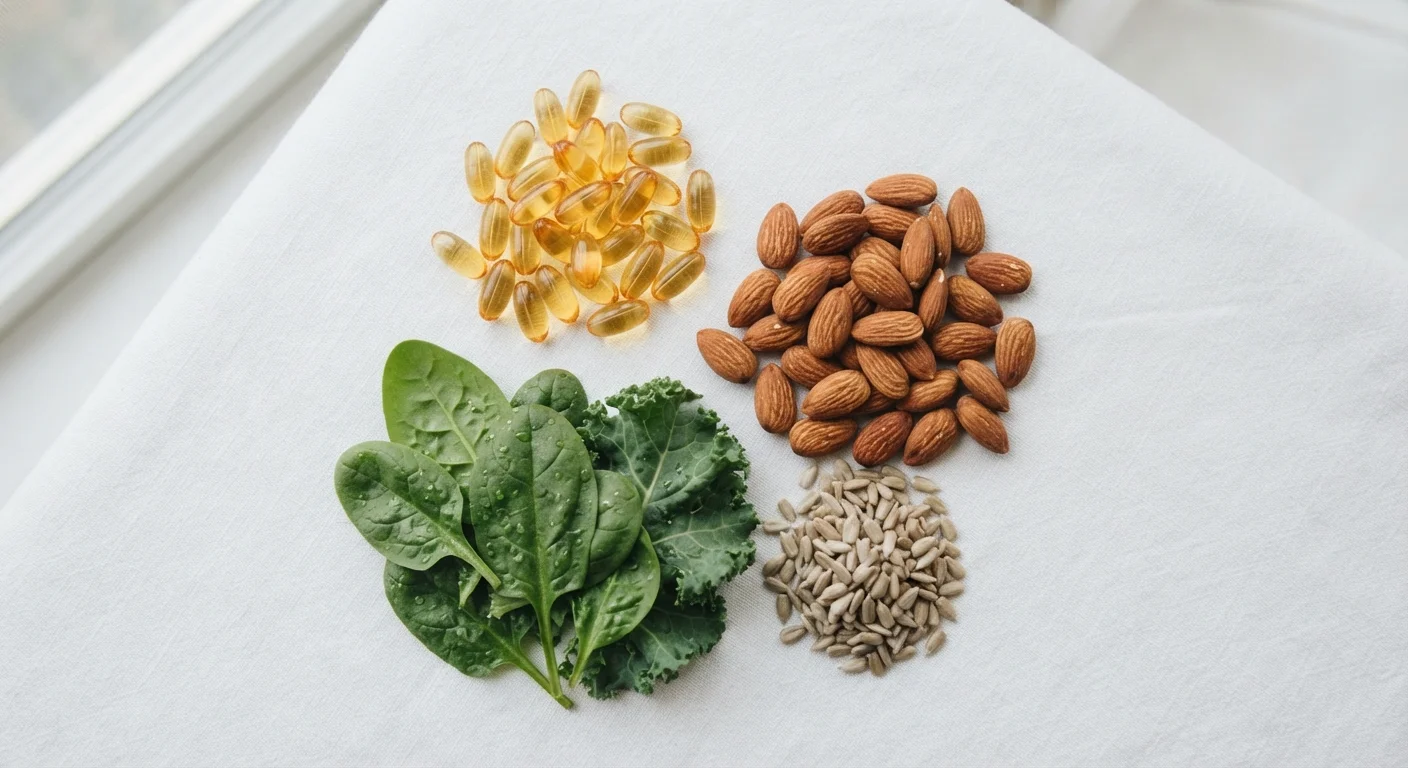
The term "vitamin E" covers eight related compounds: four tocopherols and four tocotrienols. Whole foods - almonds, sunflower seeds, wheat germ oil, spinach - deliver this broader mix, while the majority of supplements deliver only synthetic or isolated alpha-tocopherol. Emerging research suggests other forms, particularly gamma-tocopherol and tocotrienols, may have distinct biological roles. High alpha-tocopherol supplementation can actually displace gamma-tocopherol in the body. This is one reason why building dietary vitamin adequacy through food is generally preferred over isolated supplementation.
What Responsible Evidence Review Actually Shows
The collective picture from systematic reviews and large randomised controlled trials is more cautious than popular coverage suggests. Observational studies - where researchers track dietary patterns across populations - have repeatedly found associations between higher dietary vitamin E intake and slower cognitive decline. However, associations cannot establish causation; people who eat more vitamin E-rich foods may have healthier diets overall.
~35-40%
US adults with vitamin E intakes below EAR
National Health and Nutrition Examination Survey (NHANES) data has consistently found that a substantial proportion of US adults consume less than the Estimated Average Requirement for vitamin E from food alone.
No significant effect
Supplemental vitamin E on dementia risk (large RCTs)
Multiple large randomised controlled trials, including components of the AREDS2 trial, did not find that vitamin E supplementation significantly reduced dementia incidence in cognitively healthy older adults.
8 forms
Distinct compounds in the vitamin E family
Vitamin E encompasses four tocopherols and four tocotrienols; most research and supplementation focuses narrowly on alpha-tocopherol, potentially overlooking the broader activity of the full family.
Supplementation trials have generally not replicated the promise of observational findings. Notably, major trials investigating high-dose alpha-tocopherol (the most common supplemental form) for Alzheimer's prevention did not find clear preventive benefit in cognitively healthy older adults. Some evidence suggests vitamin E supplementation may slow functional decline in people already diagnosed with mild-to-moderate Alzheimer's disease, but this is a distinct question from prevention, and clinical management should always be directed by a qualified physician.
Vitamin E is not the only nutrient where this pattern emerges. omega-3 fatty acids and brain health presents a similarly nuanced picture of promising mechanisms and mixed trial outcomes. Understanding that complexity across nutrients is essential for anyone building a genuinely brain-supportive diet.
High-Dose Vitamin E and Medication Interactions
Vitamin E supplements at doses above dietary reference values can enhance the effects of anticoagulant and antiplatelet medications, including warfarin and aspirin, increasing bleeding risk. If you take any blood-thinning medication or have a bleeding disorder, speak with your prescriber before considering any vitamin E supplement. Do not adjust medications or supplement doses without medical guidance.
The most defensible approach remains dietary adequacy - obtaining vitamin E from nuts, seeds, vegetable oils, and leafy greens as part of a balanced eating pattern. If you are considering supplementation for any health reason, including cognitive support, consult a qualified healthcare professional first.
This article provides general health information for educational purposes only and is not a substitute for personalised medical advice, diagnosis, or treatment. Always consult a qualified healthcare professional before making changes to your diet or supplement regimen.