
Why the Nutrition-Mental Health Link Is Real - and Complicated
Interest in how diet shapes mood and mental wellbeing has grown substantially in recent decades, and for good reason. Large cohort studies, including the SMILES trial and research published in journals such as The Lancet Psychiatry, suggest that dietary quality is meaningfully associated with depression and anxiety outcomes. Yet popular media often amplifies early findings into definitive prescriptions before the evidence supports them.
The biology is genuinely complex. Food affects mental health through several intersecting routes: inflammatory pathways, neurotransmitter precursor availability, the gut microbiome, blood glucose regulation, and micronutrient status. No single mechanism dominates, which is one reason reductive claims - eat this one food to fix your mood - rarely hold up to scrutiny. Understanding how nutrition intersects with emotional health across multiple systems is more useful than chasing any individual ingredient.
This article examines the most common claims circulating online, identifies which have solid scientific grounding, and flags where caution - and more research - is needed. This content is general health information and is not a substitute for personalised medical advice.
Common Myths and the Evidence Behind Them
The following myth-and-fact pairs address misconceptions that appear frequently in wellness content. Each reflects the current state of peer-reviewed evidence rather than emerging trends or single-study findings.
Myth
Eating certain 'superfoods' can directly treat or cure depression and anxiety.
Fact
No single food has been shown in clinical evidence to treat depression or anxiety. Dietary patterns - not individual ingredients - are where consistent associations exist.
The term 'superfood' has no regulated scientific definition. While some foods - blueberries, dark leafy greens, fermented foods - contain compounds with biological relevance to brain health, the leap from 'contains beneficial compounds' to 'treats mental illness' is not supported. Research consistently shows that overall dietary quality, rather than any standout ingredient, correlates with mental health outcomes. Focusing on a varied, whole-food diet is more evidence-grounded than seeking a single fix.
Myth
Sugar causes depression - cutting it out will lift your mood.
Fact
High sugar intake is associated with poorer mental health outcomes in observational research, but the relationship is bidirectional and does not establish direct causation.
Several large cohort studies have found associations between high free-sugar consumption and elevated depression risk. However, mood disorders can also drive increased sugar consumption, making causation difficult to establish. Blood glucose dysregulation and neuroinflammatory mechanisms are plausible links under investigation. Reducing added sugar aligns with general dietary guidelines and may support steadier energy levels, but it should not be presented as a treatment. People experiencing depression should seek professional support rather than relying on dietary changes alone.
Myth
The gut microbiome is the primary driver of mental health, and probiotics will fix it.
Fact
The gut-brain axis is a legitimate and active area of research, but current evidence does not support probiotics as a primary or reliable mental health intervention.
Bidirectional communication between the gut and brain via the vagus nerve, immune signalling, and microbial metabolites is well-documented. Emerging research suggests that microbiome diversity may correlate with mood and stress resilience. However, most human probiotic studies in mental health are small, short-term, and heterogeneous in strain selection. A 2019 systematic review in General Psychiatry found some positive signals but called for larger, more rigorous trials before clinical recommendations could be made. Supporting microbiome diversity through fibre-rich, varied plant foods remains a sensible, evidence-consistent strategy - but it is not equivalent to treating a psychiatric disorder.
Myth
If you eat well, you won't need medication or therapy for mental health conditions.
Fact
Diet can be a meaningful complementary factor in mental wellbeing, but it does not replace evidence-based treatments for clinical mental health conditions.
Nutritional psychiatry researchers are explicit that dietary improvement should be considered an adjunct - not an alternative - to established treatments such as psychotherapy and pharmacotherapy. Moderate-to-severe depression, anxiety disorders, and other clinical conditions have well-studied, effective treatment pathways. Suggesting that diet alone is sufficient risks deterring people from care they may urgently need. If you or someone you know is experiencing significant mental health symptoms, please consult a qualified healthcare professional.
Myth
Gluten causes mental health problems in everyone, not just those with celiac disease.
Fact
There is currently no reliable evidence that gluten negatively affects mental health in people without celiac disease or confirmed non-celiac gluten sensitivity.
For the approximately 1% of the population with celiac disease, untreated gluten exposure is associated with a range of neurological and psychological symptoms, and a gluten-free diet is medically necessary. Some individuals without celiac disease report feeling better on a gluten-free diet, though controlled studies have struggled to replicate this under blinded conditions, suggesting nocebo or expectation effects may play a role. Broad adoption of gluten elimination without medical indication can reduce dietary variety and whole-grain fibre intake - both of which have relevance to gut and mental health. Anyone suspecting celiac disease should seek proper medical testing.
~33%
Reduced depression odds with healthy diet adherence
A meta-analysis in Molecular Psychiatry (2019) found approximately one-third lower odds of depression in those with the highest adherence to a healthy dietary pattern.
1 in 5
U.S. adults affected by a mental illness annually
According to the National Institute of Mental Health, approximately 1 in 5 U.S. adults experiences a mental illness in any given year, underscoring the need for evidence-based support strategies.
~12 weeks
Duration of the landmark SMILES dietary intervention trial
The 2017 SMILES trial demonstrated significant improvements in depression scores over 12 weeks in participants who received dietary support alongside standard care.
Anti-Inflammatory Eating Patterns: What the Evidence Actually Supports
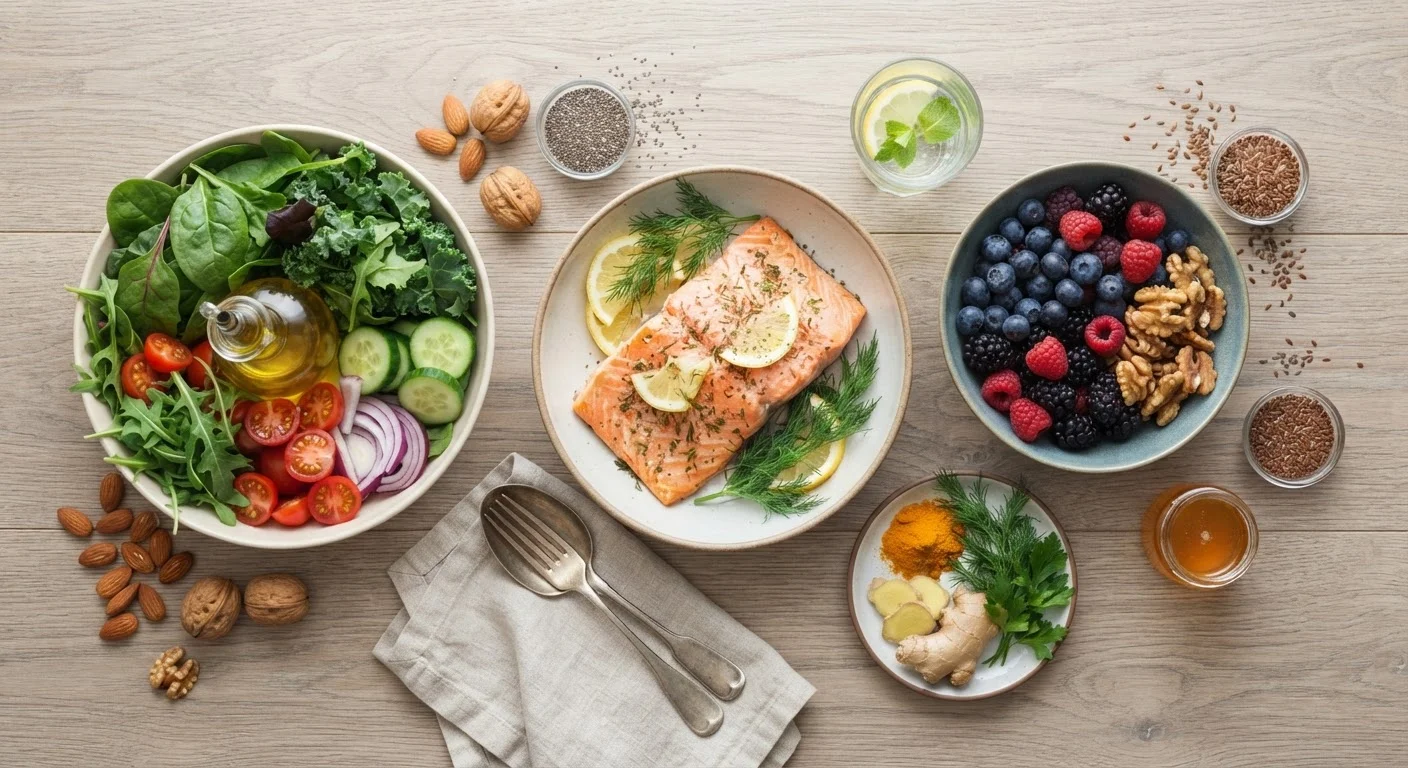
Among the most evidence-consistent findings in nutritional psychiatry is the association between anti-inflammatory dietary patterns - broadly defined as diets high in vegetables, legumes, whole grains, oily fish, nuts, and olive oil - and lower rates of depression. A 2019 meta-analysis in Molecular Psychiatry synthesised data from over 45,000 participants and found that greater adherence to a healthy dietary pattern was associated with a significantly reduced odds of depression.
Chronic low-grade inflammation is now considered a plausible biological pathway. Elevated markers such as C-reactive protein and interleukin-6 have been found at higher levels in some people with depression, and dietary components like omega-3 fatty acids and polyphenols can modulate inflammatory signalling. For a closer look at one specific nutrient, see our article on omega-3s and depression research.
It is equally important to consider what undermines mood stability. Common dietary patterns such as meal skipping and over-reliance on caffeine may work against the very stability that an anti-inflammatory diet aims to support. Dietary change is best understood as one component of a broader approach to mental wellbeing - not a replacement for professional care, therapy, or medication where those are indicated.
This article is for informational purposes only and does not constitute medical or dietary advice. Consult a qualified healthcare professional before making changes to your diet, especially if you are managing a mental health condition.