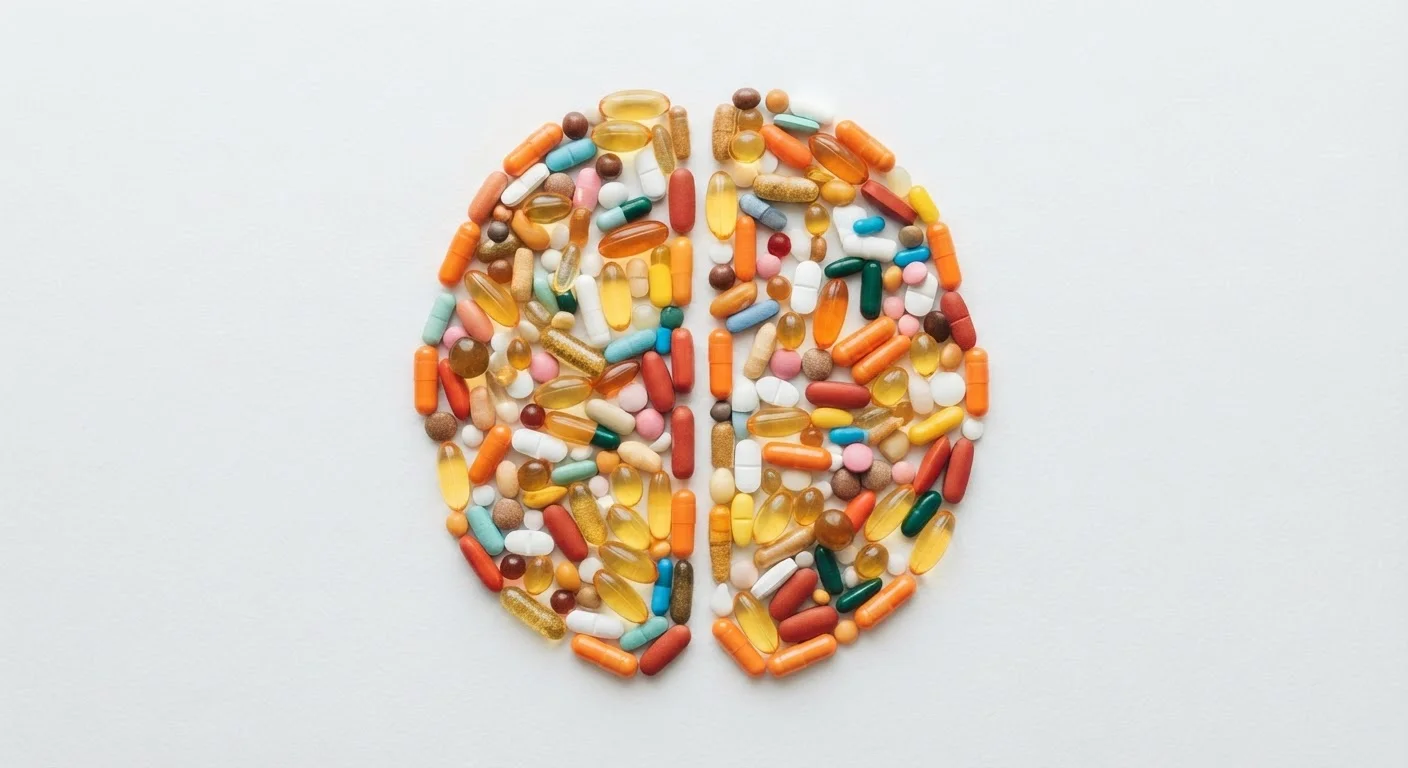

Why B Vitamins Matter to the Brain
The B vitamins are a family of eight water-soluble nutrients that serve as essential cofactors in nearly every aspect of cellular metabolism. In the brain specifically, they support neurotransmitter synthesis, myelin maintenance, and the regulation of homocysteine - an amino acid that, at elevated levels, is associated with neurological stress. Because B vitamins are water-soluble, the body does not store them the way it stores fat-soluble vitamins. This makes consistent dietary intake genuinely important. For a broader explanation of how solubility shapes nutritional brain health, see how vitamin solubility affects the brain.
Deficiencies rarely cause dramatic, sudden symptoms. More often, shortfalls quietly erode mental performance over weeks or months - a pattern explored in depth in how vitamin deficiencies erode cognitive performance.
| Vitamin family type | Water-soluble (not stored long-term in the body) |
| B vitamins with strongest brain-cognitive links | B1 (thiamine), B6 (pyridoxine), B9 (folate), B12 (cobalamin) |
| Primary risk groups for B12 deficiency | Older adults, vegans/vegetarians, long-term PPI users |
| Key role of folate in the brain | Supports methylation and neurotransmitter regulation |
| Homocysteine connection | Elevated levels linked to B6, B9, and B12 insufficiency (General clinical literature) |
| Diagnosis approach | Blood tests ordered by a healthcare provider; not self-diagnosed |
The Key Players: B1, B6, B9, and B12
While all eight B vitamins contribute to metabolic health, four have especially well-documented roles in cognitive function.
Thiamine (B1)
Thiamine is essential for glucose metabolism in the brain. Because neurons are almost entirely dependent on glucose for energy, B1 deficiency can impair this process rapidly. Severe deficiency is associated with Wernicke's encephalopathy, a neurological emergency marked by confusion and coordination loss. More moderate shortfalls may present as fatigue, irritability, and difficulty concentrating. People with alcohol use disorder and those with malabsorption conditions are at elevated risk.
Pyridoxine (B6)
B6 acts as a cofactor in the biosynthesis of several key neurotransmitters, including serotonin, dopamine, and gamma-aminobutyric acid (GABA). It also plays a role in homocysteine metabolism. Low B6 levels have been linked in observational research to depressive symptoms and increased anxiety, though causality is difficult to establish from population studies alone. Rich dietary sources include poultry, fish, potatoes, and non-citrus fruits.
Folate (B9)
Folate supports DNA synthesis and methylation reactions critical to neurotransmitter regulation. In the brain, adequate folate is required for the production of S-adenosylmethionine (SAMe), a methyl donor involved in mood regulation. Research suggests that low folate concentrations are associated with depressive symptoms and may reduce the effectiveness of certain antidepressant treatments - though these associations require careful interpretation. Folate's role extends well beyond pregnancy. For a detailed look at its impact on adult cognition, see why folate matters for adult brain health.
Cobalamin (B12)
B12 is required for myelin sheath synthesis - the protective covering around nerve fibers that enables fast, efficient signal transmission. Deficiency, which can develop slowly over years, is linked to memory difficulties, mood changes, and in advanced cases, irreversible neurological damage. Absorption depends on a stomach protein called intrinsic factor, making older adults, people on long-term proton pump inhibitors, and those following entirely plant-based diets particularly vulnerable. For a comprehensive look at how low B12 affects the brain, see what happens when B12 levels fall too low.
Homocysteine
An amino acid produced during protein metabolism. Elevated homocysteine in the blood is associated with increased cardiovascular and neurological risk; B6, B9, and B12 all play roles in converting it to safer metabolites.
Myelin Sheath
A fatty protective layer that surrounds nerve fibers and enables rapid electrical signal transmission. B12 is required for its synthesis and maintenance; damage can cause lasting neurological symptoms.
Methylation
A biochemical process in which a methyl group is added to DNA, proteins, or other molecules. Adequate folate and B12 are necessary for healthy methylation, which influences gene expression and neurotransmitter production.
Intrinsic Factor
A glycoprotein produced by the stomach lining that binds to dietary B12 and enables its absorption in the small intestine. Reduced intrinsic factor production - common with aging or certain conditions - limits B12 uptake.
MTHFR Polymorphism
A genetic variant in the MTHFR gene that reduces the body's ability to convert folate into its active form. People with this variant may have higher requirements for folate and are more susceptible to deficiency effects.
Identifying Risk and Getting Checked
Dietary insufficiency is only one pathway to low B vitamin status. Absorption issues, certain medications, genetic variants in folate metabolism (such as MTHFR polymorphisms), and increased physiological demand during pregnancy or illness can all compromise levels even when intake appears adequate.
Blood tests for B12 and folate are routine and widely available; B6 and B1 testing is less common but clinically available when indicated. Symptoms like persistent brain fog, unexplained mood changes, or sensory disturbances in the hands and feet warrant a conversation with a qualified healthcare provider - not self-supplementation.
This article is for general informational and educational purposes only. It does not constitute medical advice. Always consult a qualified healthcare professional before making changes to your diet, supplementation, or medical care.