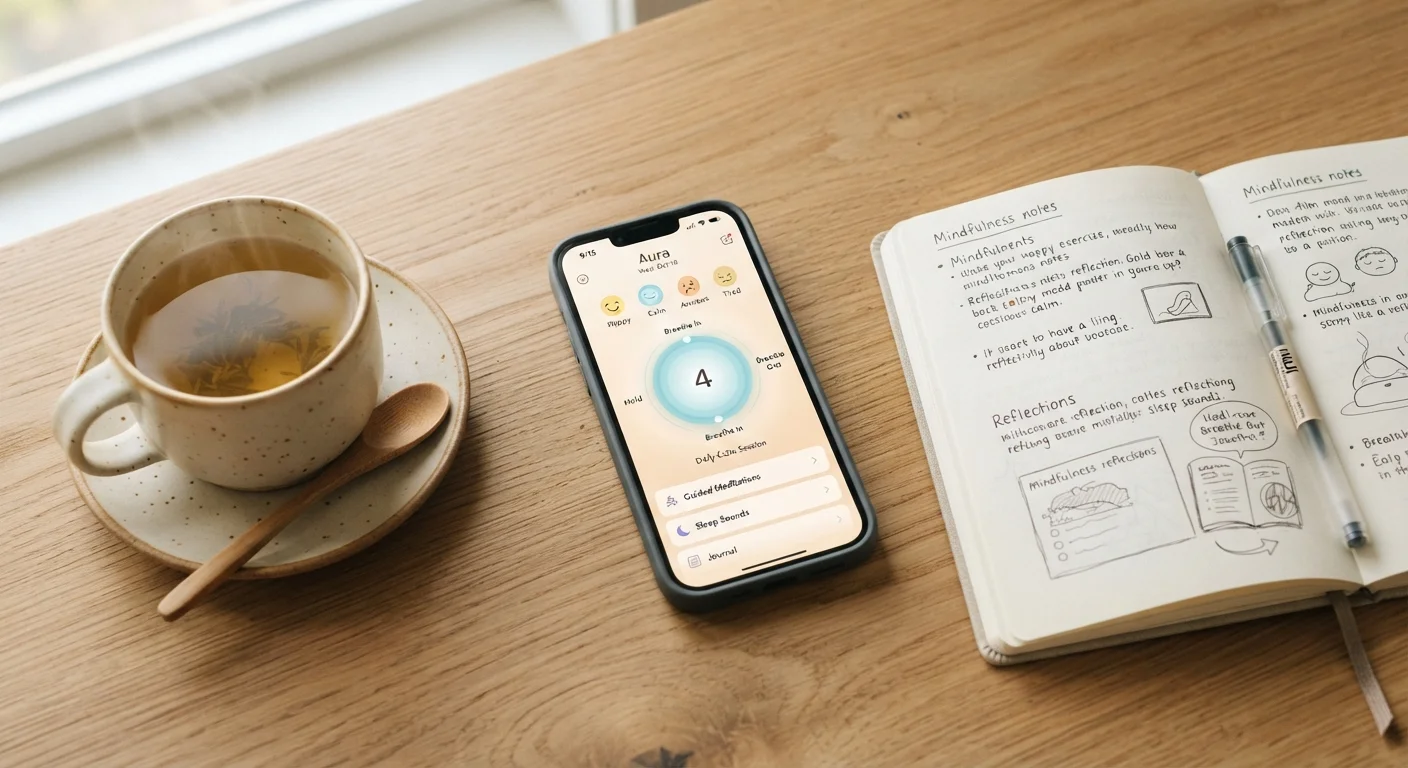

What App-Based Mental Health Tools Actually Are
Mental health apps are software programs — typically downloaded to a smartphone or tablet — designed to support psychological wellbeing outside of a clinical setting. They are sometimes called self-guided or digital wellness tools because the user works through content independently, at their own pace.
Most are built around established psychological frameworks. Cognitive behavioral therapy (CBT) — a structured approach that links thoughts, feelings, and behaviors — is one of the most commonly referenced. Mindfulness-based techniques, mood tracking, and guided journaling also appear frequently. For a fuller picture of how these categories differ from one another, see what self-guided mental health apps actually are.
Cognitive Behavioral Therapy (CBT)
A structured, evidence-based psychological approach that explores the connections between thoughts, feelings, and behaviors. Many mental health apps draw on CBT techniques to help users identify and shift unhelpful patterns.
Self-guided app
A digital tool the user works through independently, without real-time guidance from a clinician. Content is pre-built; the user progresses at their own pace.
Psychoeducation
Learning about how mental health conditions or psychological processes work. In apps, this often takes the form of short articles or lessons explaining concepts in plain language.
Mindfulness
A practice of bringing deliberate, non-judgmental attention to the present moment. It is commonly taught through breathing exercises, body scans, or guided meditation, and appears in many mental health apps.
Mood tracking
A feature that invites users to log their emotional state at regular intervals. The goal is to build awareness of patterns over time, not to diagnose anything.
What These Apps Can — and Cannot — Do
Understanding the boundaries of these tools is genuinely important before you invest time in one. App-based tools can help you build awareness of your emotional patterns, practice specific coping skills, and establish low-effort daily habits — such as a brief breathing exercise or a short mood check-in.
What they cannot do is provide a clinical diagnosis, prescribe or recommend medication, or deliver the personalized, relationship-based care that a licensed therapist offers. If you are navigating significant distress, a formal mental health condition, or a crisis, professional support should be the priority. You can find guidance on finding mental health support when you don't know where to begin.
Apps Are Not a Crisis Resource
If you are experiencing thoughts of suicide or self-harm, or are in immediate distress, please contact a crisis line or emergency service rather than relying on an app. In the US, you can call or text 988 to reach the Suicide and Crisis Lifeline, available around the clock.
Common Features You'll Encounter
Mental health apps vary considerably in design, but several features appear across many of them:
- Mood tracking: Daily or weekly check-ins that prompt you to log how you are feeling, often with optional notes. Over time this can reveal patterns you might not otherwise notice.
- Guided exercises: Short, structured activities drawn from CBT, mindfulness, or behavioral activation. Types of exercises found in mental health apps offers a plain-language breakdown of what these target.
- Psychoeducation: Articles or short lessons explaining concepts like anxiety, stress responses, or sleep hygiene in accessible language.
- Reminders and streaks: Nudges to encourage consistency — useful for habit formation, though worth monitoring if they become a source of pressure.
If you are drawn to meditation as a starting point, meditation starters provides entry-level methods with no prior experience required.
Start With One Feature, Not the Whole App
It is easy to feel overwhelmed when an app offers mood tracking, journaling, lessons, and meditation all at once. Picking a single feature — such as a daily two-minute breathing exercise — and using it consistently for two weeks gives you a fair chance to assess whether it is genuinely helpful before adding more.
How to Choose an App That Fits Your Situation
With hundreds of apps available, a simple framework helps narrow the field. Begin by identifying one specific goal — managing everyday stress, improving sleep, or building a mood-awareness habit, for example. A focused intention makes it easier to evaluate whether any given app addresses your actual need.
Next, look at the evidence base the app describes. Reputable apps reference the therapeutic approach they use and ideally cite published research. Vague language like "scientifically designed" without supporting detail is worth treating with caution.
Privacy is another practical consideration. Mental health data is sensitive, and data practices vary widely across apps. Reading the privacy policy — particularly whether data is shared with advertisers — is a reasonable step before signing up. For a structured way to work through these questions, see questions to ask before committing to a self-guided mental health app.
If your app use involves significant daily screen time, it may also be worth reviewing building your first digital boundaries to ensure that a helpful tool doesn't inadvertently add to digital overload.
No Single App Works for Everyone
Research on digital mental health tools consistently shows wide variation in how individuals respond. An app that a colleague finds transformative may feel unhelpful to you, and that is not a reflection of effort or willingness. It is reasonable to try more than one approach before concluding whether app-based tools fit your needs.
Using Apps Alongside Other Support
The most useful framing for mental health apps is as one layer within a broader approach to wellbeing — not as a standalone solution. Many people find them most helpful when used consistently alongside other strategies: regular movement, social connection, adequate sleep, and, where needed, formal professional care. See therapy basics if you are curious about how structured professional support works and what to expect.
If you are already working with a therapist or counselor, an app can serve as a between-session tool for practicing skills introduced in therapy. It is worth mentioning any app you are using to your clinician, who can help you assess whether it fits your treatment approach.
This article is intended for general informational purposes only and does not constitute medical or clinical advice. If you have concerns about your mental health, please consult a qualified healthcare professional.