
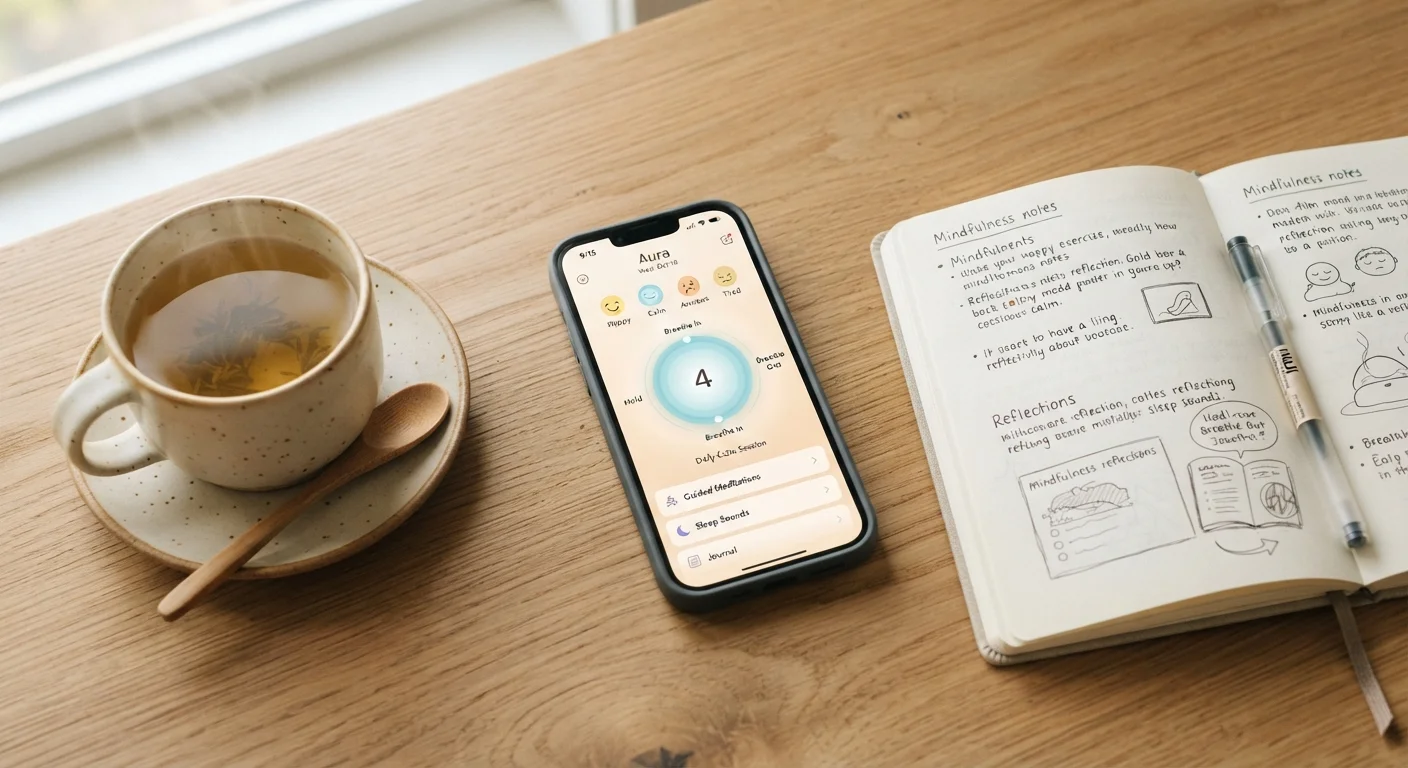
What App-Based Exercises Are — and Aren't
Mental health apps have expanded considerably in recent years, offering users structured exercises drawn from established psychological frameworks. These tools are designed as self-guided supplements — not replacements for professional care. Before exploring specific exercise types, it's worth grounding that distinction clearly. For a fuller picture of what these apps offer and where their limits lie, see what self-guided mental health apps actually are.
The exercises described below target specific psychological mechanisms — attention regulation, cognitive restructuring, emotional awareness, and physiological calming. Understanding what each type targets helps you make more informed choices about which tools might fit your situation.
| Primary frameworks used | CBT, mindfulness-based approaches, positive psychology |
| Most common app exercise type | Guided breathing and relaxation |
| Typical session length | 5–15 minutes per exercise |
| Intended role in care | Supplement, not replacement, for professional treatment |
| Evidence strength | Varies by exercise type; breathing and CBT tools have strongest research base |
Breathing and Relaxation Exercises
What they target: Acute stress response, physiological arousal, and the transition from anxious to calmer states.
Breathing exercises — including diaphragmatic breathing, box breathing (inhale-hold-exhale-hold in equal counts), and paced respiration — are among the most common features in mental health apps. They work by engaging the parasympathetic nervous system, which counteracts the fight-or-flight response. Research consistently supports controlled breathing as an accessible tool for short-term anxiety reduction.
Progressive muscle relaxation (PMR), another common app feature, guides users through tensing and releasing muscle groups sequentially. Like breathing exercises, PMR targets physical tension that often accompanies anxiety or stress. Both approaches are covered in broader context at relaxation techniques.
Cognitive restructuring
A core CBT technique that involves identifying distorted or unhelpful thoughts and actively replacing them with more accurate, balanced alternatives. It requires practice and is typically most effective with professional guidance.
Parasympathetic nervous system
The branch of the autonomic nervous system responsible for the body's rest-and-digest state. Breathing exercises are thought to activate this system, reducing physiological arousal associated with anxiety.
Behavioral activation
A CBT-derived technique that involves scheduling or engaging in activities to counteract withdrawal and low mood, particularly in the context of depression. It is based on the link between behavior, mood, and motivation.
Rumination
A pattern of repetitive, often passive focus on distressing thoughts or feelings. It is associated with both depression and anxiety, and is a common target of mindfulness-based interventions.
Progressive muscle relaxation (PMR)
A relaxation technique involving the sequential tensing and releasing of muscle groups throughout the body. It is designed to reduce physical tension and promote a calmer physiological state.
Guided journaling
A structured form of reflective writing in which specific prompts direct the user's attention rather than allowing open-ended free writing. It aims to support emotional processing and self-awareness.
Mindfulness and Meditation Exercises
What they target: Rumination, attention dysregulation, and present-moment awareness.
Mindfulness exercises ask users to observe thoughts, sensations, or emotions without immediately reacting to them. Apps typically offer guided audio meditations, body scan practices, and brief mindful check-ins. The underlying mechanism — training attention to return to the present when it wanders — draws from Mindfulness-Based Stress Reduction (MBSR) and related protocols developed in clinical settings.
These exercises are particularly associated with reductions in rumination (repetitive, looping thought patterns). For stress-specific applications, mindfulness for stress provides additional context on how these practices apply.
CBT-Based and Cognitive Exercises
What they target: Unhelpful thought patterns, cognitive distortions, and mood-behavior links.
Cognitive Behavioral Therapy (CBT) — a well-researched approach used by licensed therapists — has been adapted into app-based formats. Common exercises include thought records (identifying a distressing thought, examining the evidence for and against it, and generating a balanced alternative), behavioral activation prompts (scheduling small activities that may restore a sense of accomplishment or pleasure), and cognitive restructuring worksheets.
These exercises are most effective when used consistently. Sporadic use tends to limit their impact — a pattern explored further in why mental health apps stop working. It's also worth noting that app-based CBT exercises are simplified adaptations; they don't replicate the individualized guidance of working with a trained therapist.
10,000+
Mental health apps available globally
Estimates from mental health research organizations suggest tens of thousands of mental health apps exist across major platforms, though evidence quality varies widely.
~50%
Users who disengage within 2 weeks
Research on digital health interventions consistently finds high early drop-off rates, underscoring the importance of building sustainable habits.
Mood Tracking and Guided Journaling
What they target: Emotional self-awareness, pattern recognition, and reflective processing.
Mood tracking tools ask users to log their emotional state — often with a simple rating scale and optional tags for context (sleep quality, social activity, stress level). Over time, this data can help users and their clinicians identify patterns: for example, noticing that mood reliably dips on days with poor sleep or social isolation.
Guided journaling prompts take a more structured approach to reflection than open-ended diary writing. Prompts might ask users to identify three things they noticed in their day, describe a moment of difficulty and how they responded, or articulate a worry and examine it more carefully. These exercises target emotional processing and self-insight rather than acute symptom relief.
If you're considering which app features suit your needs, questions to ask before committing to a self-guided mental health app offers a practical checklist. And once you've chosen an app, building a consistent practice addresses how to make these exercises a sustainable habit rather than a fleeting attempt.
This article is for general informational and educational purposes only and does not constitute medical advice. If you have concerns about your mental health, please consult a qualified healthcare professional.