
Why Consistency Is the Core Challenge
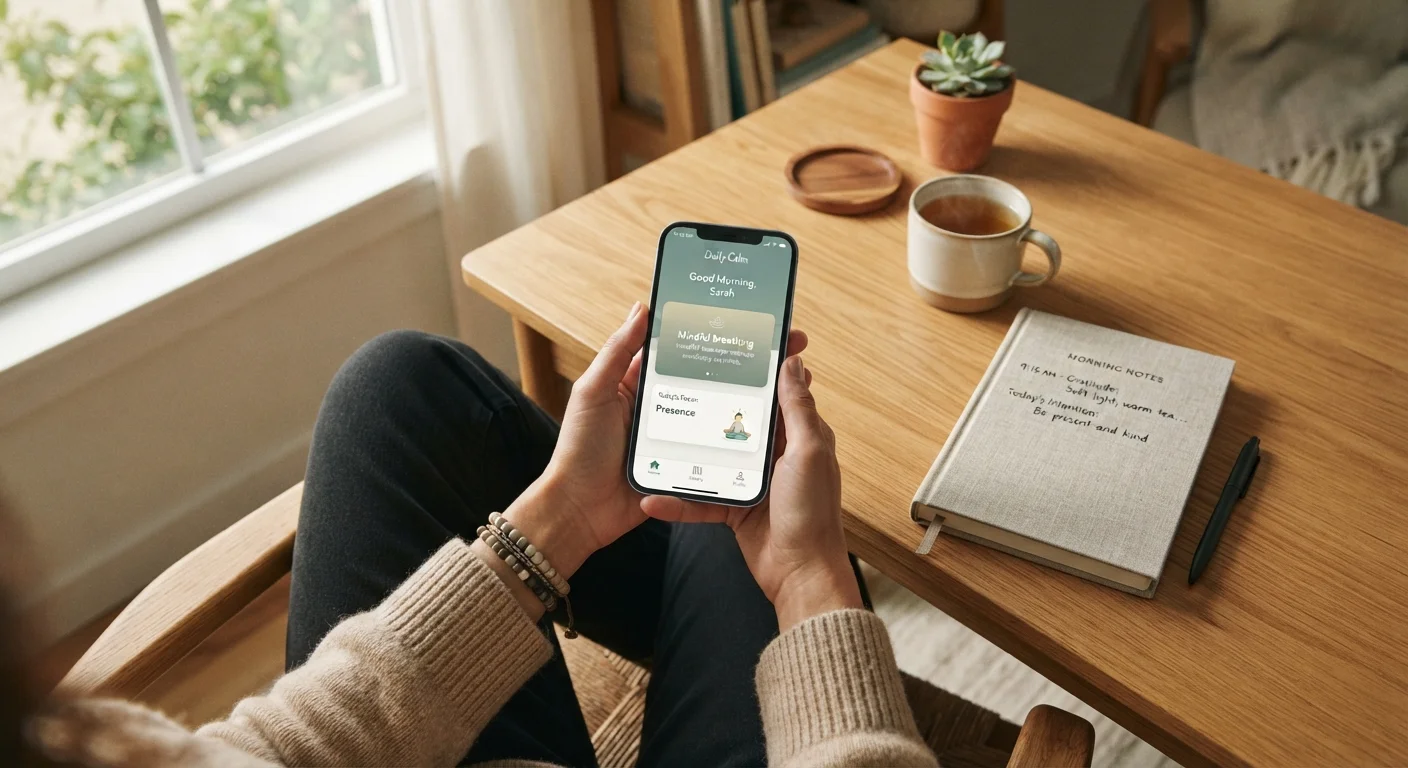
Downloading a mental health app is easy. Using it three months later is the harder part. Studies on digital health interventions consistently find that engagement drops sharply after the first week — a pattern sometimes called the "novelty cliff." Understanding why this happens makes it easier to design around it.
The apps themselves are rarely the problem. Most well-designed tools draw on evidence-based frameworks like cognitive behavioral therapy (CBT) or mindfulness. The challenge is that motivation alone is an unreliable engine for any new habit, and mental health habits carry an extra layer of complexity: the moments you most need the app are often the moments you feel least like opening it.
If you're still exploring which tool fits your needs, this overview for beginners covers what to expect from self-guided apps before you commit to one.
Apps Are Not a Replacement for Therapy
Mental health apps can be valuable self-help tools, but they are not equivalent to working with a licensed clinician. If you are experiencing significant distress, suicidal thoughts, or symptoms that interfere with daily functioning, please reach out to a qualified mental health professional or contact a crisis line. This article is for general informational purposes only and does not constitute medical advice.
Practices That Build a Lasting Habit
The following approaches are grounded in behavioral science and adapted for the specific rhythms of mental health self-care. None require willpower as a starting point — they work by making the desired behavior easier and more automatic over time.
Anchor your app session to an existing daily habit.
Behavior research consistently shows that pairing a new behavior with an already-established one — a technique sometimes called habit stacking — dramatically improves follow-through. Your brain has already built a reliable cue-routine pathway for habits like morning coffee or brushing your teeth; attaching the app to that pathway borrows its momentum.
Set a session length you can sustain on your worst days, not your best.
Ambitious goals feel motivating at first but become barriers when energy is low — exactly when mental health support matters most. A five-minute commitment you keep beats a thirty-minute plan you abandon. You can always go longer; you rarely go shorter than the goal you set.
Use the app's notification settings intentionally, then reassess after two weeks.
A well-timed reminder can act as a gentle external cue while intrinsic motivation is still forming. However, ignored or poorly timed notifications quickly become background noise and can even generate guilt that undermines the habit.
Track engagement without turning it into a performance metric.
Most apps log streaks and completion rates, which can be motivating — but treating them as grades creates anxiety around missing a day and may discourage return. The goal is cumulative practice, not a perfect record.
Review your progress with a professional if you are also in formal treatment.
Self-guided app exercises can meaningfully complement therapy when your clinician knows you're using them. They may offer guidance on which features align with your treatment goals, or flag exercises that aren't a good fit for your current situation.
For a broader framework that situates app use within a full daily structure, see building a daily mental health routine from scratch.
Getting Started: Three Actions You Can Take Today
“Habit formation is less about willpower and more about designing your environment so the right behavior is the path of least resistance.”
— Wendy Wood, Research psychologist and author specializing in habit formation
Knowing the principles is useful; acting on them is what creates change. The quick wins below are designed to be completed in under five minutes and have a disproportionate effect on whether the habit takes root.
If low motivation or low mood is making any of these steps feel daunting, the strategies in starting movement as a mental health tool when motivation is low apply equally well here — the same gentle, low-threshold approach works across self-care habits. You may also find it helpful to review key questions to ask before committing to an app if you're still deciding whether your current choice is the right fit.
This article is for informational purposes only and does not constitute medical advice. If you are experiencing a mental health crisis or significant distress, please contact a qualified healthcare professional or a crisis support service.