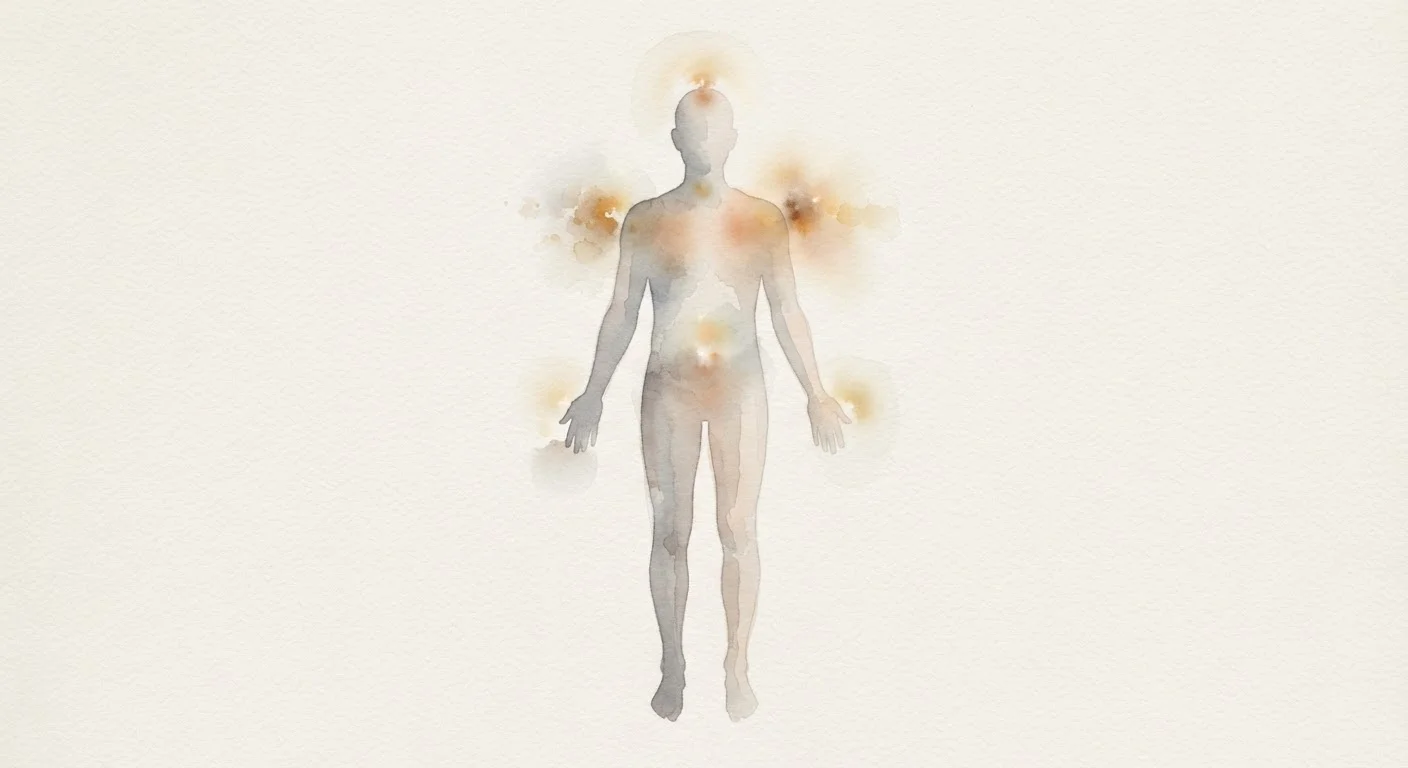

Your Body Speaks Before Your Mind Catches Up
Most people recognize stress as a mental experience — worry, overwhelm, or a sense of pressure. But the body often registers stress first, sending signals that are easy to dismiss or misattribute. A tight jaw in a difficult meeting. A sudden headache before a big presentation. An unsettled stomach on a stressful morning. These aren't coincidences.
When your brain detects a stressor, it activates the sympathetic nervous system — the branch responsible for mobilizing your body's resources. Adrenaline surges, your heart beats faster, your muscles prepare to act. This response evolved to help humans survive physical danger, but it fires just as readily in response to a difficult email or a looming deadline.
Learning to read these signals is genuinely useful. It can help you intervene earlier, before stress compounds, and it gives you a clearer picture of how your body and mind are connected. For a broader look at how these symptoms show up across the whole body, see the plain-language stress symptom reference.
Physical Symptoms Can Have Multiple Causes
Stress is one possible explanation for physical symptoms like headaches, digestive changes, or sleep disruption — but it is not the only one. Many of these symptoms overlap with other medical conditions. If you're uncertain about the source of your symptoms, or if they are severe or worsening, a healthcare provider is the right first stop, not a self-diagnosis.
The Most Common Physical Signals — and What They Mean
Physical stress responses vary from person to person, but several patterns show up consistently in research and clinical practice.
Muscle Tension and Headaches
Stress causes muscles to contract as part of the fight-or-flight preparation. The shoulders, neck, and jaw are especially prone to holding tension, which can escalate into tension-type headaches. Many people carry this tightness for hours without noticing it.
Digestive Changes
The gut has its own extensive nervous system — sometimes called the "second brain" — that is directly influenced by stress hormones. Nausea, stomach cramping, appetite changes, and altered bowel habits are all recognized stress responses. This is why the phrase "gut feeling" has a physiological basis.
Heart Rate and Breathing Changes
Adrenaline accelerates your heart rate and shifts your breathing toward shorter, shallower breaths. You might notice your heart pounding, a fluttery sensation in your chest, or a feeling of breathlessness — even in the absence of physical exertion. For comparison, anxiety produces many overlapping sensations; the anxiety in the body explainer explores the distinctions.
Sleep Disruption
Elevated cortisol at night — when it should naturally be low — can make it difficult to fall asleep or cause early waking. Poor sleep then lowers your resilience to the next day's stressors, creating a feedback loop that can be hard to break.
77%
Adults reporting physical stress symptoms
According to the American Psychological Association's Stress in America survey, a large majority of U.S. adults report experiencing physical symptoms they associate with stress.
~1 in 3
Adults with stress-related sleep problems
The APA has consistently found that stress is among the leading self-reported reasons U.S. adults struggle to get adequate sleep.
Top 3
Muscle tension as a reported stress symptom
Fatigue, headache, and muscle tension regularly rank among the most frequently reported physical stress symptoms in large U.S. population surveys.
Why Stress Feels Different in Different Bodies
There is no universal stress signature. One person's stress response might center on digestive upset; another's might show up primarily as fatigue or skin flare-ups. Several factors shape this individual variation, including genetics, prior life experiences, overall health, and current circumstances.
Repeated or sustained stress exposure can also shift the pattern. What begins as occasional tension headaches may evolve into persistent sleep problems or immune changes if the underlying stress goes unaddressed. Understanding why stress can feel so different from person to person can help you interpret your own specific signals rather than comparing yourself to a generic checklist.
“The body keeps the score. Our bodies 'know' things that our minds have not yet processed, and physical sensations are often the first language of distress.”
— Bessel van der Kolk, Psychiatrist and author known for research on trauma and the body's stress response
It's also worth knowing that stress doesn't always have an obvious source. Cumulative load — the sum of many smaller pressures — can produce genuine physical symptoms without a single clear trigger. If you've ever felt tense without being able to pinpoint why, that experience is well-documented. Stress without a clear cause is more common than many people realize.
From Temporary Signal to Pattern Worth Watching
Occasional physical stress responses are normal and, in the short term, not harmful. The concern arises when these signals become persistent — when the headaches don't lift, the sleep problems continue, or the digestive discomfort becomes the new normal. This shift often indicates that stress has moved from acute (short-term, situation-specific) to chronic (ongoing, without adequate recovery).
Chronic stress is associated with broader health effects over time, which is why recognizing the early signals matters. Signs that stress has shifted from temporary to chronic offers a more detailed look at this transition.
If you want to take stock of your own experience, a structured self-check can be a useful starting point: the stress symptom self-check walks through questions covering body, mood, sleep, and daily habits. And if you're curious how practices like mindfulness interact with the stress response at a physiological level, the science behind mindfulness and the stress response covers what current research suggests.
Start With One Signal, Not the Whole List
If you're new to noticing your body's stress signals, pick just one to pay attention to — perhaps shoulder tension or sleep quality. Tracking a single indicator over a week can reveal patterns that are easy to miss when you're focused on managing stress in the moment. A simple daily note — even one sentence — is enough to start.
This article is for general informational purposes only and does not constitute medical advice. If you are concerned about physical symptoms — especially chest pain, palpitations, or anything severe or persistent — please consult a qualified healthcare professional.