
Why Stress, Anxiety, and Depression Are So Easy to Confuse
If you've ever Googled your symptoms and ended up more confused than when you started, you're not alone. Stress, anxiety, and depression share a surprising amount of common ground — disrupted sleep, difficulty concentrating, irritability, and physical fatigue can appear in all three. That overlap is real, and it can make self-identification genuinely difficult.
The key differences often lie not in what you feel, but in why, how long, and how persistently you feel it. Understanding those distinctions can help you communicate more clearly with a healthcare provider — and reassure you that what you're experiencing has a name and a path forward.
This article is general health information, not a diagnostic tool. For personal symptoms or concerns, please consult a qualified healthcare professional.
| Criterion | Stress | Anxiety & Depression |
|---|---|---|
| Primary trigger | Identifiable external situation | Internal or no clear trigger |
| Duration | Eases when situation resolves | Persists beyond trigger or context |
| Core experience | Pressure, overwhelm, tension | Persistent worry, emptiness, or low mood |
| Physical symptoms | Headaches, muscle tension, fatigue | Racing heart, appetite/sleep changes, exhaustion |
| Emotional tone | Frustration, urgency, irritability | Dread, sadness, numbness, hopelessness |
| Relief pattern | Improves when stressor is removed | Persists even when circumstances improve |
| Impact on functioning | Temporary disruption | Significant, ongoing interference |
| Professional support typically needed? | Not always, but helpful if persistent | Usually recommended |
Stress: The Body's Short-Term Alarm System
Stress is the mind and body's response to a perceived demand or threat. It evolved to help us meet deadlines, navigate conflict, and respond quickly to danger. The physiological stress response — sometimes called "fight or flight" — triggers a release of hormones including cortisol and adrenaline, raising heart rate, sharpening focus, and priming muscles for action.
Crucially, stress is typically reactive and situational. It has an identifiable trigger — a difficult conversation, a looming exam, financial pressure — and it generally eases once that trigger is resolved. You might feel tense and exhausted during a difficult period at work, but find that things settle once the project is finished.
Common stress symptoms include tension headaches, muscle tightness, trouble sleeping, irritability, and difficulty switching off mentally. These are normal adaptive responses. The concern arises when stress becomes chronic and unrelenting, which research suggests can increase vulnerability to both anxiety disorders and depression over time. You can explore more about that progression in our article on chronic stress and mental health.
Anxiety and Depression: When Distress Takes on a Life of Its Own
While stress is primarily a response to the world outside, anxiety and depression tend to be more internally driven and persistent — often continuing even when external circumstances improve.
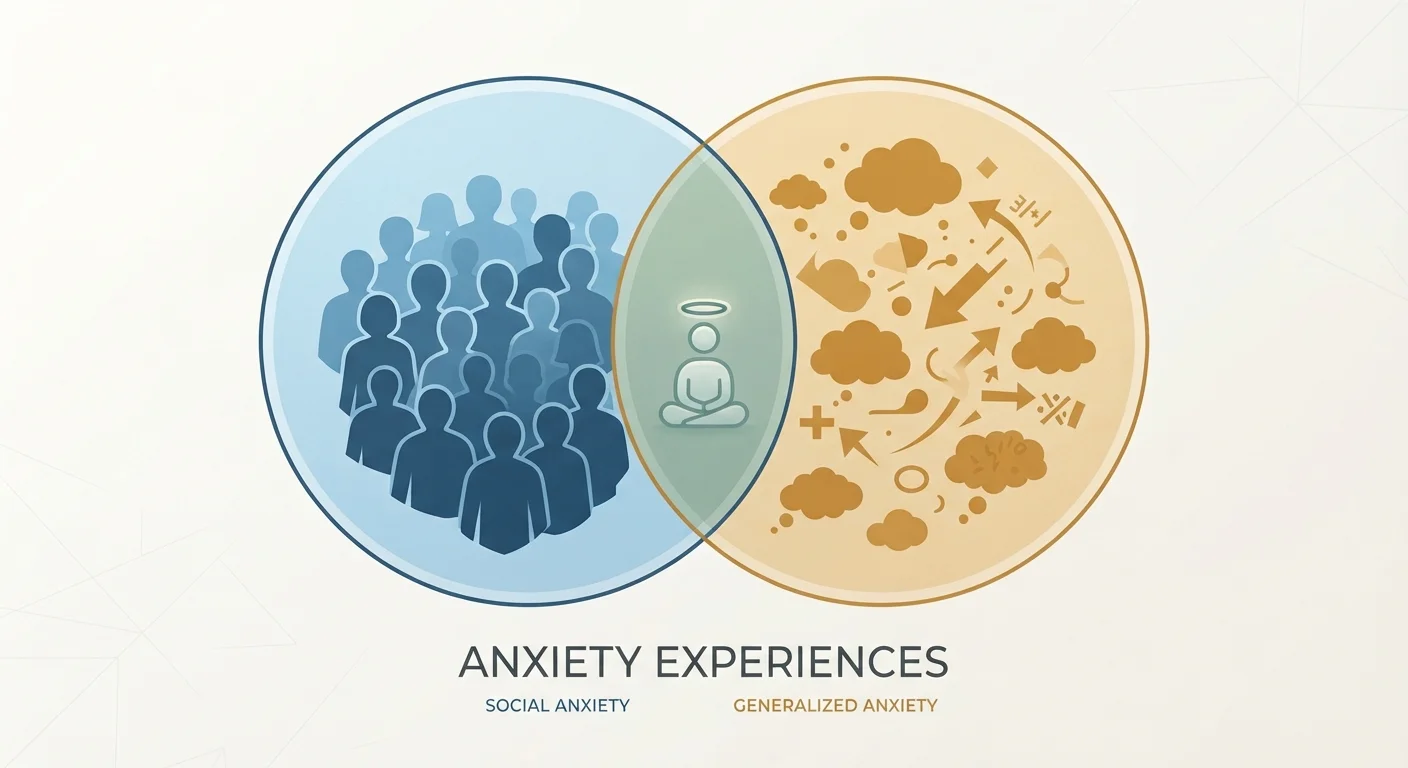
Anxiety is characterized by excessive worry, fear, or unease that feels disproportionate to the actual situation — or exists without a clear trigger at all. People living with anxiety may constantly anticipate worst-case scenarios, feel physically on edge (racing heart, shallow breathing, muscle tension), and struggle to reassure themselves even when things are objectively fine. Unlike the relief that usually follows a stressful event passing, anxiety tends to seek out the next source of threat. For a closer look at how anxiety conditions differ from one another, see our piece on social anxiety vs. generalised anxiety disorder.
Depression is more than prolonged sadness. It typically involves a persistent low or empty mood, a marked loss of interest or pleasure in activities once enjoyed, fatigue, changes in appetite or sleep, difficulty concentrating, and sometimes feelings of worthlessness. According to criteria used in clinical practice, a depressive episode generally involves symptoms present most of the day, nearly every day, for at least two weeks.
Overlap Is Common — And Normal
It's very common to experience elements of stress, anxiety, and depression simultaneously. Chronic stress can lower the threshold for developing an anxiety disorder or depressive episode, and someone with depression may also experience significant anxiety. Experiencing more than one of these does not mean something has gone uniquely wrong — it reflects how interconnected the brain's stress and mood systems are. A healthcare provider can help clarify what's happening and what kinds of support are most appropriate.
Both conditions frequently coexist — it's common to experience anxiety and depression at the same time, and stress can amplify both. This complexity is one reason professional assessment is valuable. Our article on how clinicians tell burnout, depression, and anxiety apart offers additional context.
When to Seek Support
A useful question to ask yourself: Would these feelings ease if the pressure in my life eased? If yes, and if your symptoms feel manageable, you may be experiencing normal stress. Self-care strategies — regular movement, consistent sleep, and social connection — have well-documented benefits for stress resilience.
However, consider speaking with a healthcare professional if:
- Symptoms persist for several weeks without improvement
- Distress significantly interferes with work, relationships, or daily activities
- You feel hopeless, empty, or unable to find pleasure in anything
- You experience intrusive or uncontrollable worry that doesn't respond to reassurance
- You are having thoughts of self-harm or suicide — if this applies, please reach out to a crisis line or emergency services immediately
Understanding where everyday stress ends and an anxiety disorder begins is an important step, and professional guidance makes that distinction much clearer. You don't need a crisis to deserve support — early conversations with a GP or mental health professional can make a meaningful difference.
~31%
U.S. adults experiencing anxiety disorder at some point
The National Institute of Mental Health estimates that anxiety disorders affect approximately 31% of U.S. adults at some point in their lives, making them among the most common mental health conditions.
~21%
U.S. adults who experience depression in their lifetime
According to the National Institute of Mental Health, an estimated 21% of U.S. adults experience a major depressive episode at some point during their lifetime.
This article is for general informational purposes only and does not constitute medical advice. Always consult a qualified healthcare professional for concerns about your mental or physical health.