
Why Stress Terminology Matters
When researchers, therapists, and health writers discuss stress, they use precise terms that carry specific meanings. Without a shared vocabulary, it's easy to misread an article, misunderstand what a professional is saying, or assume all stress is equally harmful — which it isn't. This glossary brings the most important concepts together in one place so you can read, ask questions, and make sense of your experience with greater confidence.
For a fuller explanation of how the stress response unfolds biologically, see our plain-language guide to the stress response. If you're curious whether the stress you feel every day is actually harmful, this article on stress myths may also help.
Acute Stress
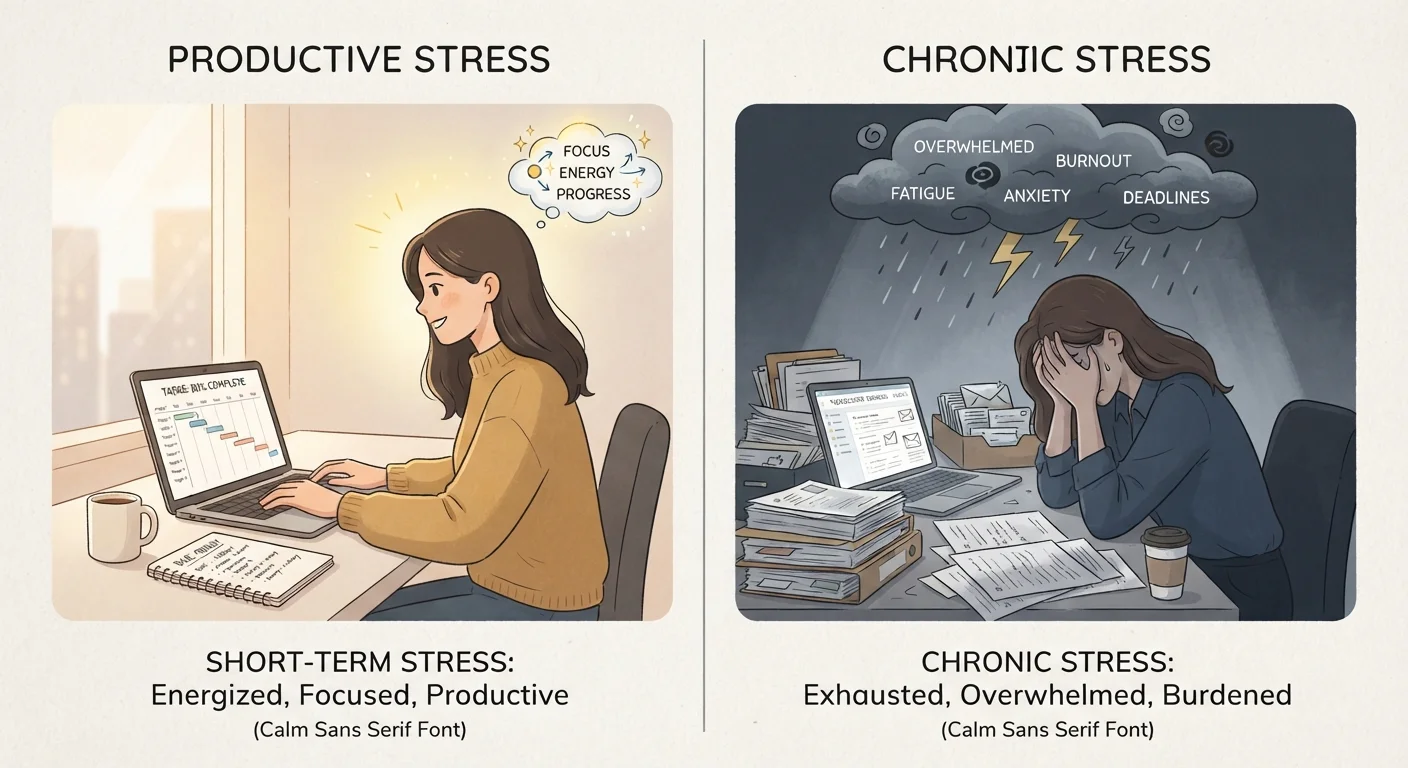
A short-lived stress response triggered by an immediate challenge or threat, such as a near-miss accident or a job interview. The body activates quickly and returns to baseline once the event passes. Occasional acute stress is considered normal and can even be motivating.
Chronic Stress
Stress that persists over weeks, months, or longer without adequate recovery. Unlike acute stress, the nervous system stays partially activated, which over time can contribute to sleep problems, immune changes, and mood difficulties. Chronic stress is what researchers generally consider uniquely harmful to long-term health.
Eustress
A term coined by endocrinologist Hans Selye to describe stress that feels challenging but manageable — the kind associated with excitement, motivation, or personal growth. Starting a new job or training for a race can both produce eustress. It is generally considered beneficial rather than harmful.
Distress
The negative form of stress — arising when demands feel overwhelming, uncontrollable, or unrelenting. Distress is associated with anxiety, exhaustion, and reduced functioning. Most everyday use of the word 'stress' refers to distress rather than eustress.
Allostatic Load
The cumulative 'wear and tear' on the body that results from repeated or prolonged stress activation. A high allostatic load is associated with increased risk of cardiovascular, metabolic, and immune health problems. Think of it as the running tab the body keeps when stress is never fully resolved.
Cortisol
A hormone released by the adrenal glands during the stress response. In short bursts, cortisol helps mobilize energy and sharpen focus. Chronically elevated cortisol, however, can disrupt sleep, digestion, and immune function.
HPA Axis
Short for the hypothalamic-pituitary-adrenal axis — the brain-body communication pathway that regulates cortisol release. When the brain perceives a threat, it triggers a chain of signals along this axis that result in the body mobilizing a stress response.
Fight-or-Flight Response
The automatic physiological reaction to perceived danger, characterized by increased heart rate, rapid breathing, and heightened alertness. It is mediated by the sympathetic nervous system and is designed for short-term survival, not sustained everyday activation.
Autonomic Nervous System
The part of the nervous system that controls involuntary functions such as heart rate, digestion, and breathing. It has two main branches: the sympathetic (activating, stress-response) and the parasympathetic (calming, rest-and-digest). Stress research often examines the balance between these branches.
Dysregulation
A state in which the body's stress-response systems fail to activate or deactivate in a well-timed, proportionate way. Dysregulation can mean reacting too strongly to mild stressors or failing to calm down after a threat has passed. It is frequently discussed in the context of trauma and chronic stress.
Stressor
Any event, situation, or internal thought that triggers a stress response. Stressors can be physical (illness, noise), psychological (worry, conflict), or environmental (financial pressure, workplace demands). The same stressor can affect people very differently depending on individual resources and history.
Resilience
The capacity to adapt to, recover from, or grow through stressful experiences. Resilience is not a fixed personality trait — research suggests it can be strengthened over time through supportive relationships, healthy habits, and learned coping skills.
Key Concepts at a Glance
The terms below build on each other. Acute and chronic stress sit at opposite ends of a duration spectrum, while eustress and distress occupy opposite ends of a valence spectrum — that is, whether stress feels motivating or harmful. Allostatic load and dysregulation describe what happens to the body when stress persists too long. Recognizing these distinctions can help you describe what you're experiencing more precisely, whether you're talking to a doctor, a therapist, or simply trying to understand yourself better.
| Term coined for 'good stress' | Eustress — by Hans Selye (1974) (Selye H., Stress Without Distress, 1974) |
| Primary stress hormone | Cortisol, released by the adrenal glands |
| Chronic vs. acute: key difference | Duration and recovery — chronic stress lacks adequate rest periods |
| Allostatic load concept introduced | 1993, by Bruce McEwen and Eliot Stellar (McEwen & Stellar, Archives of Internal Medicine, 1993) |
| Nervous system branch driving fight-or-flight | Sympathetic nervous system |
| Resilience: fixed trait or learnable? | Learnable — supported by behavioral and psychological research (American Psychological Association, The Road to Resilience) |
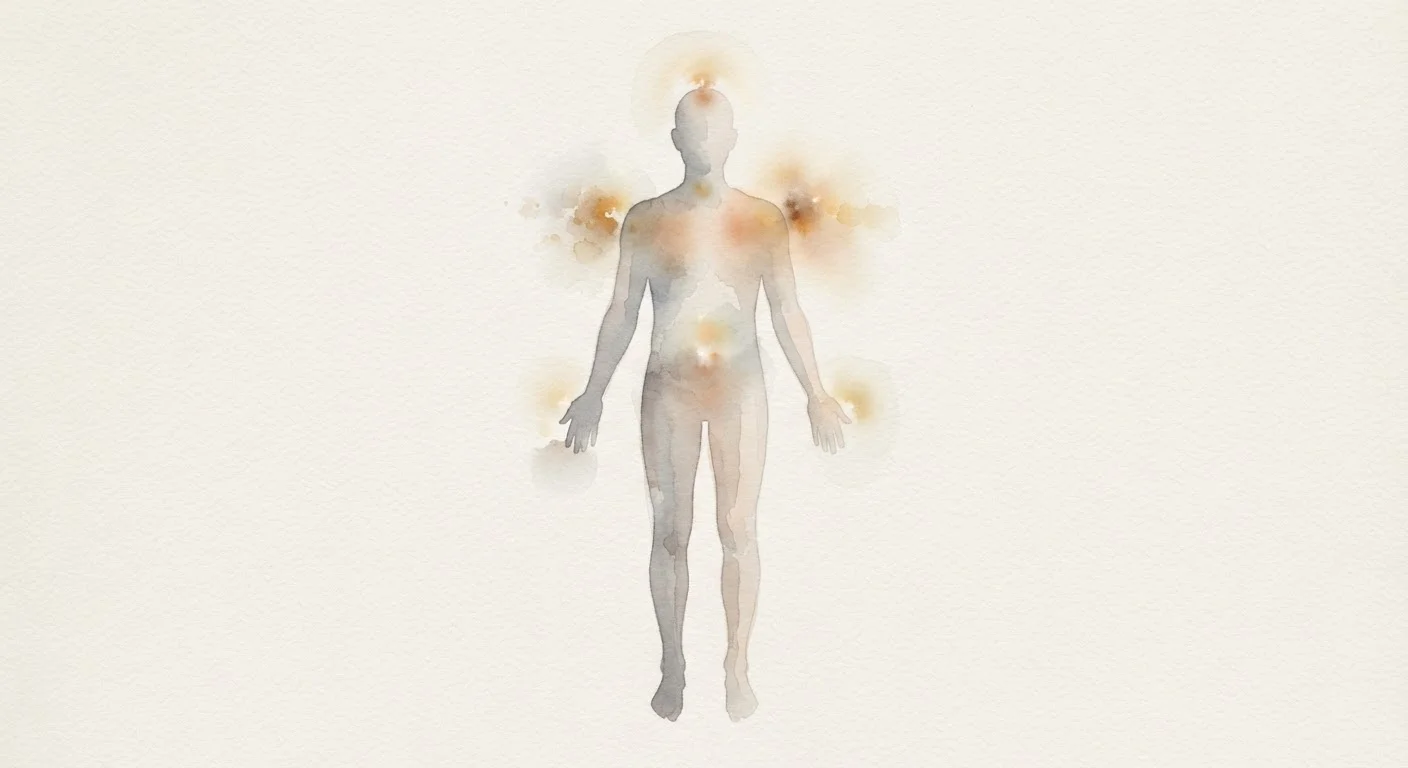
For a guided look at how these concepts show up physically and emotionally, the head-to-toe symptoms reference and the Stress Symptoms hub are practical next stops. You may also find it useful to explore common stress triggers to understand what typically activates these responses. If any of these terms overlap with trauma-related experiences, the PTSD terminology glossary covers related vocabulary in similar depth.
These Definitions Are a Starting Point
Stress research is an active field, and some terms (like 'allostatic load') are still being refined by scientists. The definitions here reflect broad consensus in psychology and behavioral medicine, but nuance exists in clinical and research contexts. If you encounter a term used differently in a specific article or professional setting, that variation is often intentional. When in doubt about how any of these concepts apply to your personal health, a qualified clinician is your best resource.
This article is for informational purposes only and is not a substitute for professional medical or mental health advice. If you are concerned about your stress levels or mental health, please speak with a qualified healthcare provider.