How the Body's Stress Response Is Designed to Work
When the brain perceives a threat — a looming deadline, a near-miss while driving, an important presentation — it activates the hypothalamic-pituitary-adrenal (HPA) axis and the sympathetic nervous system. These systems release hormones including adrenaline and cortisol, redirecting energy toward muscles, sharpening focus, and raising heart rate. This is commonly called the fight-or-flight response.
This response evolved for survival and, crucially, it was built to be temporary. Once the perceived threat passes, the parasympathetic nervous system — sometimes called the "rest and digest" system — is supposed to restore baseline calm. For acute, time-limited stress, that recovery happens relatively quickly.
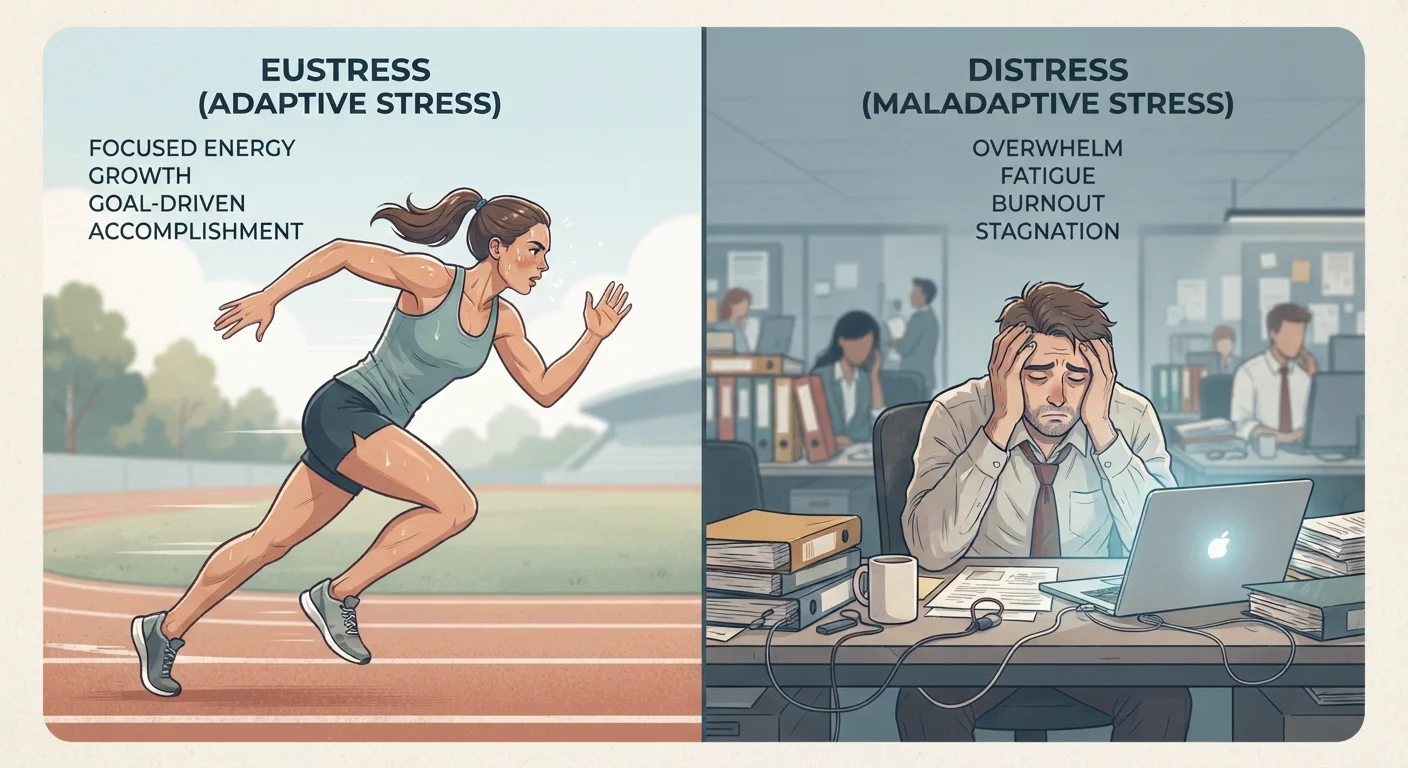
Research in performance psychology consistently shows that moderate stress arousal can enhance cognitive function, reaction time, and motivation in the short term. This is sometimes described using the Yerkes-Dodson model: performance tends to improve as arousal rises from low levels, up to an optimal point, before declining under excessive or sustained pressure. So a measured amount of stress before a job interview or athletic event is not only normal — it may genuinely help.
Reframing Stress Before High-Stakes Moments
Research by psychologist Alison Wood Brooks and colleagues suggests that reappraising pre-performance anxiety as excitement — rather than trying to calm down — can improve outcomes on tasks requiring focus. Labeling the sensation as "I'm excited" keeps arousal levels available for performance while shifting its emotional meaning. This works best for time-limited, controllable situations — not as a long-term coping strategy for persistent stress.
Acute vs. Chronic Stress: What Actually Separates Them
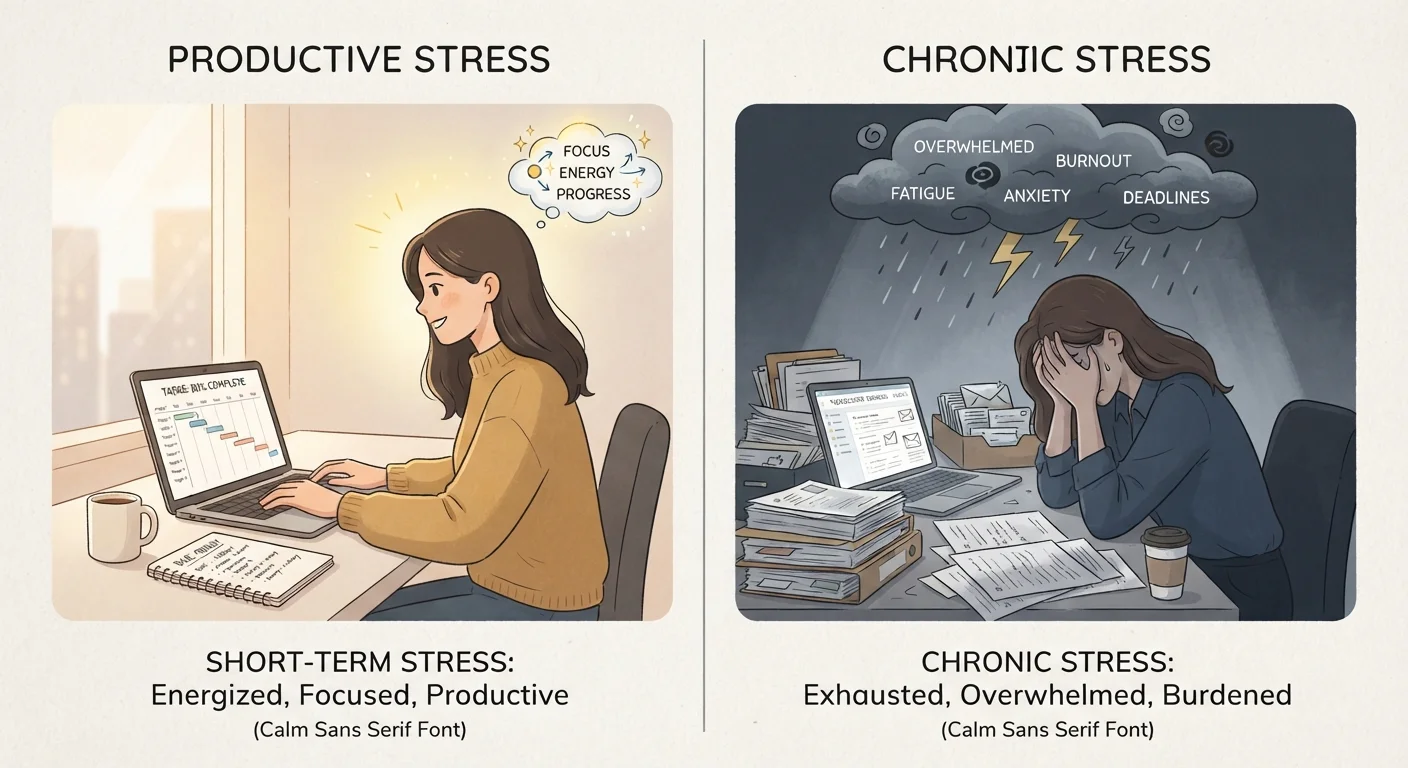
The clearest distinction between useful and harmful stress comes down to duration and recovery. Acute stress has an identifiable cause and a clear end point. Your nervous system activates, you respond, and then it settles. Chronic stress, by contrast, keeps the stress-response system running in the background — sometimes for weeks, months, or longer — without adequate recovery windows.
| Acute Stress | Chronic Stress | |
|---|---|---|
| Typical duration | Minutes to days | Weeks to months or longer |
| Identifiable trigger | Usually clear and specific | Often diffuse or unresolvable |
| Cortisol pattern | Rises and returns to baseline | Remains persistently elevated |
| Impact on immune function | Minimal or briefly priming | Suppressive over time |
| Sleep effects | Temporary disruption | Chronic disruption and fatigue |
| Recovery ability | Body resets effectively | Recovery window shrinks |
| Long-term health risk | Low for most people | Associated with cardiovascular, metabolic, and mental health risks |
As the table above shows, the two forms of stress differ not just in feel but in measurable biological impact. Elevated cortisol that resolves quickly poses little threat. Cortisol that remains chronically elevated is associated with disrupted sleep architecture, suppressed immune function, impaired memory consolidation, and increased cardiovascular risk, according to established psychoneuroimmunology research.
For a deeper look at how to tell these apart in everyday life, see how different types of stress actually work.
Situations Where Stress Is Genuinely Useful
Stress earns its reputation as harmful — but that framing misses important nuance. There are well-documented situations in which a short-term stress response supports rather than undermines wellbeing:
- Performance under pressure: Athletes, musicians, and surgeons often report that pre-event arousal sharpens concentration. The stress response allocates attention and resources to the task at hand.
- Motivating action on solvable problems: Mild anxiety about a health screening or an overdue bill can prompt people to act sooner than they otherwise would.
- Short-term immune priming: Some research suggests that brief acute stress may temporarily upregulate certain immune markers, though this effect reverses under chronic conditions.
- Learning and memory encoding: Moderate emotional arousal during an experience can strengthen memory formation — a finding with roots in research on the amygdala's role in emotional learning.
The common thread is brevity and resolution. The body handles acute stress well because it was built to do exactly that.
When Stress Stops Being Helpful — and Why Chronic Stress Is Different
The transition from useful stress to chronic stress rarely arrives with a clear announcement. It tends to build: one stressor overlaps with another; sleep erodes; recovery time shrinks. Over time, the body's baseline settles at a higher-alert level, and the parasympathetic recovery response becomes less effective at restoring calm.
Chronic stress is uniquely harmful because of this sustained physiological load. Prolonged cortisol elevation is linked to structural changes in brain regions involved in emotion regulation and memory, reduced immune surveillance, metabolic disruption, and elevated inflammatory markers. These are not temporary inconveniences — they represent cumulative wear on the body's systems, sometimes called allostatic load.
Chronic Stress Often Masquerades as "Just Being Busy"
Because chronic stress builds gradually, many people normalize it as a lifestyle feature rather than a health signal worth addressing. Persistent physical symptoms — such as recurring headaches, digestive issues, or frequent illness — alongside persistent emotional exhaustion are not signs of a busy, productive life. They are worth discussing with a healthcare provider, particularly if they have lasted more than a few weeks.
Recognising the shift matters. Signs that short-term pressure has become a longer-term pattern are often subtle at first — changes in sleep quality, persistent fatigue, difficulty concentrating, or a sense that you can no longer "switch off." The self-awareness framework for identifying when stress stops being normal can help you reflect on your own experience with more clarity.
If you suspect your stress has shifted into chronic territory, speaking with a qualified healthcare provider is a sound and important step. This article is for general informational purposes only and is not a substitute for professional medical advice.
This article is for informational purposes only and does not constitute medical advice. If you are concerned about your stress levels or mental health, please consult a qualified healthcare professional.