What Makes a Relaxation Technique 'Active' or 'Passive'?
The words active and passive here don't refer to how hard you're working — they describe how you engage with the technique itself. An active relaxation method asks you to do something deliberately: contract and release muscle groups, follow the rhythm of your breath, visualize a specific scene, or move through a sequence of postures. A passive method invites you to stop doing and allow relaxation to arise on its own — through stillness, soft sound, or simply receptive rest.
Both categories are grounded in the same underlying goal: shifting the body away from its stress response and toward a calmer physiological state. To understand why that shift matters, see what actually happens in your body during relaxation.
Active Relaxation: Engaging the Body and Mind Deliberately
Active techniques give your nervous system something structured to follow, which can be especially useful when stress has your thoughts scattered or your muscles braced. Common examples include:
- Progressive muscle relaxation (PMR): Systematically tensing and then releasing muscle groups from head to toe, building awareness of where tension lives in your body.
- Paced or diaphragmatic breathing: Deliberately slowing and deepening each breath to a controlled rhythm, which directly influences heart rate.
- Guided imagery: Actively constructing a mental scene — a quiet beach, a forest path — in sensory detail.
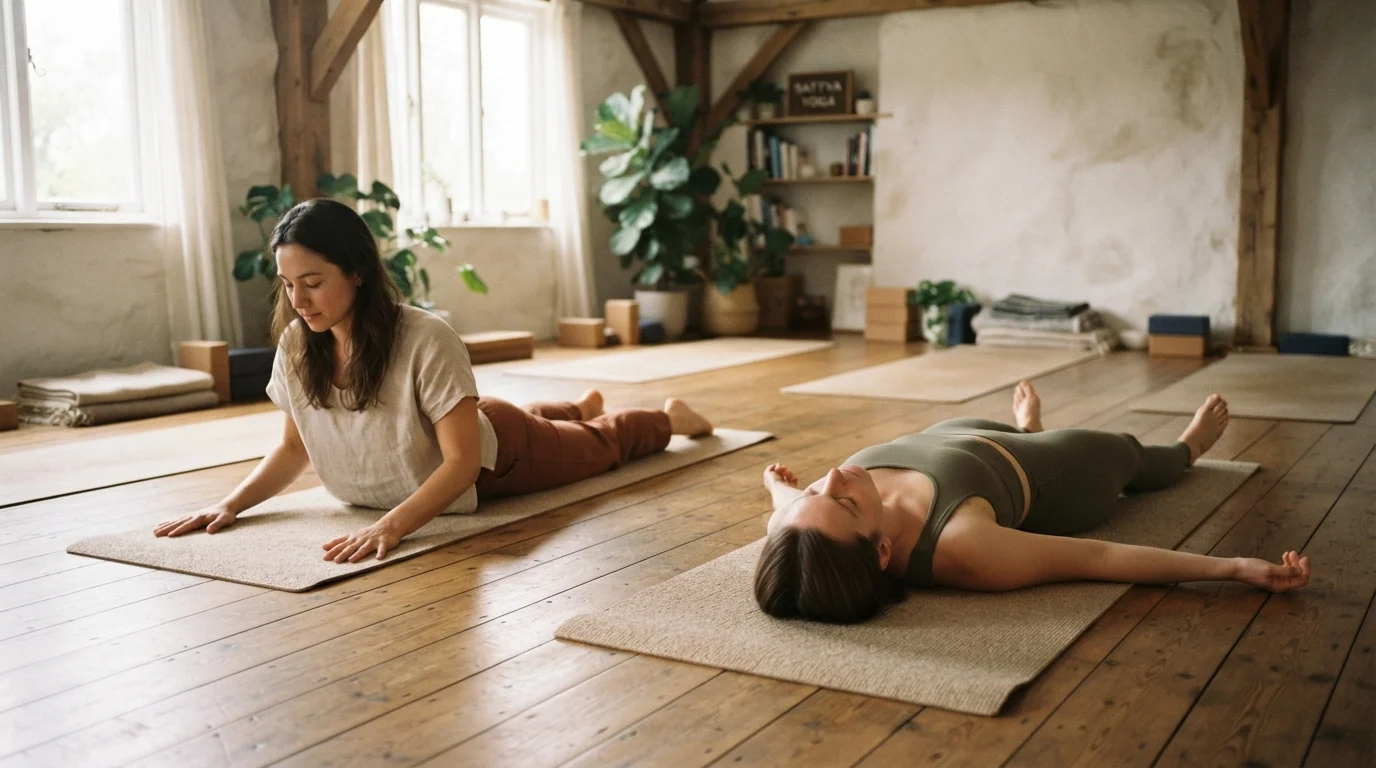
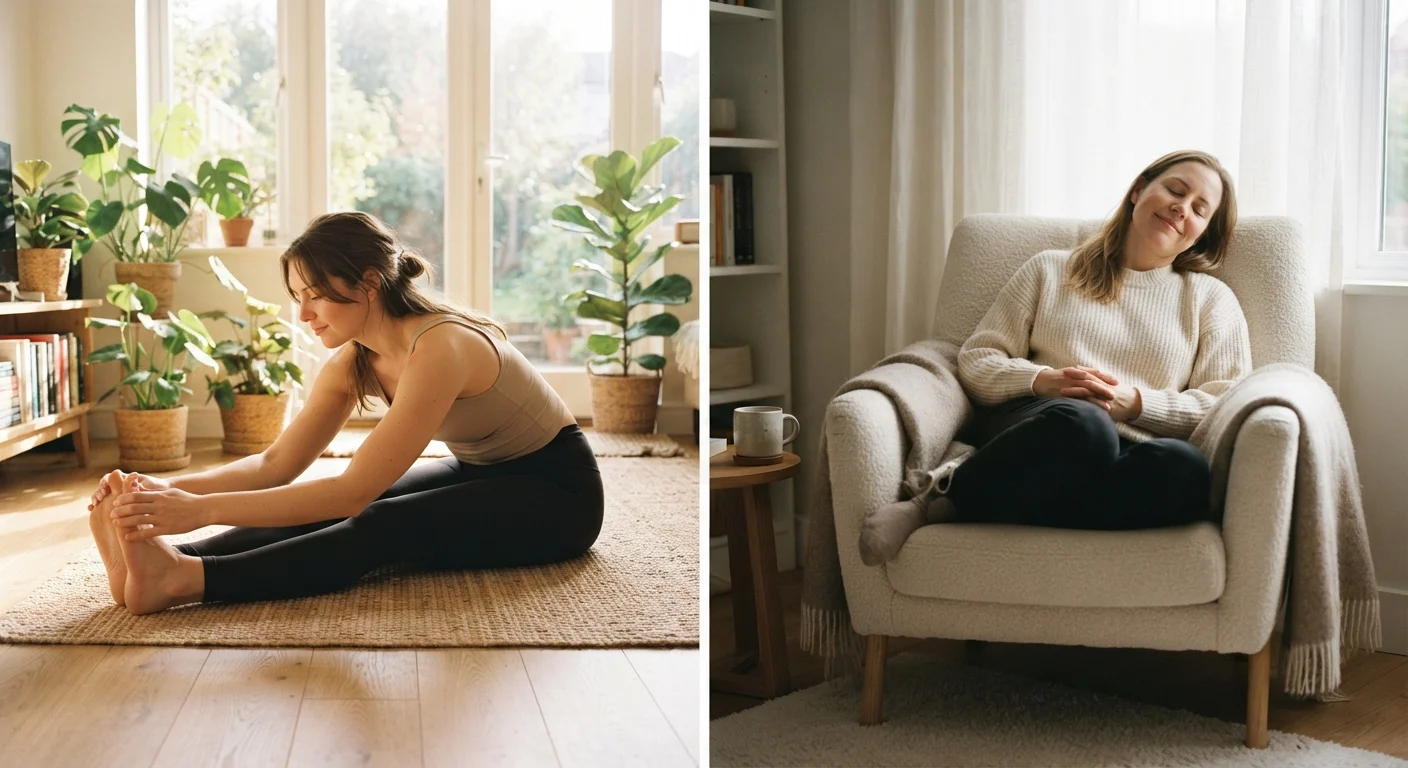
- Gentle movement practices: Slow yoga, tai chi, or stretching sequences where intentional attention is placed on each motion.
These methods work partly because they give a busy or anxious mind a task with clear steps. Rather than struggling to 'stop thinking,' you redirect attention to the exercise itself. For a detailed look at how PMR and body scanning compare as physical-awareness tools, see body scan vs. progressive muscle relaxation.
Try Pairing Active and Passive Techniques
One effective approach is to use an active method — like five minutes of paced breathing or progressive muscle relaxation — before transitioning into passive rest. This sequence can help settle a restless mind enough that stillness becomes genuinely restful rather than frustrating. You don't need to choose one or the other as your only tool.
Passive Relaxation: Allowing Stillness to Do Its Work
Passive techniques ask less of you in the moment — and that simplicity is exactly their strength. Examples include:
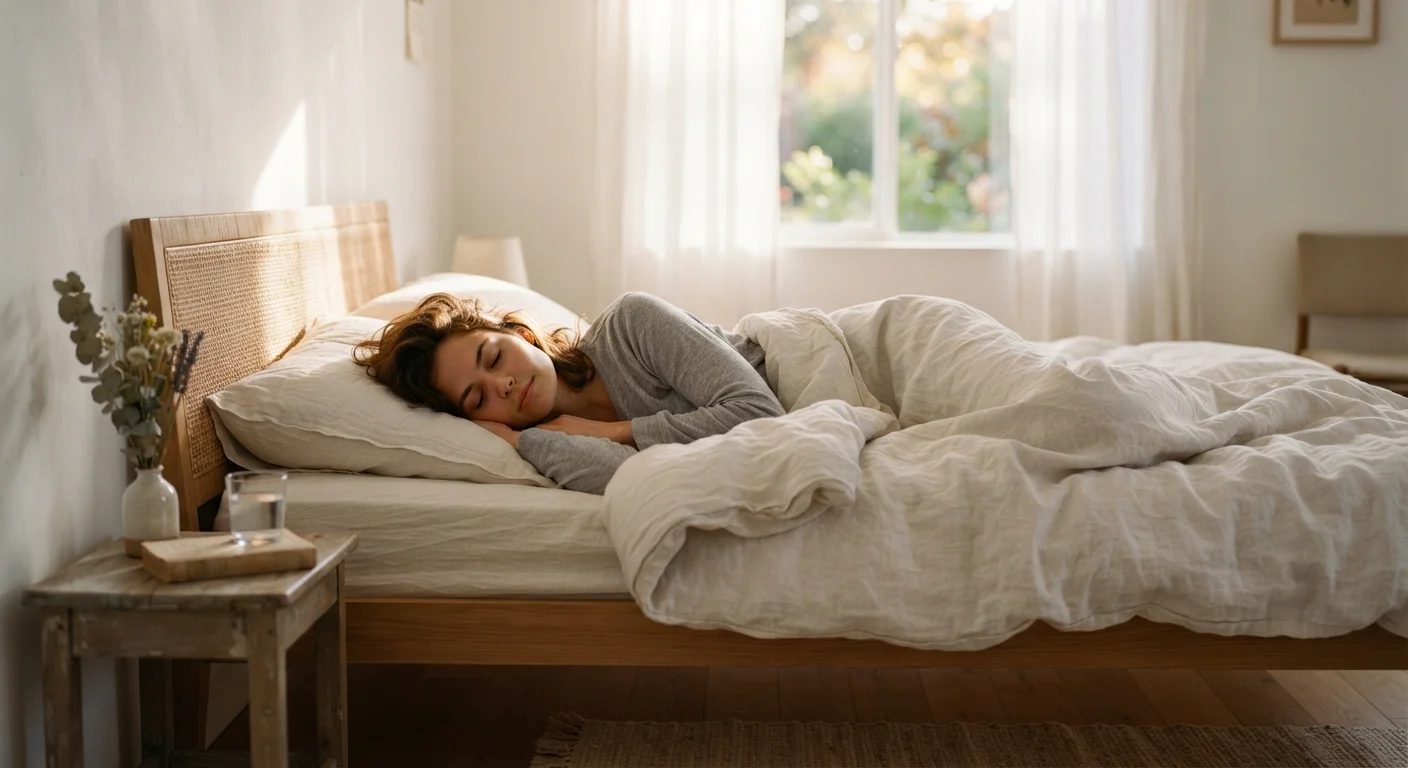
- Restorative rest: Lying still in a comfortable position without an agenda, letting the body settle.
- Listening to calming audio: Nature sounds, soft music, or ambient soundscapes that encourage the mind to quiet without requiring active direction.
- Warm baths or heat therapy: Allowing external physical comfort to ease muscle tension passively.
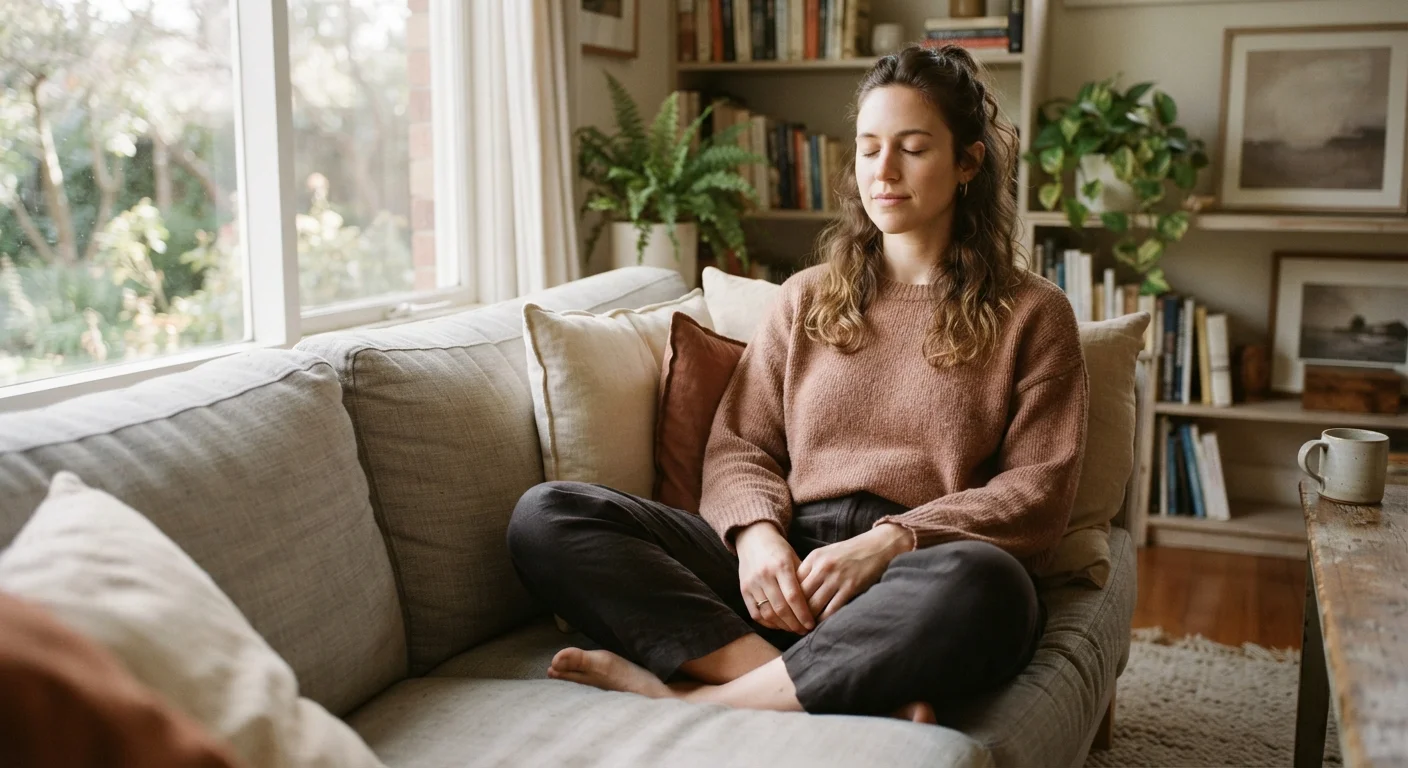
- Unstructured quiet time: Simply sitting away from screens and demands, without filling the space.
The catch with passive relaxation is that it can feel frustrating if your stress level is already high. A restless mind doesn't always cooperate with stillness. In those moments, starting with an active technique first — then transitioning to passive rest — can make quiet time far more accessible. If you find that either approach sometimes feels like it isn't helping, common barriers to relaxation and how to address them is worth exploring.
How the Two Approaches Compare
Understanding the practical differences can help you decide where to start — or which to reach for in a given moment.
| Active Relaxation | Passive Relaxation | |
|---|---|---|
| Core mechanism | Deliberate engagement with a technique | Receptive stillness and rest |
| Effort required | Moderate — follows steps or sequences | Low — allow rather than do |
| Best starting state | High stress or physical tension | Mild fatigue or moderate calm |
| Common examples | PMR, paced breathing, gentle yoga | Quiet rest, calming audio, warm baths |
| Mental focus needed | Directed — follows a clear task | Diffuse — open and unfocused |
| Learning curve | Low to moderate | Very low — but harder when restless |
| Best used | To initiate relaxation response | To deepen or sustain rest state |
It's worth noting that these categories are not rigid. A body scan, for example, has elements of both: it asks you to move attention deliberately (active) while remaining physically still (passive). A broader overview of calming practices can help you explore where various techniques fall on this spectrum.
Choosing What Fits Your Needs Right Now
There is no universally correct choice between active and passive relaxation. The most useful question isn't which is better but which fits this moment. A few guiding principles:
- High physical tension or racing thoughts? Start with an active method to give your mind and body a structured anchor.
- Feeling worn out or overstimulated? Passive rest may be what your system actually needs — permission to do nothing.
- New to relaxation practice? Active techniques often feel more accessible at first because they offer clear steps to follow.
- Building a longer-term routine? Rotating between both types keeps your practice flexible and sustainable.
It's also worth knowing that relaxation techniques and mindfulness, while related, are not the same thing. If you're curious how they differ, mindfulness vs. relaxation techniques lays out that distinction clearly.
This article is for general informational and educational purposes only and is not a substitute for professional medical or mental health advice. If you are experiencing persistent or severe stress, anxiety, or other mental health concerns, please speak with a qualified healthcare provider.