Understanding Your Crisis Support Options
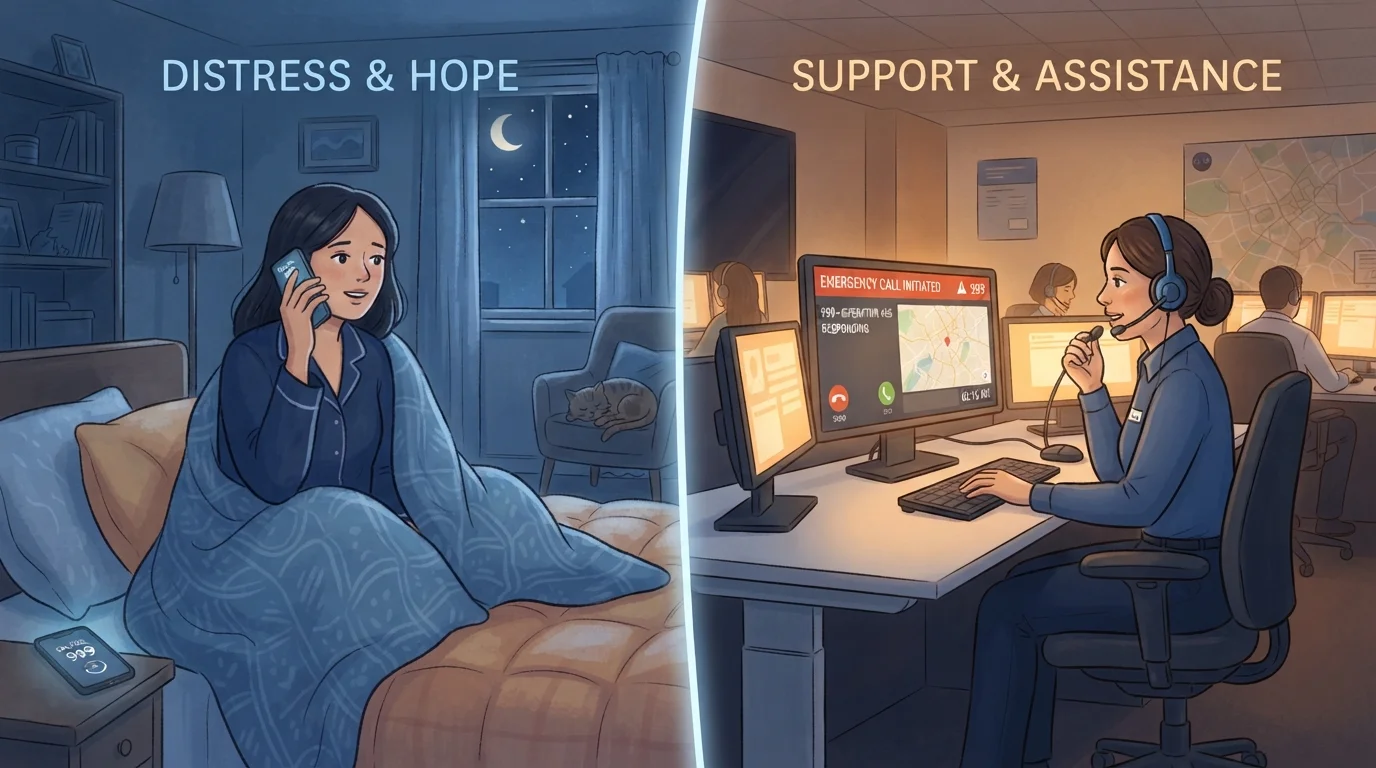
If you or someone you care about is experiencing a mental health crisis, knowing which services exist - and how to reach them - is genuinely lifesaving knowledge. This guide provides a factual reference to the main crisis support pathways available in the UK, so you can act quickly when it matters.
Not every difficult moment qualifies as a crisis, and understanding that distinction matters. What counts as a mental health crisis can help you recognise the difference between distress and an acute emergency requiring immediate intervention.
| Samaritans helpline | 116 123 (free, 24/7) (Samaritans UK) |
| Crisis text service | Text SHOUT to 85258 (free, 24/7) (Shout 85258) |
| NHS urgent mental health | Call 111 and select the mental health option (NHS England) |
| Life-threatening emergency | Call 999 or go to A&E (NHS UK) |
| CALM helpline | 0800 58 58 58 (5pm-midnight daily) (Campaign Against Living Miserably) |
| Childline (under 19s) | 0800 1111 (free, 24/7) (Childline UK) |
This article is for general informational purposes only and is not a substitute for professional medical advice. If someone is in immediate danger, call 999.
National Helplines and Crisis Text Services
Several national organisations provide free, confidential support by phone and text, available to anyone in the UK regardless of where they live.
116 123
Samaritans - free, 24/7 phone support
Samaritans answered over 10,000 calls a day in recent years, according to their published annual reports.
85258
Shout crisis text line - free, around the clock
Shout 85258 reports having supported hundreds of thousands of people since launching in 2019, according to their published data.
- Samaritans: Available 24 hours a day, 365 days a year. Call 116 123 (free from any phone). Samaritans offer a non-judgmental space to talk through whatever you're feeling.
- Shout 85258: A free, confidential text crisis service. Text SHOUT to 85258 to connect with a trained volunteer. Available 24/7 and useful when speaking aloud feels too difficult.
- Crisis lines for specific groups: CALM (Campaign Against Living Miserably) runs a helpline at 0800 58 58 58 and a webchat service, focused on people who may be less likely to seek help. Childline (0800 1111) supports people under 19.
- Mind Infoline: 0300 123 3393, open Monday-Friday, 9am-6pm. Provides information about mental health conditions and local services rather than immediate crisis support.
Choosing between a helpline and emergency services can feel confusing. Crisis vs. emergency: knowing when to call a helpline and when to call 999 explains how to tell them apart.
NHS Crisis Teams and Urgent Mental Health Pathways
Within the NHS, dedicated services exist specifically for people in acute mental health crisis. These are distinct from general A&E and are often better equipped to respond to psychiatric emergencies.
Crisis Resolution and Home Treatment (CRHT)
An NHS team that provides intensive, short-term mental health support in the community for people in acute crisis. The goal is to treat people safely at home where possible, reducing the need for hospital admission.
Psychiatric liaison team
Mental health specialists based within general hospitals, including A&E departments, who assess and support patients presenting with mental health emergencies.
NHS Talking Therapies
Formerly called IAPT (Improving Access to Psychological Therapies), this NHS programme provides evidence-based psychological therapies such as CBT for common mental health conditions. Self-referral is available in most areas of England.
Mental health crisis
An acute state in which a person's mental health deteriorates rapidly, posing risk to themselves or others, or severely impairing their ability to function. Crisis may include thoughts of self-harm, psychosis, or complete psychological breakdown.
- Crisis Resolution and Home Treatment (CRHT) teams are NHS services that assess and support people experiencing acute mental health crises, often providing intensive community-based care to avoid hospital admission where safe to do so. You can typically be referred via your GP, NHS 111, or A&E.
- NHS 111 (select the mental health option): All areas of England now have a dedicated mental health pathway through 111. Trained mental health professionals can provide advice, triage, and referrals to local crisis services. This is a useful first call if you're unsure which service to contact.
- Accident & Emergency (A&E): If you or someone else is in immediate danger - including risk of self-harm or suicide - go to your nearest A&E or call 999. A&E departments have a duty to assess and refer to psychiatric liaison teams.
If you're supporting someone through a crisis, supporting someone through a mental health crisis without burning out offers practical guidance on staying present without depleting yourself.
For those navigating crisis support for the first time, Navigating a mental health crisis outlines what to expect step by step.
After the Crisis: Finding Ongoing Support
Crisis services are designed for acute moments, not long-term care. Once the immediate situation has stabilised, connecting with sustained support is an important next step.
- Your GP can refer you to NHS talking therapies (IAPT/NHS Talking Therapies), community mental health teams, or specialist services.
- Local Mind organisations and other voluntary sector providers offer counselling, peer support groups, and wellbeing programmes across the UK.
- Self-referral to NHS Talking Therapies is available in most areas of England - search via the NHS website using your postcode.
Building a broader support network around you can meaningfully reduce future vulnerability. Building support networks offers practical starting points. For help identifying the right professional, Finding professional support explains the options clearly.
Always consult a qualified healthcare professional for advice tailored to your individual circumstances. In a life-threatening emergency, call 999 immediately.