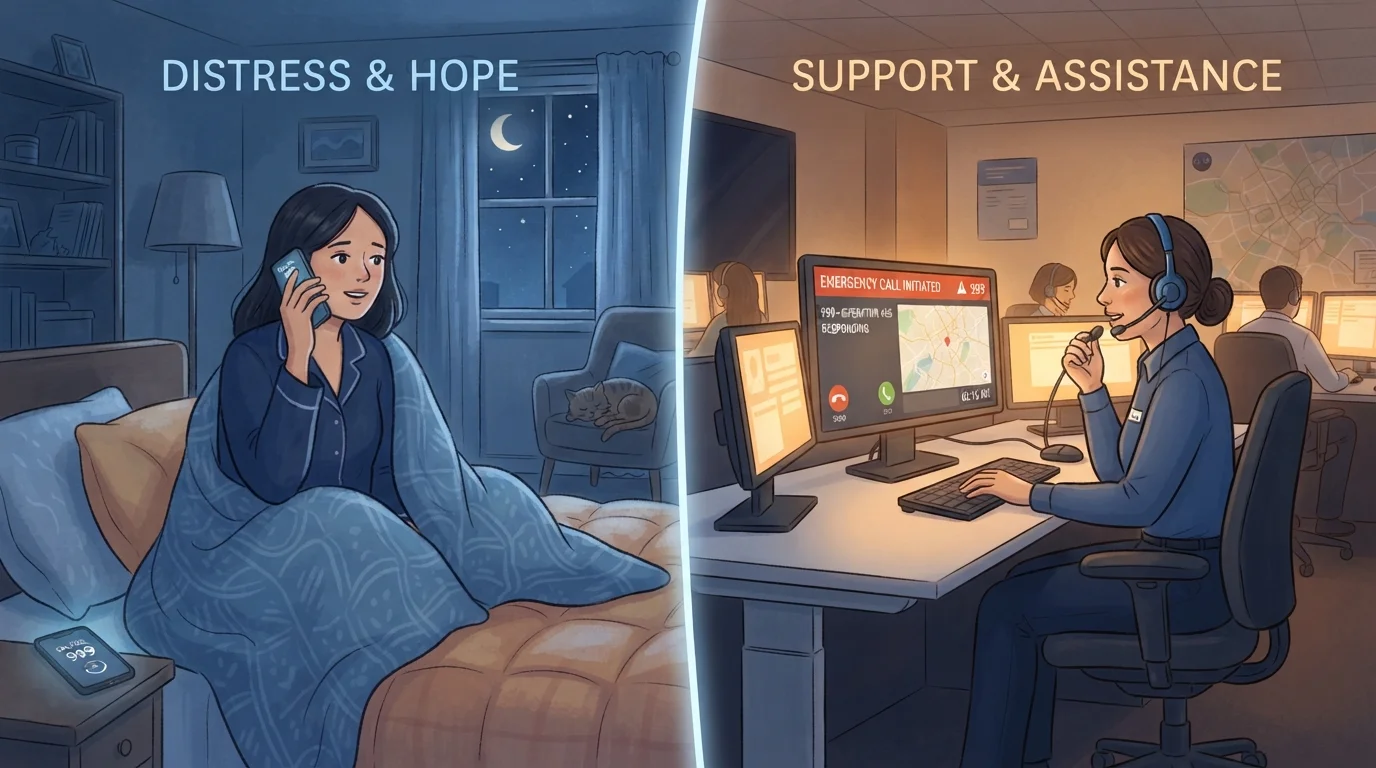

Why Supporting Someone in Crisis Is So Hard
When someone you care about is in a mental health crisis, the instinct to help can be overwhelming — and so can the fear of saying or doing the wrong thing. You may feel responsible for keeping them safe, uncertain about what they actually need, and exhausted by the weight of it all.
These feelings are valid. Supporting someone through acute distress — whether they're experiencing suicidal thoughts, a severe anxiety episode, or a breakdown — places real emotional demands on you. Understanding what a crisis actually looks like is an important first step. Our article on what counts as a mental health crisis can help you distinguish serious crisis from everyday distress, so you can respond more clearly.
The good news: you don't need to be perfect to help. You need to be present, informed, and honest about your own limits.
Practices for Helping Safely and Sustainably
These approaches are grounded in what mental health professionals and crisis support organizations consistently recommend for people in a supporting role.
Listen without trying to fix or minimize what the person is experiencing
People in crisis most often need to feel heard before they can accept any form of help. Rushing to reassure or problem-solve can inadvertently signal that their feelings are inconvenient or exaggerated. Validating their experience — 'that sounds incredibly hard' — creates the psychological safety needed to stay in conversation.
Ask directly and calmly about thoughts of suicide or self-harm
Research consistently shows that asking directly about suicidal thoughts does not plant the idea — it reduces shame and opens a door. Avoiding the topic can leave the person feeling more isolated. Use plain, non-alarming language and follow the person's lead in the conversation.
Connect the person to professional crisis support rather than serving as their sole resource
You cannot sustainably be someone's only lifeline, and attempting to do so increases the risk of burnout while potentially delaying professional care. Crisis lines, therapists, and community mental health teams are trained for exactly this work. Your role is bridge-builder, not sole provider.
Set and maintain clear boundaries around your availability
Boundaries aren't about abandonment — they're about honesty. Telling someone 'I'm available to talk until 10 p.m., and after that I need to sleep' is kinder than burning out and becoming unavailable entirely. Clear limits also encourage the person to develop a broader support network.
Check in with yourself regularly using brief self-assessments
Supporters often wait until they're in crisis themselves before acknowledging their own needs. Regular self-check-ins — asking 'How am I doing? Am I sleeping? Am I resentful?' — catch early signs of burnout before they escalate. Emotional depletion impairs your ability to help effectively.
When to Step Back and Involve Professional Support
One of the most important things you can do as a supporter is recognize the limits of what you can — and should — handle alone. You are not a crisis counselor, and that's okay.
You Don't Have to Manage This Alone
Reaching out to a mental health professional — for guidance on how to support someone else — is completely appropriate. Many therapists offer consultations specifically for family members or friends of people in crisis. Organizations like NAMI (National Alliance on Mental Illness) also provide education and peer support for people in a caregiving role.
If the person you're supporting is expressing thoughts of suicide, self-harm, or poses a risk to others, professional intervention is necessary. Our guide on when to call a helpline versus when to call emergency services can help you make that call with more confidence.
Encouraging the person to build their own plan — and not rely solely on you — is also protective. A personal crisis plan gives them a framework for their own care during difficult moments.
Protecting Yourself From Burnout
Caregiver burnout — the emotional exhaustion that comes from sustained caregiving without adequate support — is well-documented across mental health and social care research. It's not a sign of weakness or lack of love. It's a predictable consequence of giving more than you can sustain.
Burnout can develop gradually, often before you notice it. Warning signs include persistent fatigue, growing resentment, emotional numbness, and neglecting your own basic needs. If you recognize these in yourself, that's important information — not something to push through.
After a crisis passes, the period of recovery matters for supporters too, not just the person in crisis. Understanding what follow-up care typically looks like can help you plan for a more sustainable role going forward.
1 in 5
US adults experience mental illness each year
According to the National Institute of Mental Health, approximately 1 in 5 US adults lives with a mental illness, meaning many people will find themselves in a support role at some point.
40–70%
Family caregivers showing signs of depression
Research published in health and aging journals consistently finds that between 40 and 70 percent of family caregivers show clinically significant symptoms of depression, underscoring how real caregiver burnout is.
This article is for general informational purposes only and is not a substitute for professional mental health advice, diagnosis, or treatment. If you or someone you know is in immediate danger, please contact emergency services or a crisis helpline.