Why the Distinction Matters
When you or someone you care about is in acute distress, deciding who to call can feel impossible. The fear of overreacting - or underreacting - often causes people to delay seeking help altogether. But understanding the difference between a mental health crisis that needs emotional support and one that requires emergency medical intervention can genuinely save lives and prevent unnecessary distress.
What counts as a mental health crisis isn't always obvious. Distress exists on a spectrum, and most crisis moments don't require an ambulance - but some do. Getting this distinction clear means you're more likely to reach for the right kind of help, faster.
NHS 111 Mental Health Option
In England, dialling 111 and selecting the mental health option connects you to a trained mental health professional who can assess your situation and recommend the most appropriate support - including community crisis teams. This can be a useful middle step when you're unsure whether 999 is necessary. Availability may vary by area; check your local NHS trust for details.
When a Helpline Is the Right Call
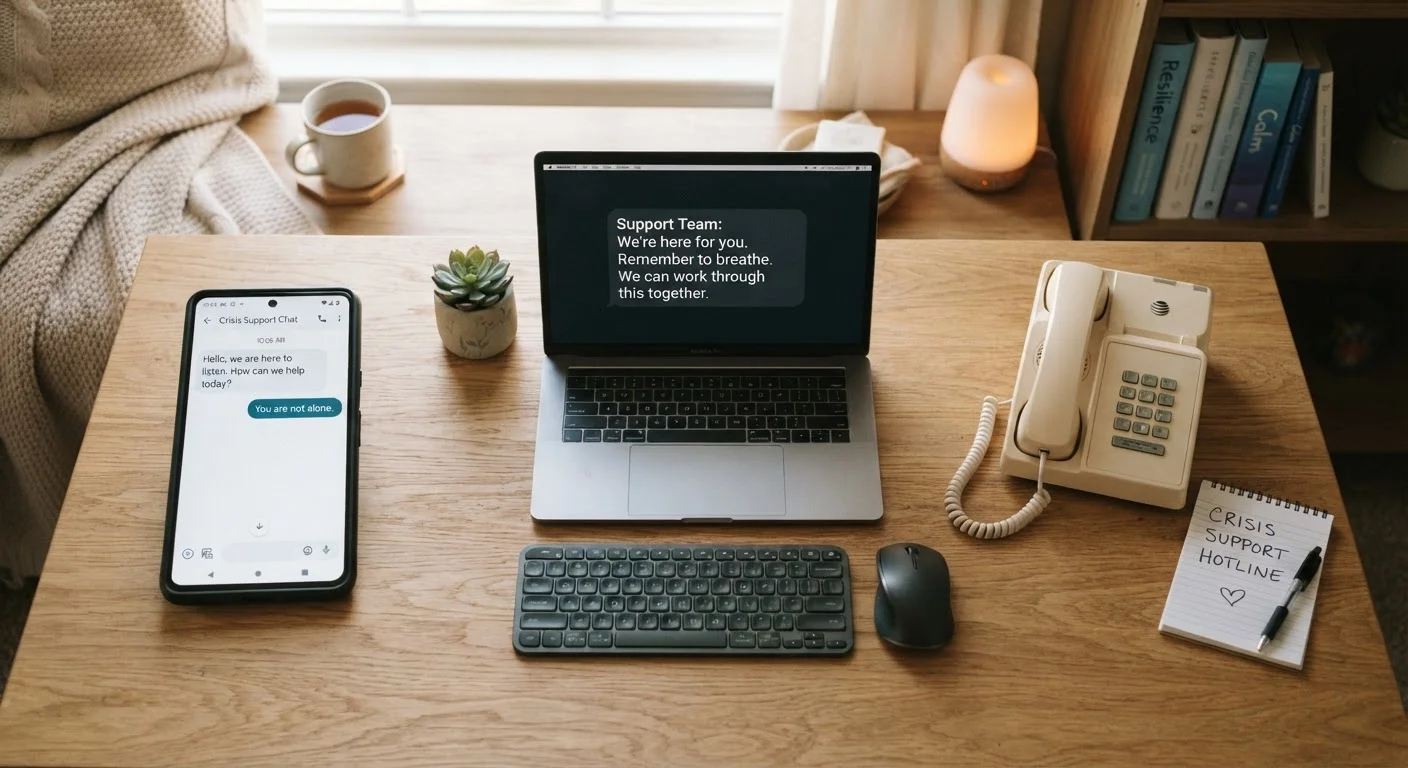
Mental health helplines - such as the Samaritans (116 123), Shout (text 85258), or the Mind Infoline - are staffed by trained volunteers and professionals who specialise in crisis support. They are the right option when:
- You are having thoughts of suicide or self-harm but are not in immediate danger
- You feel overwhelmed, panicked, or unable to cope and need someone to talk to
- You're supporting someone else in distress and need guidance on how to help
- You're unsure whether what you're experiencing warrants emergency care
Importantly, calling a helpline does not automatically involve the police or paramedics. Confidentiality is a core part of how most services operate. For a fuller look at how different services work, see crisis lines, text services, and online chats compared.
| Criterion | Mental Health Helplines | Emergency Services (999) |
|---|---|---|
| Response type | Remote, telephone or text support | Physical attendance - paramedics or police |
| Best for | Emotional distress, suicidal thoughts without immediate intent | Immediate physical danger or life-threatening injury |
| Confidentiality | Generally confidential; limits apply only at extreme risk | Information shared across emergency services as needed |
| Wait time | Usually minutes; varies by service | Priority response; can vary |
| Follow-up support | May signpost to local services or crisis teams | Medical treatment; potential referral to psychiatric liaison |
| Available 24/7 | Yes (Samaritans, Shout, and others) | Yes |
When to Call 999
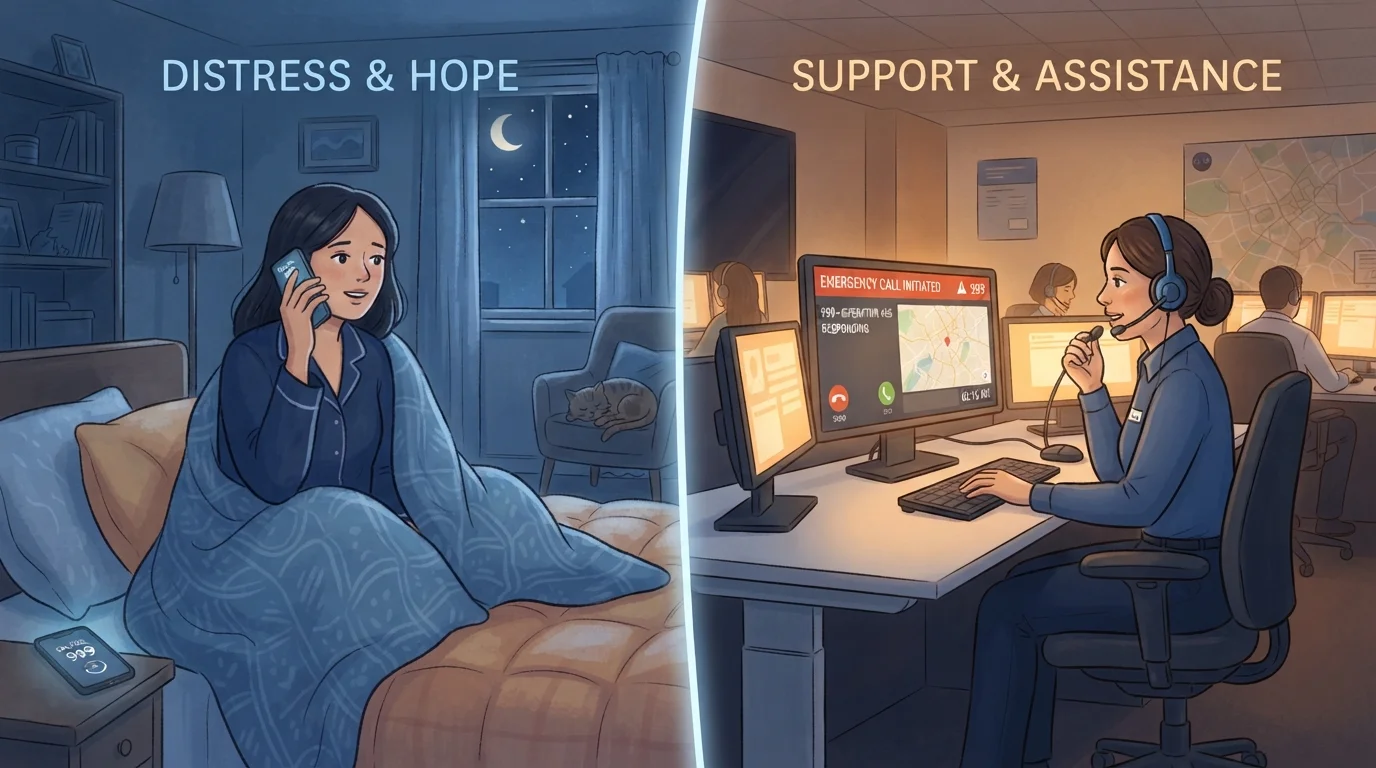
Emergency services exist for situations where immediate physical danger is present. In a mental health context, this means:
- Someone has taken an overdose or seriously harmed themselves and needs medical treatment
- A person is unconscious, not breathing, or physically injured
- There is an immediate and credible risk to the life of someone present - including yourself
- Someone is in a severely confused or psychotic state and is putting themselves or others in danger right now
It's worth knowing that NHS 111 (press option 2 for mental health) can also be a useful bridge - trained mental health professionals can triage your situation and direct you to the most appropriate response, including dispatching a crisis team rather than police where possible.
If you're worried about common myths around calling for help, you're not alone - fear of judgement or forced hospitalisation stops many people from reaching out when they need it most.
Planning Ahead So You Don't Have to Decide in the Moment
One of the most effective things anyone can do - whether for themselves or for someone they care about - is to create a crisis plan before a crisis happens. A plan that spells out which numbers to call, under which circumstances, removes some of the agonising decision-making at the worst possible moment.
See our guide to preparing a personal crisis plan for practical steps on building one. If you're supporting someone else through a difficult period, supporting someone through a mental health crisis offers guidance on how to do that sustainably.
116 123
Samaritans UK freephone number
The Samaritans line is free to call from any phone, at any time of day or night, and does not appear on most phone bills.
85258
Shout text crisis line number
Shout is the UK's 24/7 text-based mental health support service - useful if you're unable or unwilling to speak aloud.
This article is for general informational purposes only and does not constitute medical or clinical advice. If you are concerned about your safety or the safety of someone else, please contact emergency services or a qualified healthcare professional.