
Why the Format of Support Matters
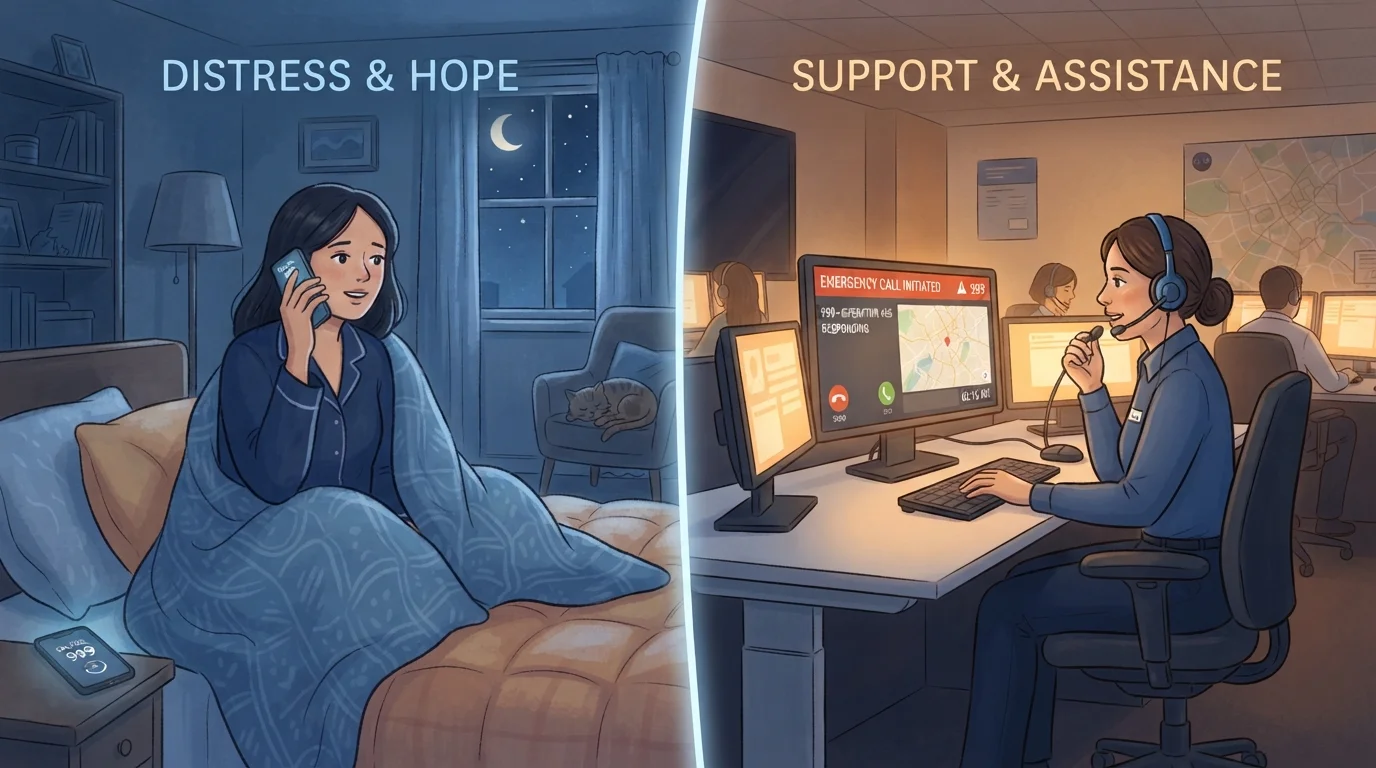
When you're in emotional pain, reaching out for help is hard enough without having to figure out which door to knock on. Crisis support services in the US have expanded significantly over recent years - the 988 Suicide and Crisis Lifeline, for instance, now offers phone, text, and chat options under one umbrella. But each format works differently, and knowing what to expect can lower the barrier to actually using them.
Before exploring each option, it's worth understanding what counts as a crisis moment. Our article on what counts as a mental health crisis can help you gauge where you are. And if you're ever unsure whether a situation requires emergency services instead, see our guide on crisis versus emergency response.
How Each Crisis Support Format Works
Here's a clear breakdown of the three main formats:
| Crisis Phone Line | Text Crisis Service | Online Chat | |
|---|---|---|---|
| Communication style | Voice call with counselor | SMS text exchange | Typed browser-based chat |
| Response speed | Near-immediate connection | May have short wait | Varies by demand |
| Discretion / privacy | Requires private space to speak | Silent, discreet | Silent, screen-dependent |
| Accessibility | Phone required | Mobile phone required | Internet device required |
| Good for | High urgency, immediate grounding | Quiet environments, articulators | Computer users, anonymous seekers |
| Deaf / hard of hearing | Less accessible | Well-suited | Well-suited |
| Emotional tone | Warm, vocal, immediate | Measured, written | Conversational, written |
Crisis Phone Lines
Phone hotlines connect you directly with a live counselor through voice. The 988 Lifeline is free, available 24/7, and staffed by trained volunteers and professionals. Voice calls allow counselors to pick up on tone and pacing, which can help them assess urgency quickly. For many people, hearing another human voice is genuinely grounding. The trade-off is that calling requires a private space and the ability to speak aloud - not always possible in shared homes or workplaces.
Text Crisis Services
Text lines - such as the Crisis Text Line (text HOME to 741741) - let you type your situation to a trained counselor in real time. Texting is quieter and more discreet, making it a good option if you're not alone or if speaking feels too exposing. Response times can vary and may be slightly slower than a live call, but the format helps many people articulate thoughts they struggle to say out loud. It's also more accessible for people who are deaf or hard of hearing.
Online Chat
Chat services, available through platforms like the 988 Lifeline website, work similarly to text but through a browser window rather than SMS. They're often well-suited to people already on a computer, those who find apps unfamiliar, or those who want a slightly more structured, conversation-like feel. Wait times vary by time of day and service demand.
Save the Number Before You Need It
It's much easier to reach out in a crisis moment if you've already saved a contact or bookmarked a chat link. Consider saving 988 in your phone now, or bookmarking the 988 Lifeline chat page. Having these ready removes one small but real barrier when distress is high.
Confidentiality and What It Covers
All three formats are confidential - counselors do not share your conversation with your employer, family members, or healthcare provider as a matter of routine. However, all crisis services have limits to confidentiality: if a counselor believes there is imminent risk to life, they may contact emergency services. This is a legal and ethical requirement, not a punitive one.
Many people hold back from calling because of fears around judgment or forced hospitalization. Those concerns are understandable, but often reflect misconceptions. Our piece on myths about calling a crisis line addresses these directly. For a broader overview of resources available, see our crisis resource reference guide.
After the Crisis: Finding Ongoing Support
Crisis lines are designed for acute moments - they aren't a substitute for ongoing mental health care. If you find yourself reaching out repeatedly, that's a signal worth paying attention to, not a source of shame. Sustained support through therapy or peer groups can help address underlying patterns.
If you're curious about therapy formats, our comparison of individual, group, and online therapy explains how each works and who each tends to suit. Peer support groups are another option that many people find helpful between formal therapy sessions.
This article is for general informational purposes only and is not a substitute for professional mental health advice, diagnosis, or treatment. If you are in crisis, please contact the 988 Suicide and Crisis Lifeline by calling or texting 988, or reach out to your local emergency services.