How the Gut and Brain Stay in Constant Contact
Your digestive system and your brain are never truly silent. From the moment you wake up, they are exchanging a stream of biochemical messages that shape digestion, stress responses, appetite, and emotional tone. Understanding this network is central to understanding how everyday dietary choices ripple outward into mental wellbeing.
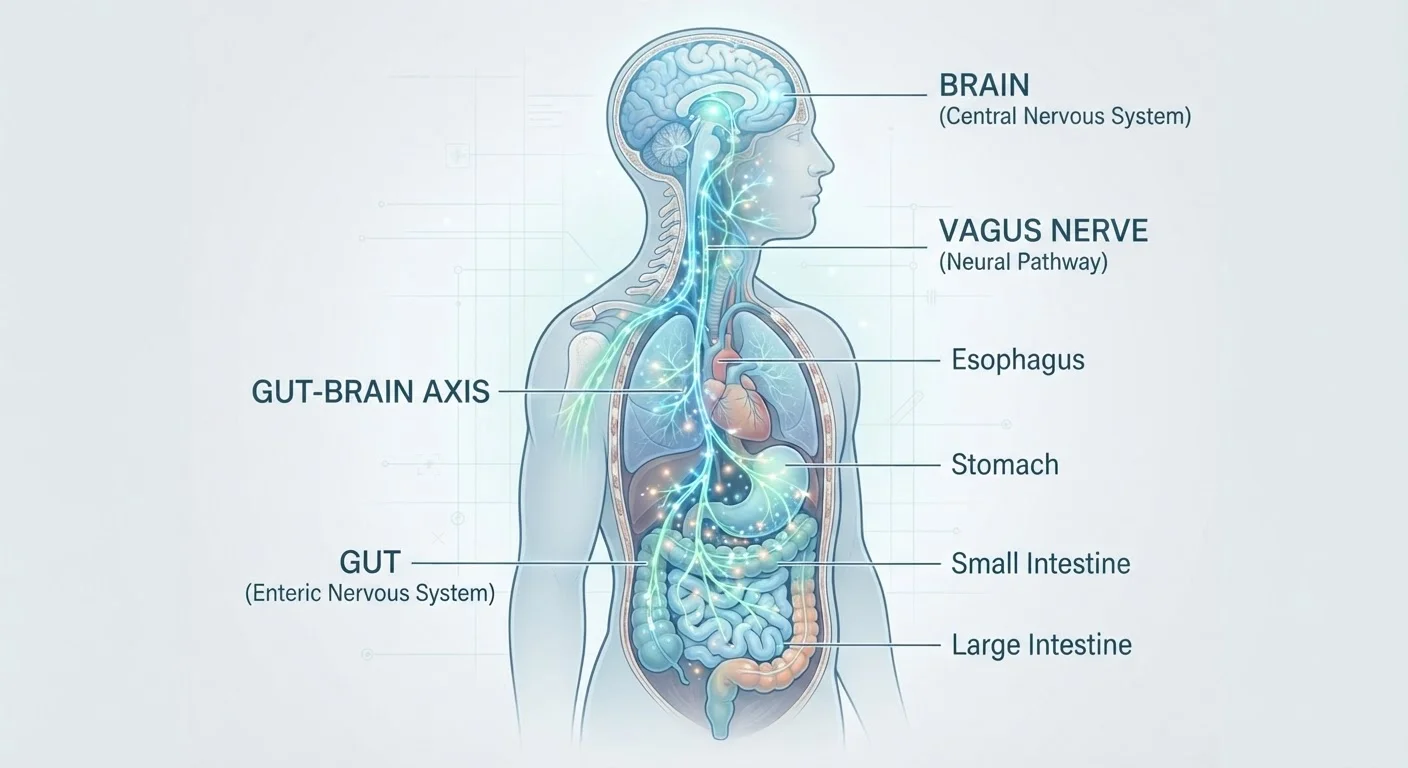
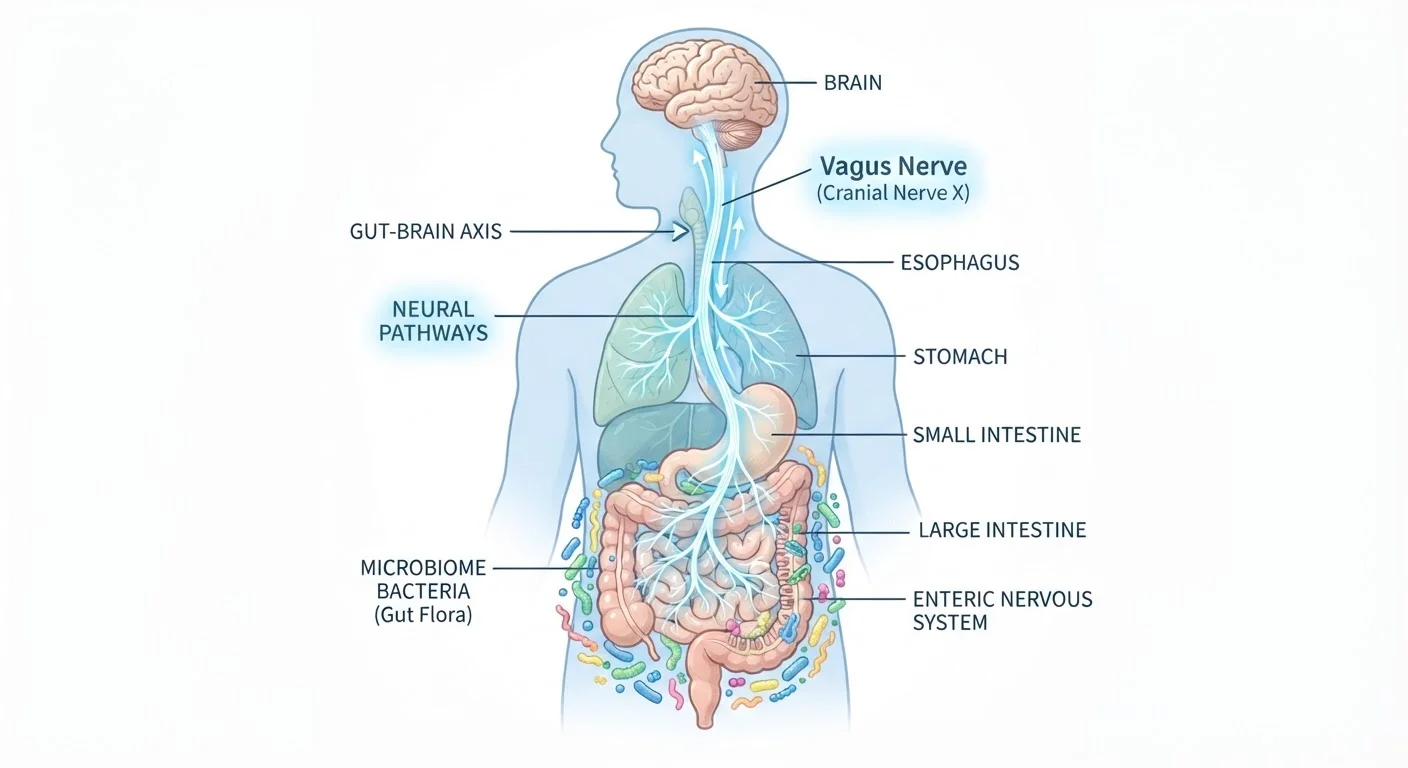
The primary physical highway is the vagus nerve, a cranial nerve that extends from the brainstem all the way into the abdomen. Crucially, communication is not one-directional: research indicates that roughly 80-90% of vagal fibers carry signals from the gut to the brain, meaning the digestive system is often initiating the conversation. Alongside the vagus nerve, the gut communicates through the immune system (releasing cytokines that can cross into neural tissue) and through hormones and neuropeptides that enter the bloodstream. For a broader introduction to this network, see our complete beginner's guide to the gut-brain connection.
~500 million
Neurons in the enteric nervous system
The enteric nervous system - embedded in the gut wall - contains roughly 500 million neurons, comparable in scale to the spinal cord, according to established neuroanatomy research.
90-95%
Body's serotonin produced in the gut
Research published in neurogastroenterology literature consistently estimates that the vast majority of serotonin synthesis occurs in the gastrointestinal tract, not the brain.
38+ trillion
Microbial cells in the human gut
Revised estimates published in Cell (Sender et al., 2016) suggest the gut microbiome contains approximately 38 trillion microbial cells - roughly equal to the number of human cells in the body.
The Microbiome: A Third Player in Mental Wellbeing
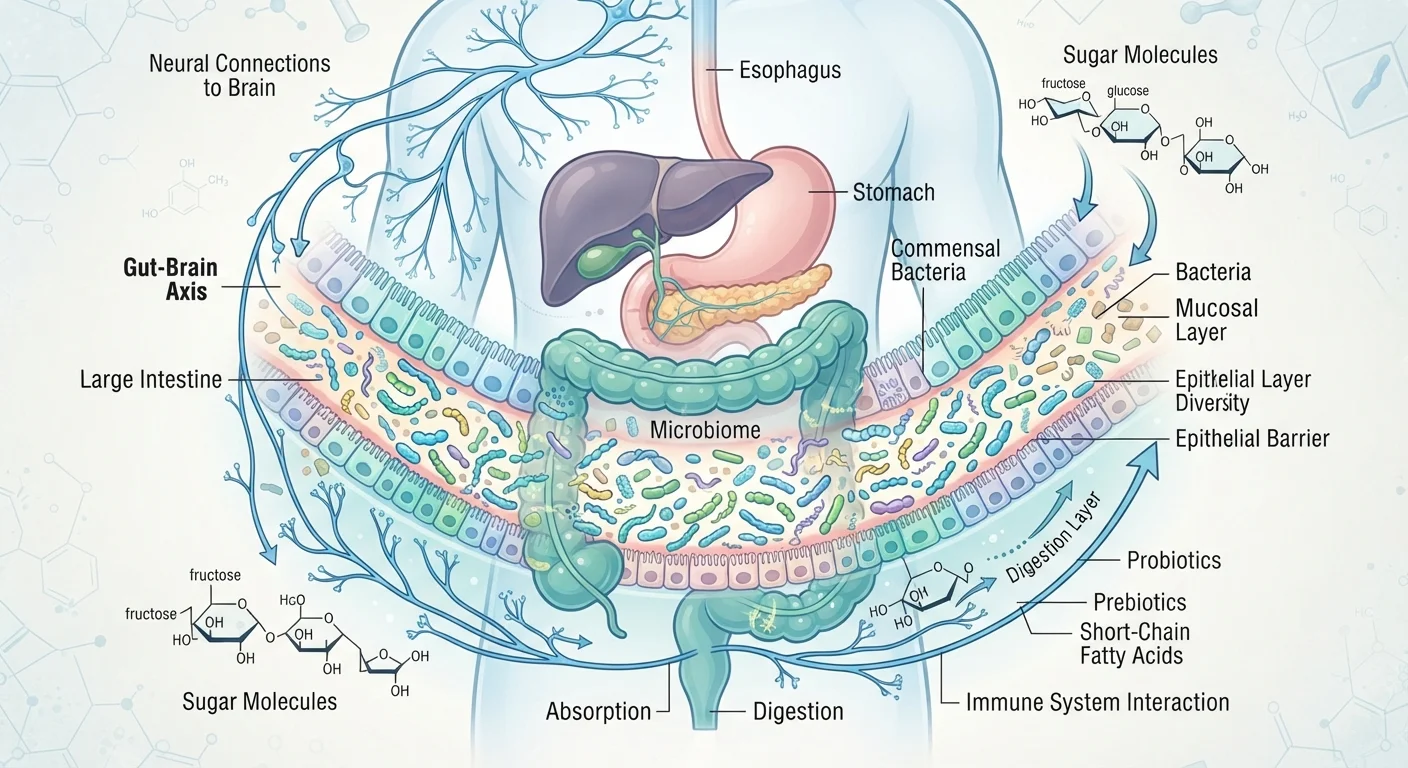
No discussion of the gut-brain axis is complete without the gut microbiome - the community of bacteria, fungi, and other microorganisms inhabiting your large intestine. These organisms are metabolically active, breaking down dietary fibers into short-chain fatty acids (SCFAs) like butyrate and propionate. SCFAs help maintain the gut lining's integrity, regulate immune activity, and may dampen neuroinflammation - a process increasingly linked to depressive symptoms in emerging research.
The microbiome also participates in neurotransmitter production. Approximately 90-95% of the body's serotonin is synthesized in the gut, and certain bacterial species produce or regulate precursors to serotonin and other signaling molecules. Dietary patterns that support microbial diversity - abundant vegetables, whole grains, legumes, fermented foods - may therefore have downstream effects on mood-related chemistry. Explore the gut-brain link hub for deeper coverage of microbiome science.
“The gut-brain axis represents one of the most exciting frontiers in both neuroscience and psychiatry. Understanding how the microbiome communicates with the brain opens new avenues for thinking about mental health that go beyond purely neurological models.”
— Emeran Mayer, Professor of Medicine and Psychiatry, UCLA; author of research on gut-brain interactions
Anti-Inflammatory Eating and the Gut-Brain Axis
Chronic low-grade inflammation is one of the mechanisms through which an unhealthy microbiome may negatively affect brain function. When the gut lining becomes more permeable - sometimes called 'leaky gut' in popular media - microbial byproducts can enter the bloodstream and trigger systemic immune responses that extend to the brain. An anti-inflammatory dietary approach works partly by restoring microbial balance and reinforcing the mucosal barrier.
Foods consistently associated with lower inflammatory markers include leafy greens, oily fish, berries, nuts, and olive oil. Omega-3 fatty acids found in oily fish are particularly well-studied; our omega-3 and brain hub covers their specific mechanisms in detail. Conversely, diets high in added sugar and ultra-processed foods have been linked to microbiome disruption and heightened inflammatory signaling - patterns examined in our article on how sugar and the microbiome may influence anxiety.
Building a Gut-Friendly Plate
Aim for at least five varied vegetable and fruit servings daily, include two portions of oily fish per week, and rotate your legume and whole grain sources to encourage microbial diversity. Fermented foods such as plain yogurt, kefir, and kimchi can also contribute live microorganisms to the gut environment. These are general healthy-eating principles - speak with a registered dietitian for guidance tailored to your individual health needs.
What the Research Shows - and Where It Is Still Evolving
Epidemiological studies, including large dietary-pattern analyses, have found associations between Mediterranean-style eating and reduced risk of depression. Randomized controlled trials examining diet as an intervention for mild-to-moderate depressive symptoms have produced encouraging results, though sample sizes are often small. The field of nutritional psychiatry is legitimate and growing, but it is important not to overinterpret current findings as proof that diet can replace established treatments.
For a grounded look at where popular claims outpace the evidence, see common misconceptions about the gut-brain link. The most defensible conclusion from current science is this: supporting gut health through dietary diversity and anti-inflammatory eating is a reasonable, low-risk lifestyle strategy that may contribute positively to mental wellbeing - alongside, not instead of, professional mental health care.
This article is for general informational purposes only and is not a substitute for professional medical or nutritional advice. Always consult a qualified healthcare provider before making significant changes to your diet or health routine.