What Is the Gut-Brain Connection?
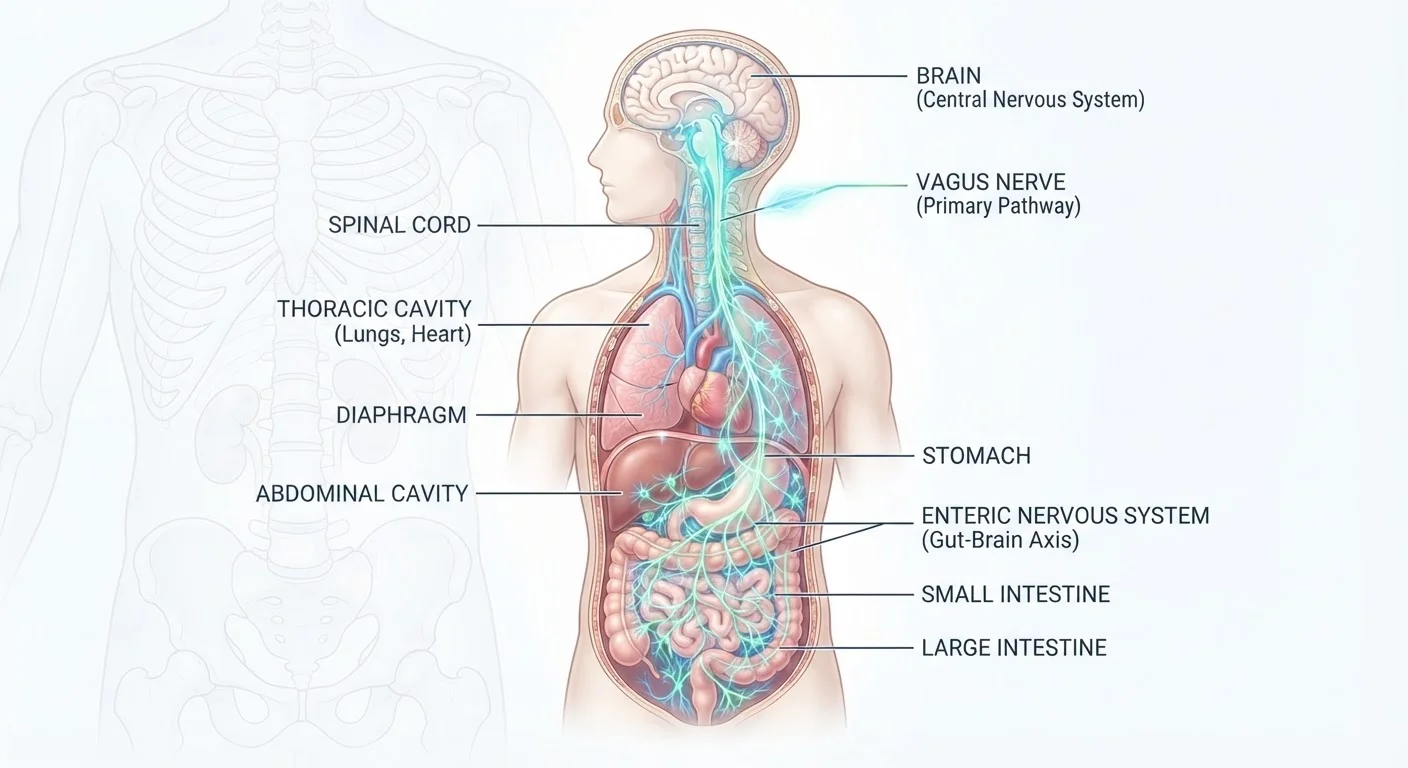
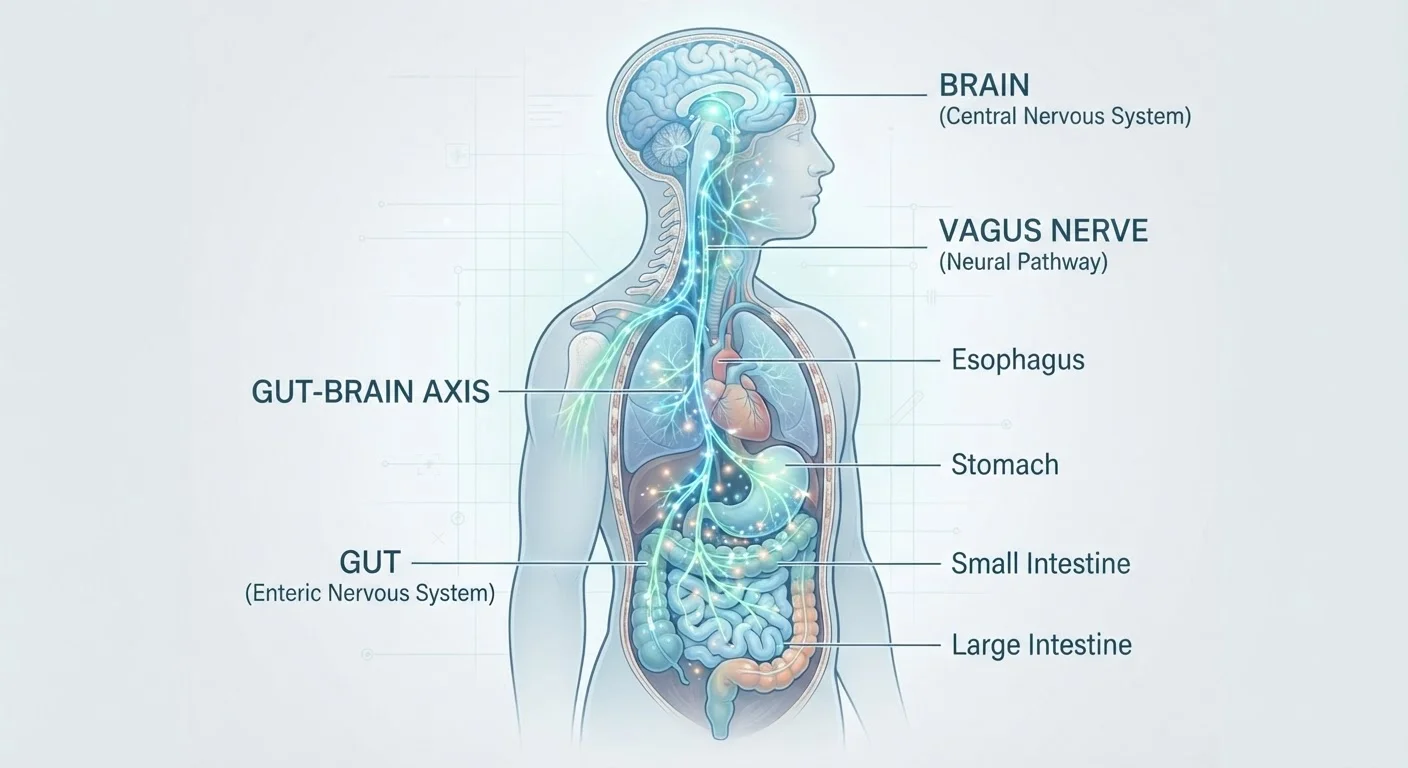
The term gut-brain connection - also called the gut-brain axis - describes the bidirectional communication network linking your gastrointestinal system and your central nervous system. Put simply, your gut and brain are in constant conversation, each influencing the other's activity.
This idea moves well beyond the folk wisdom of "gut feelings." Researchers across neuroscience, gastroenterology, and nutritional science have spent decades mapping the biological pathways involved. For a deeper look at this two-way relationship, see our guide to what the gut-brain axis is and why it matters.
Understanding these basics gives everyday readers a more accurate framework for evaluating health information - and a starting point for thinking about lifestyle choices that may support both digestive and mental wellness.
Gut-brain axis
The two-way communication system connecting the gastrointestinal tract and the central nervous system via nerves, hormones, and immune signals.
Vagus nerve
The longest cranial nerve in the body, acting as a primary communication highway between the gut and the brain.
Enteric nervous system (ENS)
A vast network of neurons embedded in the gut wall that governs digestive function and communicates closely with the brain.
Gut microbiome
The collective community of trillions of microorganisms - including bacteria and fungi - living in the digestive tract and influencing many body systems.
Short-chain fatty acids (SCFAs)
Compounds produced when gut bacteria ferment dietary fiber; they help maintain the gut lining and may have wider effects on inflammation and brain signaling.
Cytokines
Immune system messenger proteins that can travel through the bloodstream and influence brain activity, including aspects of mood regulation.
How the Gut and Brain Communicate
Communication between the gut and brain travels through three main channels:
- The vagus nerve: The longest cranial nerve in the body, it carries signals in both directions - from the brainstem down to the gut, and from the gut back up to the brain. Roughly 80-90% of the fibers in the vagus nerve are afferent, meaning they carry information from the gut to the brain.
- The enteric nervous system (ENS): Sometimes called the "second brain," the ENS is an extensive network of roughly 500 million neurons embedded in the gastrointestinal tract. It can operate independently of the central nervous system but communicates with it continuously.
- Hormonal and immune signaling: Gut cells release hormones and cytokines (immune messenger molecules) that enter the bloodstream and can influence brain function and mood regulation.
Your gut sends more signals upward than down
Because the majority of vagus nerve fibers carry information from the gut to the brain rather than the reverse, researchers now view the gut as an important sensory organ - not merely a passive system that the brain controls. This helps explain why gut health can show up as changes in how you feel mentally, not just physically.
These pathways explain why physical digestive discomfort can coincide with anxiety or low mood, and why psychological stress can produce gastrointestinal symptoms - the connection flows both ways.
The Role of the Gut Microbiome
The gut microbiome - the community of trillions of bacteria, fungi, and other microorganisms living in the digestive tract - plays a particularly active role in the gut-brain axis. These microbes:
- Produce short-chain fatty acids (SCFAs) that support gut lining integrity and have anti-inflammatory effects.
- Are involved in the synthesis of neurotransmitter precursors, including those related to serotonin and GABA pathways.
- Interact with the immune system, influencing systemic inflammation, which is increasingly studied in relation to mood disorders.
Microbiome composition varies significantly between individuals and is shaped by diet, early-life exposures, antibiotic use, and other factors. Research published in journals such as Nature Microbiology and Cell has advanced understanding of these interactions considerably, though much of this work remains at early or preclinical stages.
Dietary patterns associated with greater microbial diversity - such as those rich in fiber, fermented foods, and plant variety - are an active area of research. For context on how specific nutrients relate to brain health, see our overview of omega-3 fatty acids and the brain.
What This Means for Daily Life
Understanding the gut-brain axis is useful not because it offers quick fixes, but because it highlights how interconnected lifestyle factors are. Sleep quality, physical movement, stress levels, and dietary patterns all interact with gut health - and through it, with brain function.
Some evidence-informed starting points include:
- Eating a varied, fiber-rich diet that supports microbial diversity.
- Managing chronic stress, which can disrupt the gut lining and alter microbiome composition.
- Prioritizing consistent sleep, since gut bacteria appear to follow circadian rhythms.
- Staying physically active, as exercise is associated with beneficial shifts in gut microbial diversity.
For a practical look at building these habits, our article on daily habits that may support the gut-brain relationship goes into more detail.
This article is for general informational purposes only and is not a substitute for personalized medical advice. Consult a qualified healthcare professional before making significant changes to your diet or lifestyle, especially if you have an existing health condition.
What the Science Has Not Yet Proven
Public enthusiasm for the gut-brain axis has outpaced the evidence in several areas. It is important to be clear about what remains uncertain:
- Most human studies on probiotics and mood are small, short-term, and use varying strains - making broad conclusions premature.
- Demonstrating that changing the microbiome causes changes in mental health (rather than merely correlating with them) requires much stronger evidence than currently exists.
- The gut-brain axis does not operate in isolation; genetics, socioeconomic factors, and overall lifestyle all shape mental health outcomes independently.
Be cautious of oversimplified gut-health claims
The gut-brain axis is genuine science, but it has attracted significant commercial interest and some misleading health claims. Products or protocols that promise to "heal your gut and cure your anxiety" are going well beyond what current research supports. Speak with a healthcare professional before spending money on gut-focused supplements or programs marketed for mental health benefits.
This does not diminish the real science behind the gut-brain axis - it simply means readers should evaluate claims carefully. Our article on common misconceptions about the gut-brain link offers a grounded look at where popular narratives go beyond the evidence. And for a fuller exploration of how diet may influence mood, see our piece on why what you eat can shift how you feel.