What the Gut-Brain Axis Actually Is
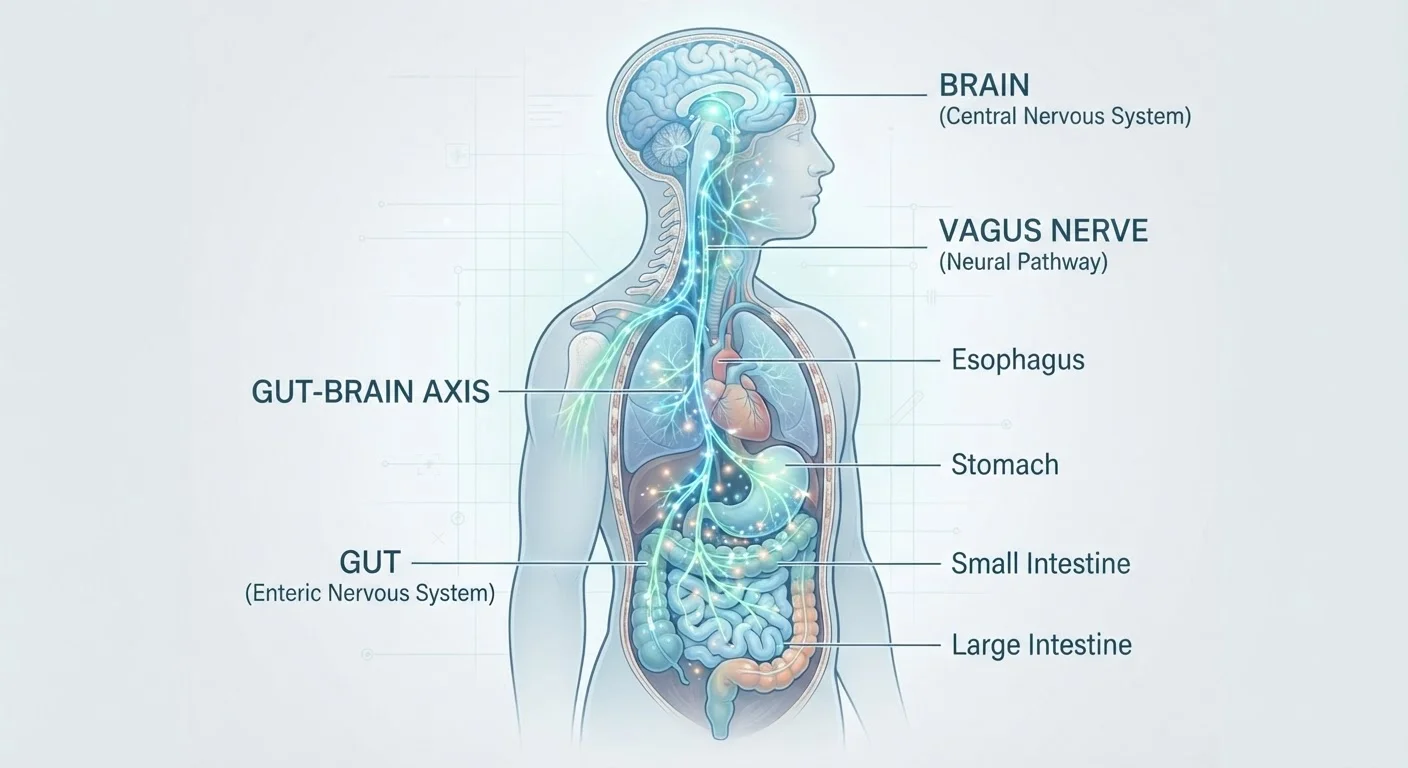
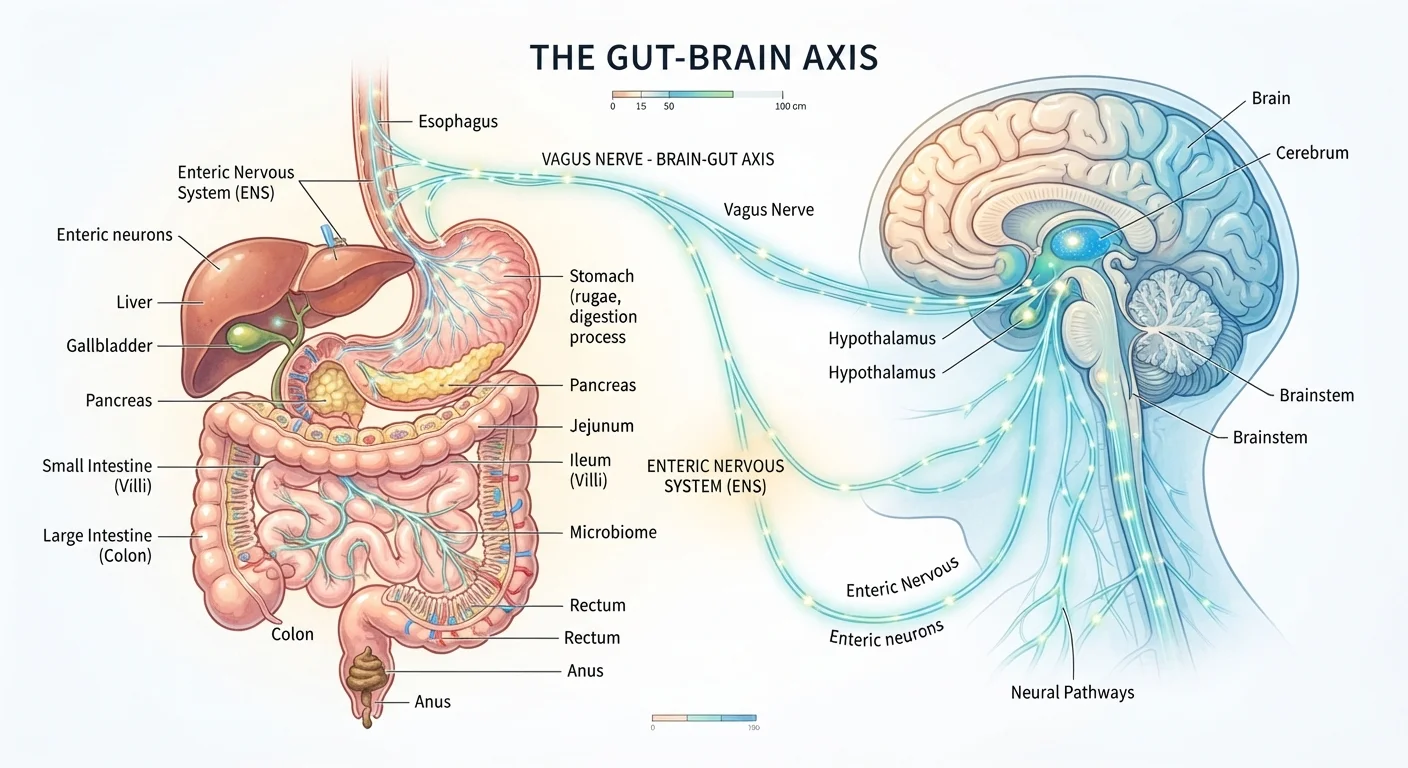
Your gut and brain are in constant conversation. The gut-brain axis is the scientific term for this bidirectional communication network - a system of nerves, chemical messengers, and immune signals that links your gastrointestinal tract to your central nervous system.
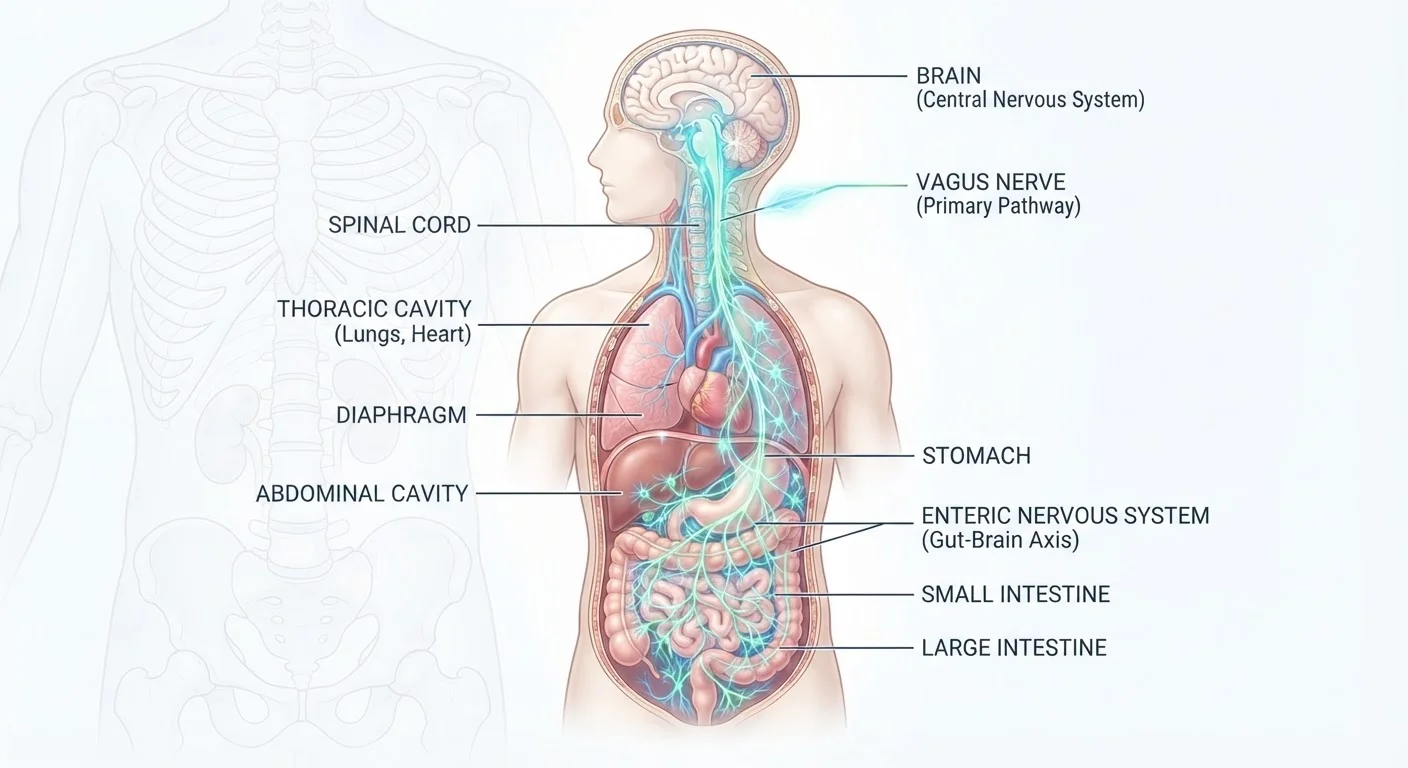
At the center of this network sits the vagus nerve, a long wandering nerve that runs from the brainstem all the way down to the abdomen. Contrary to what many people assume, the majority of signals on this nerve travel upward - from gut to brain - making your digestive system one of the brain's most active informants.
Alongside the vagus nerve, the axis includes the enteric nervous system (ENS) - a web of around 500 million neurons embedded in the gut wall. The ENS can regulate digestion independently of the brain, which is why it is sometimes described as the body's "second brain," though that label is more poetic than literal.
For a broader introduction to these ideas, see our plain-language guide to the gut-brain connection.
The Key Pathways: How They Communicate
Three main channels carry information between gut and brain:
- Neural pathways: The vagus nerve and enteric nervous system transmit rapid electrochemical signals in both directions.
- Endocrine (hormonal) signals: Gut cells secrete hormones such as serotonin precursors, ghrelin, and peptide YY that enter the bloodstream and reach the brain. It is estimated that roughly 90-95% of the body's serotonin is produced in the gut, though this gut-derived serotonin does not cross the blood-brain barrier directly - it acts locally and signals the vagus nerve.
- Immune and microbial signals: Trillions of microorganisms in the gut (collectively the gut microbiome) produce short-chain fatty acids, neurotransmitter precursors, and other compounds that interact with the gut lining and nervous system.
~500 million
Neurons in the enteric nervous system
According to neurogastroenterology research, the ENS contains roughly 500 million neurons - more than the spinal cord.
80-90%
Vagus nerve signals traveling gut-to-brain
Research on vagal anatomy indicates the large majority of fibers are afferent, meaning they carry information from the gut up to the brain.
~38 trillion
Microbial cells estimated in the human gut
A widely cited estimate in microbiome science places the number of microbial cells in the human body at roughly the same order as human cells.
These pathways do not operate in isolation. Stress, for example, activates the hypothalamic-pituitary-adrenal (HPA) axis - the body's central stress-response system - which in turn can alter gut motility and microbiome composition, illustrating just how tightly the two systems are coupled.
Why This Matters for Everyday Mental Wellness
Understanding the gut-brain axis helps explain some familiar experiences: the stomach-tightening sensation before a stressful event, or the low mood that sometimes accompanies gastrointestinal illness. These are not coincidences - they reflect real biological crosstalk.
Emerging research suggests that the composition of the gut microbiome may be associated with markers of anxiety, depression, and stress resilience, though this is an active field and causality is not yet firmly established. For a careful look at what the evidence currently supports, read our science review of the microbiome-mood link.
Diet appears to be one modifiable factor that interacts with this system. Dietary patterns rich in fiber, fermented foods, and omega-3 fatty acids have been associated with greater microbiome diversity in observational studies. You can explore nutrient-specific evidence in our omega-3 and brain health hub.
Start With Diet Diversity
One of the most evidence-supported ways to support the gut-brain axis is through dietary variety - particularly increasing fiber from vegetables, legumes, and whole grains, which feeds a broader range of gut microbes. This does not require a dramatic dietary overhaul; small, consistent changes tend to be more sustainable. Speak with a registered dietitian if you are unsure what changes are appropriate for your health situation.
It is equally important to be cautious about overclaiming. Popular wellness content sometimes presents the gut-brain link as a simple fix - it is not. For a grounded look at common misconceptions, see our article on where the evidence is often overstated.
This article is for general informational and educational purposes only and does not constitute medical or clinical advice. Always consult a qualified healthcare professional for guidance specific to your health needs.