
Good Intentions, Unintended Harm
Most people who say something stigmatizing about mental health aren't trying to be hurtful. They're trying to comfort a friend, encourage a family member, or simply fill an uncomfortable silence. But impact and intention aren't the same thing - and when it comes to mental health, even caring words can quietly reinforce the very stigma we hope to dismantle.
Understanding how this happens isn't about assigning blame. It's about recognizing patterns that most of us have absorbed from a culture that has long treated mental health as something to be fixed quickly, kept private, or reframed as a character test. If you've ever left a conversation feeling like you handled it wrong, this article is for you.
For a broader look at why stigma makes asking for help so difficult in the first place, explore how shame and judgment create barriers.
Common Mistakes That Reinforce Stigma - Even With Good Motives
The mistakes below are widespread precisely because they feel helpful in the moment. Learning to recognize them is one of the most practical things you can do to become a more supportive presence.
Minimizing the person's experience by comparing it to something "worse."
Why it happens: We instinctively try to reassure people by putting things in perspective, but comparisons like "at least you don't have it as bad as..." communicate that the person's pain isn't serious enough to warrant support.
Offering unsolicited advice or solutions immediately after someone opens up.
Why it happens: Jumping to solutions feels productive and caring, but it can signal that you're uncomfortable sitting with difficult emotions - and that the person should be "fixed" rather than heard.
Framing mental health struggles as a sign of weakness or a lack of effort.
Why it happens: Cultural narratives around resilience and self-reliance are deeply ingrained, leading many people to believe that mental health challenges reflect personal failure rather than complex, often biological, experiences.
Over-medicalizing by insisting someone "just needs professional help" and disengaging.
Why it happens: Redirecting to professionals is sometimes appropriate, but using it as the only response can communicate that the person's experience is too much to handle, or that your relationship isn't a safe space.
Disclosing someone's mental health information to others without their consent.
Why it happens: People sometimes share out of concern or a desire to rally support, not realizing that unauthorized disclosure removes the person's agency and can deepen shame and distrust.
Language plays a particularly large role in all of these patterns. Everyday phrases carry more weight than we realize - and small word choices can either open or close a conversation.
Why These Patterns Are So Hard to Spot
Stigmatizing responses often masquerade as positivity, practicality, or concern. That's what makes them so persistent. When someone says "just think positive" or "you have so much to be grateful for," it can feel like encouragement - but it implicitly communicates that the person's distress is a matter of attitude rather than a genuine health experience.
Positivity Can Become Pressure
Encouraging someone to "stay positive" or "look on the bright side" is one of the most common ways well-meaning support becomes stigmatizing. It implies that a mental health struggle is a failure of attitude rather than a legitimate health experience. Validating someone's feelings - without rushing to reframe them - is almost always more helpful than optimism.
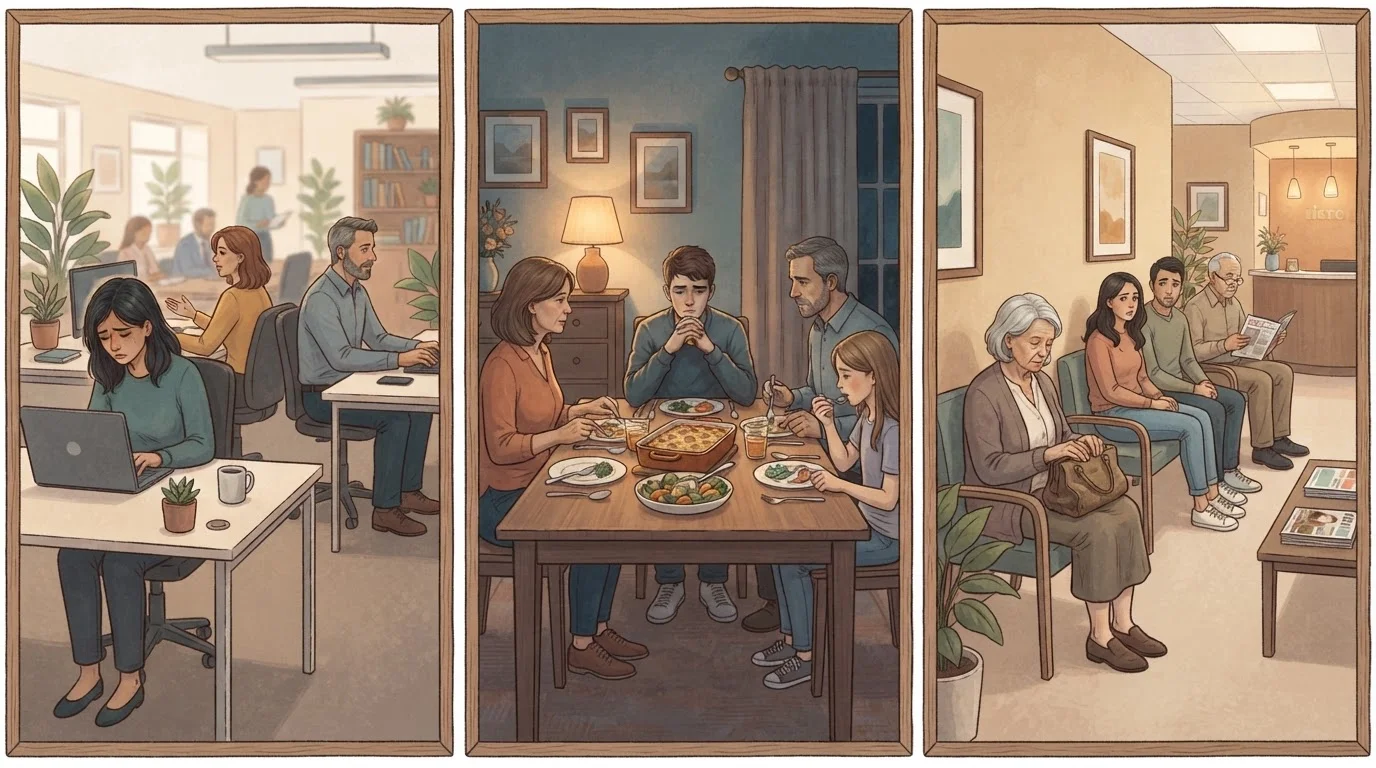
These patterns also show up differently depending on the setting. A minimizing comment from a manager lands differently than the same words from a close friend. Stigma in workplaces, families, and healthcare settings has its own dynamics worth understanding.
It also helps to recognize that stigma isn't only social - people internalize it, too. Understanding both social and self-stigma can clarify why your words may affect someone more deeply than you'd expect.
Moving Toward More Helpful Conversations
Becoming a more stigma-aware supporter doesn't require a clinical background or perfect language. It mostly requires a willingness to listen more and fix less. Asking "what would feel most helpful right now?" is often more valuable than any advice.
1 in 5
U.S. adults experience a mental illness each year
According to the National Institute of Mental Health, approximately one in five American adults lives with a mental illness in any given year - making supportive, stigma-aware conversations a widespread social need.
~60%
of people with mental illness don't receive treatment
The Substance Abuse and Mental Health Services Administration (SAMHSA) has consistently found that a majority of people with mental health conditions do not access care, with stigma identified as a leading barrier.
If you're not sure where to start, practical guidance on talking about mental health can walk you through real conversation strategies. And if you want to strengthen the broader web of support in your life, building a genuine support network offers concrete starting points.
Every conversation is a chance to do it a little better. Recognizing the mistakes covered here - not to feel guilty, but to grow - is a meaningful step forward.
This article is for general informational and educational purposes only. It is not a substitute for professional mental health advice, diagnosis, or treatment. If you or someone you know is struggling, please reach out to a qualified mental health professional.