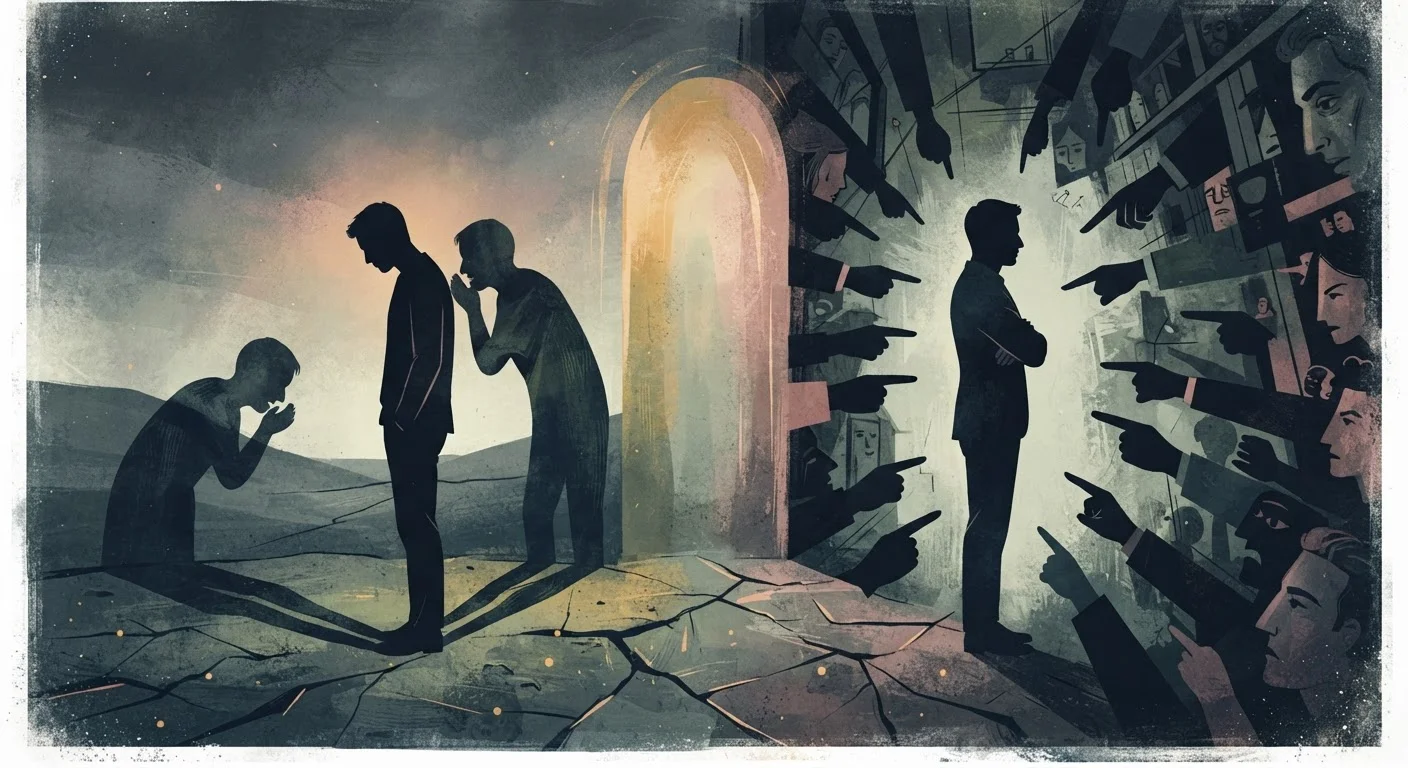

The Gap Between Needing Help and Asking for It
Nearly half of people who experience a mental health condition never receive any form of treatment. That gap isn't usually about access alone - it's often about stigma. Stigma is the invisible force that turns a reasonable instinct (reaching out) into something that feels dangerous, embarrassing, or simply impossible.
Understanding why stigma has this power is the first step toward dismantling it - for yourself and for the people around you.
~50%
People with mental illness who receive no treatment
Public health research consistently estimates that roughly half of people with diagnosable mental health conditions do not receive any professional treatment, with stigma cited as a leading reason.
11 years
Average delay between symptoms and treatment
According to data from the National Alliance on Mental Illness (NAMI), the average delay between the onset of mental health symptoms and receiving treatment is approximately 11 years.
40%
People who fear being seen as 'weak' for seeking help
Surveys on mental health help-seeking barriers frequently find that fear of appearing weak or incapable is among the top reasons people avoid reaching out for support.
How Stigma Actually Works
Stigma operates through labels. When society associates mental health conditions with words like 'crazy,' 'unstable,' or 'dangerous,' those labels take on social weight. People fear being assigned those labels - and losing the respect, opportunities, and relationships they've built.
This plays out in two distinct but connected ways. Public stigma describes the negative attitudes that communities, workplaces, and institutions hold toward people with mental health conditions. Self-stigma is what happens when someone internalizes those messages and begins to believe them about themselves. You can learn more about how each form operates in our article on the two faces of mental health stigma.
When both forms are present at once - which is common - they create a cycle. Society signals that mental illness is shameful. The individual absorbs that message. Shame prevents disclosure. And without disclosure, support never arrives.
The Specific Fears That Keep People Silent
Stigma doesn't just create vague discomfort - it generates specific, concrete fears that feel entirely rational to the person experiencing them:
- Fear of judgment: Being seen as weak, dramatic, or broken by friends, family, or coworkers.
- Fear of professional consequences: Worrying that a mental health diagnosis could affect a career, security clearance, or custody situation.
- Fear of losing relationships: Concern that loved ones will pull away or treat them differently.
- Cultural and community pressure: In many communities, mental health struggles are expected to be handled privately - or not acknowledged at all.
These fears reflect real social dynamics, which is why simply telling someone 'don't be ashamed' rarely works on its own. The documented patterns behind these barriers are explored in depth in our stigma by the numbers reference.
Small Steps Can Make a Real Difference
If stigma is making it hard to seek formal support, starting small is valid. Reading about mental health, talking to a trusted friend, or exploring anonymous online resources are all meaningful first moves. You don't have to make a big declaration to begin taking care of yourself. Each small step builds familiarity and reduces the fear that stigma feeds on.
What Actually Reduces Stigma
Decades of public health research point to several approaches that meaningfully reduce mental health stigma:
- Education
- Accurate information about mental health conditions challenges myths and replaces fear with understanding. Knowing that depression is a medical condition - not a character flaw - shifts how people think about it.
- Personal storytelling
- When someone shares their own mental health experience openly, it humanizes the issue and makes others feel less alone. This is one reason public advocacy from people with lived experience has such a measurable impact.
- Contact-based interventions
- Research shows that meaningful, respectful interaction with someone who has a mental health condition is one of the most effective ways to reduce stigma in others.
It's also worth noting that even well-meaning efforts can sometimes reinforce stigma in subtle ways. Our article on when trying to help reinforces stigma explores this important nuance.
“Stigma is a process by which the reaction of others spoils normal identity. It is not an attribute of the individual - it is a relationship between an attribute and a stereotype.”
— Erving Goffman, Sociologist and author of 'Stigma: Notes on the Management of Spoiled Identity' (1963)
Starting the Shift - For Yourself and Others
Change happens at two levels: personal and cultural. At the personal level, recognizing stigma as a social construct - not a truth about you or anyone else - creates room for a different response. If you've been avoiding seeking support, understanding that avoidance as a stigma response (rather than a personal failure) can be genuinely freeing.
At the cultural level, every conversation that treats mental health as a normal part of human experience chips away at stigma's foundation. That includes the words you use, the way you respond when someone shares a struggle, and whether you seek help yourself when you need it.
If crisis or immediate distress is part of your experience, understanding why people delay reaching out in crisis can help make sense of what's getting in the way - and what might help move past it.
This article is for general informational and educational purposes only and is not a substitute for professional mental health advice, diagnosis, or treatment. If you are struggling, please reach out to a qualified mental health professional or contact a crisis line in your area.