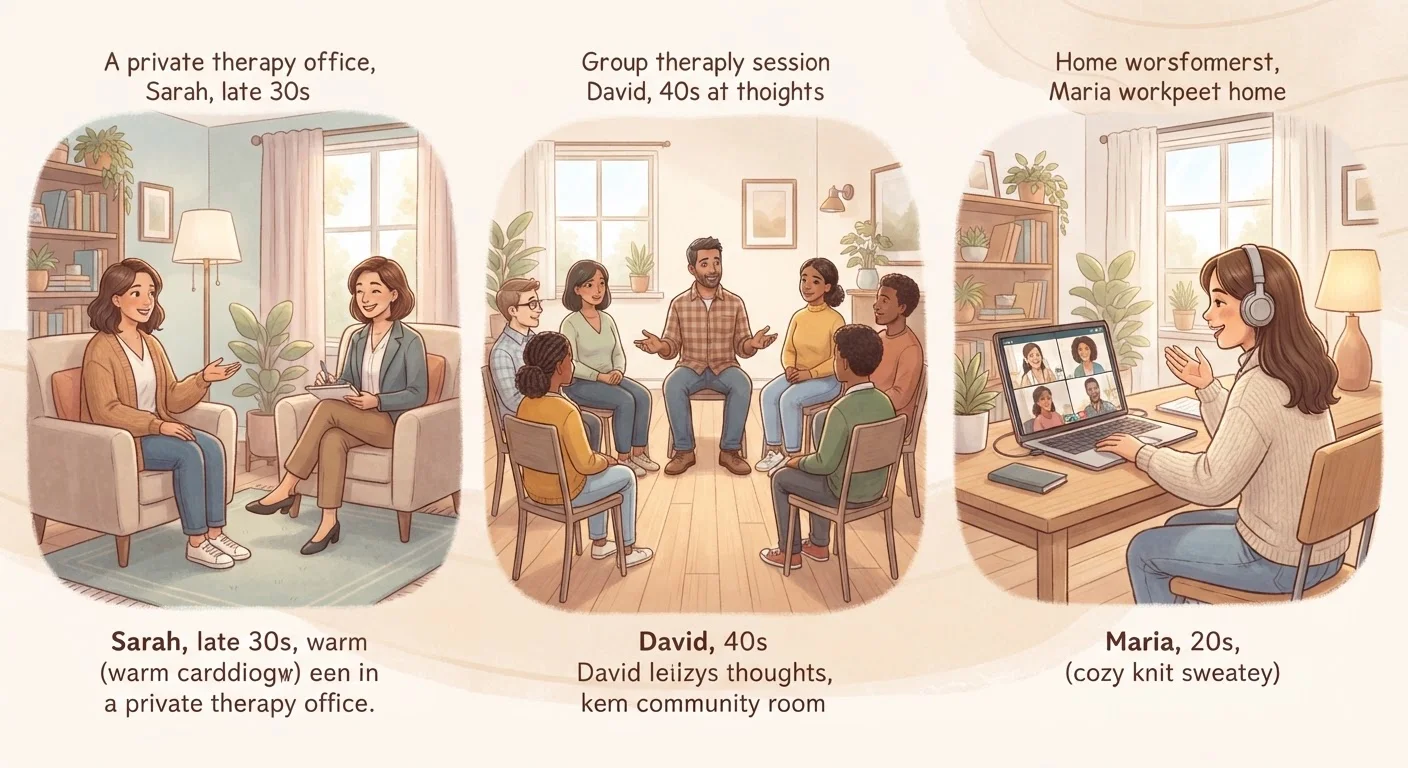

How Each Format Works
Individual therapy is a private, one-on-one arrangement between you and a licensed mental health professional. Sessions typically run 45-55 minutes and are scheduled around your availability. The therapist can tailor every conversation to your specific concerns, adjusting their approach as your needs evolve. For a broader look at what to expect, the Therapy Basics hub is a helpful starting point.
Group therapy, by contrast, brings together a small number of people - usually 5 to 15 - under the guidance of one or two licensed therapists. Sessions are structured around a shared theme or common experience, such as managing anxiety, processing grief, or building social skills. The therapist facilitates discussion, sets boundaries, and keeps the group emotionally safe, but much of the healing comes from the interactions among members themselves.
Both formats are grounded in established therapeutic approaches. Talk Therapy Basics offers more context on the core principles underlying most talk-based treatment.
| Criterion | Individual Therapy | Group Therapy |
|---|---|---|
| Session size | 1-on-1 with therapist | 5-15 participants + therapist |
| Privacy level | Fully confidential | Confidentiality agreements; peers present |
| Personalization | Highly tailored to individual | Structured around shared themes |
| Typical cost per session | Higher (one therapist, one client) | Lower (cost shared among members) |
| Peer connection | Not present | Core part of the format |
| Interpersonal skill-building | Limited in-session practice | Direct, real-time practice |
| Therapist attention | Undivided throughout session | Shared across group members |
What Each Format Does Well
Individual therapy excels when your concerns are complex, highly personal, or involve material you aren't ready to share in front of others. It allows for a depth of exploration that a group setting simply cannot always accommodate. The therapist can track your progress closely across sessions, adjusting goals and techniques accordingly.
Group therapy has a distinct advantage when interpersonal connection is part of what you're working on. Hearing someone else articulate an experience you've kept private - and realizing you're not alone - can be profoundly validating. Research suggests that this sense of universality (the recognition that others share your struggles) is one of group therapy's most powerful mechanisms.
~80%
People who benefit from psychotherapy
According to the American Psychological Association, research consistently shows the majority of people who engage in psychotherapy experience meaningful benefit.
5-15
Typical group therapy size
Most clinically led therapy groups maintain this range to balance peer interaction with adequate therapist oversight, per general clinical practice guidelines.
Group settings also give you a live environment in which to practice communication, set boundaries, and receive feedback - skills that are harder to develop in a room with just one other person. For more on the difference between peer-led support and professionally facilitated group therapy, see Support Groups vs. One-on-One Therapy.
Practical Considerations: Access, Privacy, and Cost
Privacy is a meaningful distinction. In individual therapy, confidentiality is tightly protected by professional and legal standards - what you share stays between you and your therapist, with narrow legal exceptions. In group therapy, therapists uphold the same professional standards, but they cannot legally bind other group members to silence. Most groups establish confidentiality agreements, and violations are rare, but the dynamic is worth understanding before you begin.
A Note on Group Confidentiality
While therapists who lead groups are bound by the same professional confidentiality standards as those in individual practice, other group members are not licensed professionals. Most groups ask all members to sign a confidentiality agreement at the outset, and violations are uncommon - but they can happen. If you have concerns about sensitive material being shared in a group context, this is worth discussing with the therapist before joining.
Cost is another practical factor. Group sessions are generally less expensive because the therapist's fee is distributed across participants. Individual therapy, while typically more costly per session, may be covered in part by insurance plans - it's worth checking what your plan includes. If you're weighing in-person versus remote options for either format, Online Therapy and In-Person Therapy: A Practical Comparison covers the key differences.
Neither format is a permanent commitment. Many people move between individual and group therapy at different points in their lives - or use both simultaneously. If you're curious how these two formats fit alongside other options, Individual, Group, and Online Therapy: How They Compare offers a broader view.
This article is for general informational purposes only and does not constitute medical or psychological advice. Please consult a qualified mental health professional for guidance specific to your situation.