
How the Two Formats Actually Work
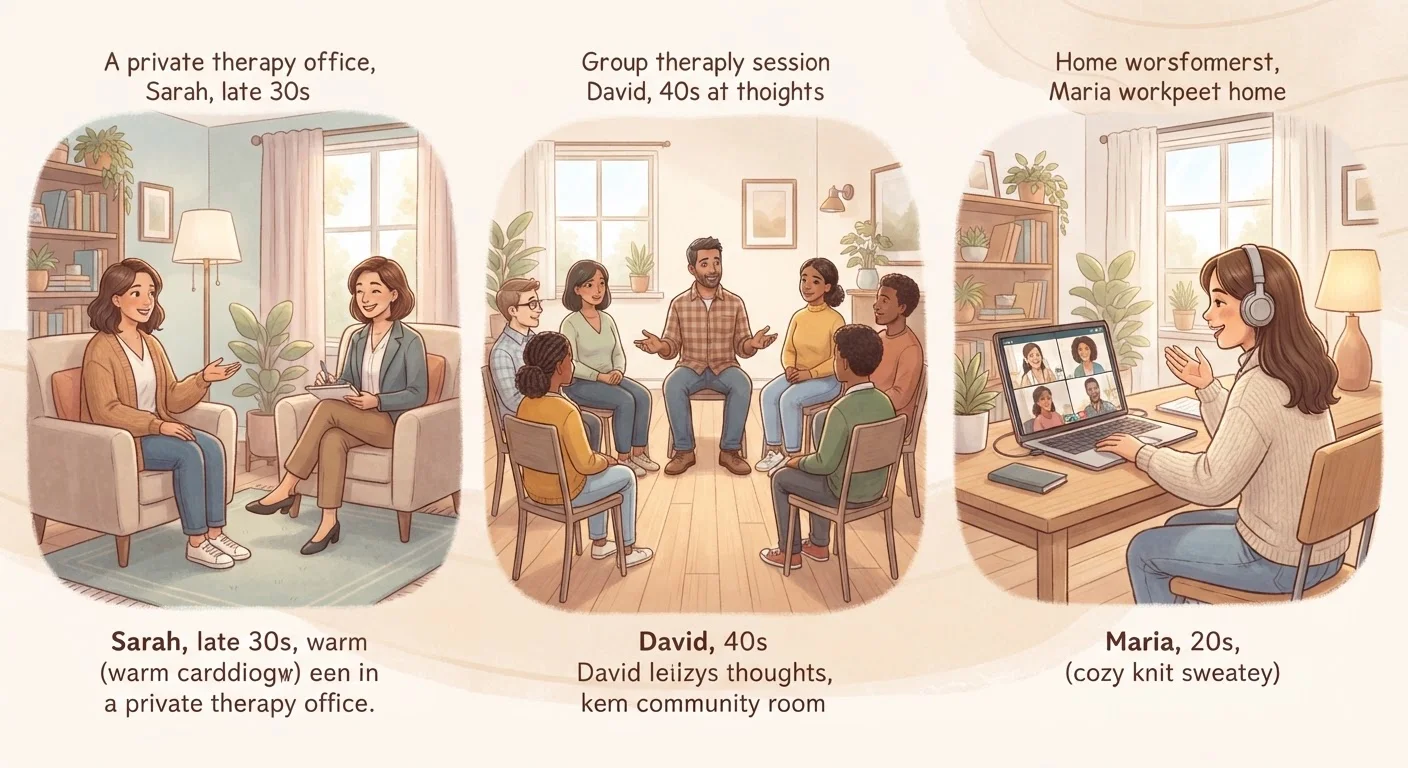
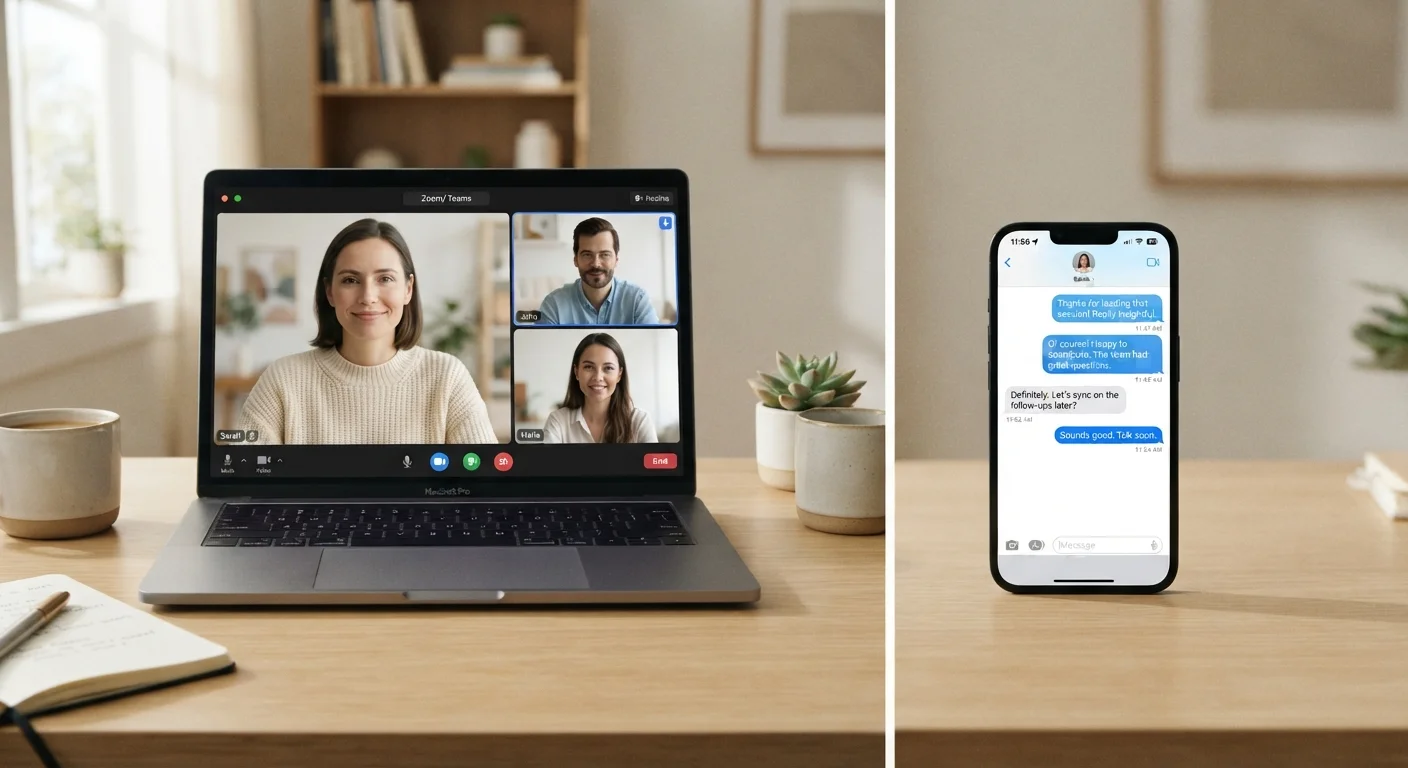
In-person therapy is the traditional model: you travel to a licensed therapist's office and meet face-to-face for a scheduled session, typically 45-55 minutes. Online therapy - sometimes called teletherapy or telehealth - delivers those same sessions through a secure video call, phone call, or in some cases asynchronous text messaging. The underlying clinical approach (for example, cognitive behavioral therapy or talk therapy) can be identical regardless of where the session takes place. What changes is the logistics, the sensory experience, and certain practical constraints. Understanding those differences is what helps you make a genuinely informed choice. For a broader look at how formats compare, see our comparison of individual, group, and online therapy.
Advantages and Disadvantages of Online Therapy
Online therapy has expanded access to mental health care for millions of people who previously faced real barriers - distance, disability, time, or stigma. Its convenience is genuine, not just a marketing claim.
No commute - access care from home
Eliminating travel time makes it easier to fit therapy into a busy week and reduces the logistical burden for people with mobility challenges, chronic illness, or caregiving responsibilities.
Broader therapist selection regardless of location
Online therapy allows you to work with a licensed clinician in your state even if no suitable providers are available locally - a significant advantage in rural or underserved areas.
Flexible scheduling, including evenings and weekends
Many online therapists offer appointment times outside standard business hours, which can be essential for people who cannot take time off work for midday appointments.
Reduced stigma barrier for first-timers
Some people feel more comfortable starting therapy when they don't have to walk into a building - the lower-stakes entry point can make it easier to take that first step.
Continuity of care during travel or relocation
As long as you remain in the same state where your therapist is licensed, online sessions allow you to maintain your therapeutic relationship even when your circumstances change.
At the same time, online therapy is not the right fit for every situation or every person. It's worth understanding where the format has real limits before committing to it.
Technology barriers can interrupt or limit care
Unstable internet connections, unfamiliarity with video platforms, or lack of a private device can all disrupt sessions - and not everyone has reliable access to the necessary technology.
Not appropriate for all clinical presentations
People experiencing active psychosis, severe eating disorders, high suicide risk, or certain complex trauma presentations are generally better supported through in-person or intensive outpatient settings.
Privacy at home is not always guaranteed
Shared living situations can make it difficult to speak freely in a session, which may limit what a person is willing to disclose and reduce the effectiveness of treatment.
Nonverbal cues are harder for therapists to observe
A camera captures only part of a person's physical presence - subtle body language, breathing patterns, or physical tension that would be visible in person may go unnoticed online.
Online Therapy Is Not the Same as a Self-Help App
Platforms that offer live, scheduled sessions with a licensed therapist are meaningfully different from self-guided mental health apps that use automated programs or AI chatbots. Both can play a role in a wellness routine, but they serve distinct purposes. Our article on self-guided apps vs. live online therapy explains the difference in detail.
If you're weighing a specific teletherapy platform, our companion article on what teletherapy platforms can and cannot do sets realistic expectations about how these services operate.
When In-Person Therapy Has a Clear Edge
For certain presentations and certain people, the physical therapy room offers something that a screen genuinely cannot replicate. A therapist can observe posture, breathing, and subtle body language cues that inform their clinical judgment. If you are managing a severe mental health condition, have recently experienced a crisis, or require structured assessments, in-person care is typically the more appropriate setting - and your treating clinician can help clarify this.
~80%
Patients reporting satisfaction with telehealth mental health visits
A review of telehealth effectiveness published in journals including the Journal of Psychiatric Research has consistently found high patient satisfaction rates for video-based therapy.
1 in 5
US adults living in mental health professional shortage areas
According to the Health Resources and Services Administration (HRSA), geographic shortages mean online therapy is not just convenient for many Americans - it may be their primary realistic option.
In-person care also removes the technology variable entirely. No dropped connections, no audio lag, no concern about a family member overhearing through a thin wall. For people who find it difficult to feel emotionally present through a screen, the physical environment of an office can make it easier to settle into the work of therapy. See our therapy basics hub for more on what to expect when starting out.
Practical Factors: Cost, Insurance, and Privacy
Cost is a real consideration. Insurance coverage for online therapy has expanded considerably in recent years, particularly following changes made during the COVID-19 pandemic, but coverage varies widely by plan, state, and provider. Before starting either format, it's worth contacting your insurer directly to confirm what is covered and whether out-of-network costs apply. Some online platforms operate on subscription or per-session models that fall entirely outside insurance - meaning you pay the full amount yourself.
Privacy deserves equal attention. In an office, confidentiality is built into the physical setting. At home, you may need to think about who else is in your space, whether headphones are necessary, or whether a parked car or a quiet coffee shop offers more privacy than your apartment. These are solvable problems for most people, but they are worth planning for rather than discovering mid-session. For those considering text-based options, our article on video therapy vs. text-based messaging therapy explains how asynchronous formats differ in both structure and clinical depth.
This article is for general informational purposes only and does not constitute medical or mental health advice. Please consult a qualified mental health professional for guidance specific to your situation.