
The Myth of Open Spaces
Most people, when they hear "agoraphobia," picture someone terrified of standing in a field or a wide plaza. The word comes from the Greek agora, meaning marketplace - a gathering place. But that etymology has led to a widespread misunderstanding of the condition.
Agoraphobia is not primarily about open spaces. It is about perceived entrapment. The core fear is being in a situation where, if something went wrong - specifically, if a panic attack or overwhelming physical symptoms occurred - the person could not escape easily or access help. That fear applies just as readily to a packed movie theater as to an empty parking lot.
Understanding how the main anxiety types differ is a useful starting point, because agoraphobia sits at an intersection - it shares features with specific phobias but operates through a distinct mechanism tied closely to panic.
How Panic Disorder Sets the Stage
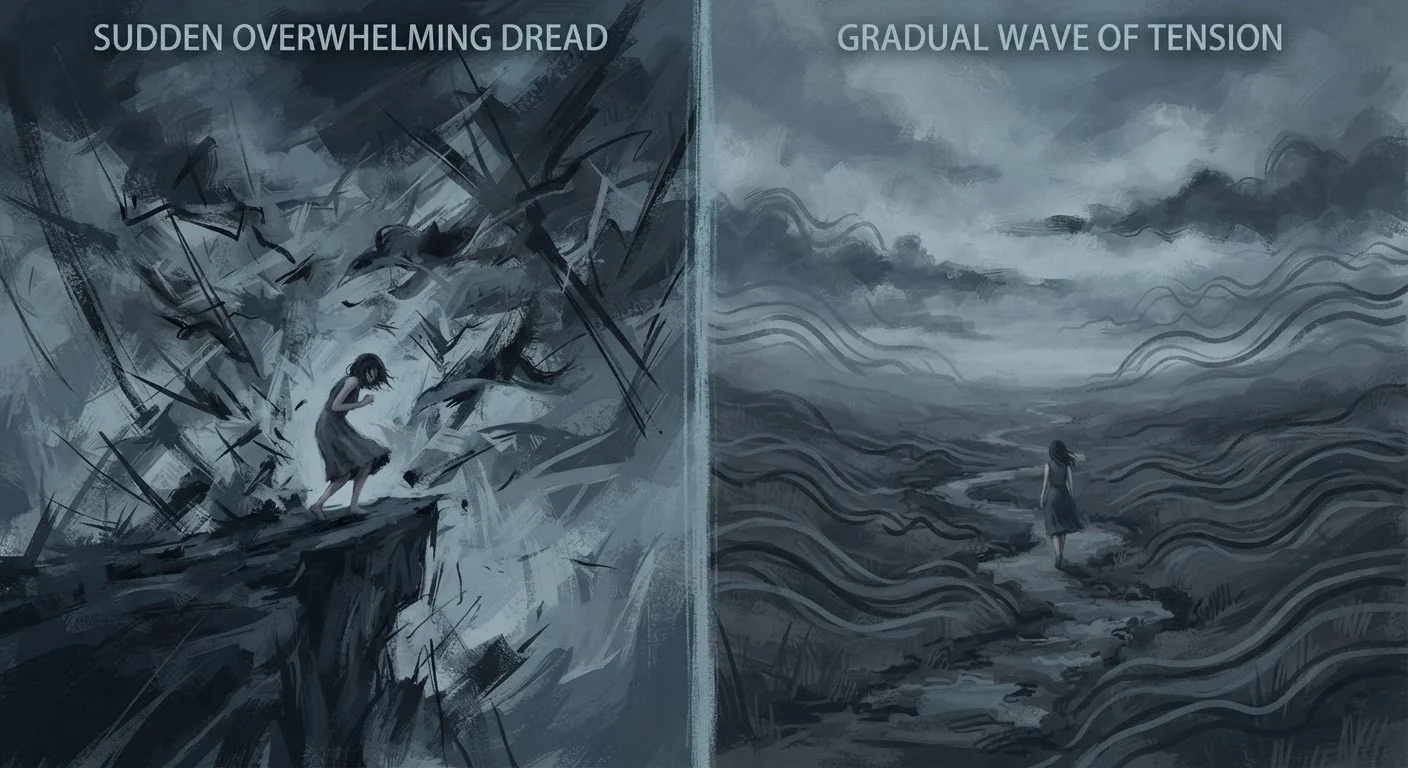
To understand agoraphobia, it helps to understand what distinguishes a panic attack from other intense fear responses. Panic attacks are sudden surges of intense fear accompanied by physical symptoms - racing heart, shortness of breath, chest tightness, dizziness, or a sense of unreality. They can feel like a medical emergency.
Panic disorder develops when a person experiences repeated panic attacks and becomes persistently worried about having more. That worry triggers a critical behavioral shift: avoidance. The person begins steering clear of situations where past attacks occurred, or where a future attack would feel especially dangerous or embarrassing.
~1.7%
Estimated US adult prevalence of agoraphobia
The National Institute of Mental Health estimates that agoraphobia affects approximately 1.7% of US adults at some point in their lives, with higher rates among women than men.
30-50%
Panic disorder patients who develop agoraphobia
Research published in psychiatric literature suggests that roughly 30 to 50 percent of individuals with panic disorder develop agoraphobic avoidance over time, though estimates vary across studies.
Over time, this avoidance pattern can solidify into agoraphobia. Research consistently shows that a significant proportion of people with panic disorder develop agoraphobia as a secondary condition - though the exact figures vary by population and diagnostic criteria used. The two conditions reinforce each other: panic attacks fuel avoidance, and avoidance confirms the belief that certain situations are genuinely dangerous.
What Agoraphobia Looks Like in Practice
The DSM-5 identifies five categories of situations that people with agoraphobia typically fear or avoid:
- Using public transportation (buses, trains, planes)
- Being in open spaces (parking lots, marketplaces, bridges)
- Being in enclosed spaces (shops, theaters, elevators)
- Standing in line or being in a crowd
- Being outside the home alone
A diagnosis requires marked fear in at least two of these categories, active avoidance or endurance with significant distress, and symptoms lasting at least six months. Crucially, the person must recognize that the fear is disproportionate - and the condition must meaningfully interfere with daily life.
Agoraphobia exists on a spectrum. Some people manage with workarounds - always traveling with a companion, choosing less crowded times to shop. Others become housebound, unable to leave without overwhelming distress. A broader look at intense fear responses helps place this within the wider landscape of anxiety disorders.
Why It's Not Just Another Phobia
Specific phobias - fear of spiders, heights, or needles - are tied to identifiable objects or situations. Agoraphobia is different because the feared situations share a theme rather than a single trigger, and that theme is about what could happen, not about the place itself.
Sorting out the terminology around fear, anxiety, and phobia makes this clearer: a spider phobia is about the spider; agoraphobia is about the scenario of being stranded in distress without recourse. This is also what separates it from social anxiety disorder, which centers on fear of judgment by others rather than fear of physical entrapment.
Recognize the Avoidance Cycle Early
Avoidance provides immediate relief from anxiety, but it prevents the brain from learning that the feared situation is actually manageable. If you notice yourself routinely restructuring your life around what you can't face, that pattern is worth discussing with a mental health professional. Catching it early generally makes treatment more straightforward.
If you recognize these patterns in yourself or someone close to you, speaking with a mental health professional is the most important next step. Both agoraphobia and panic disorder are well-documented conditions with established treatment approaches, and professional evaluation is the appropriate path to understanding what's happening and what options exist.
This article is for general informational purposes only and does not constitute medical advice. Always consult a qualified healthcare professional for concerns about your mental or physical health.