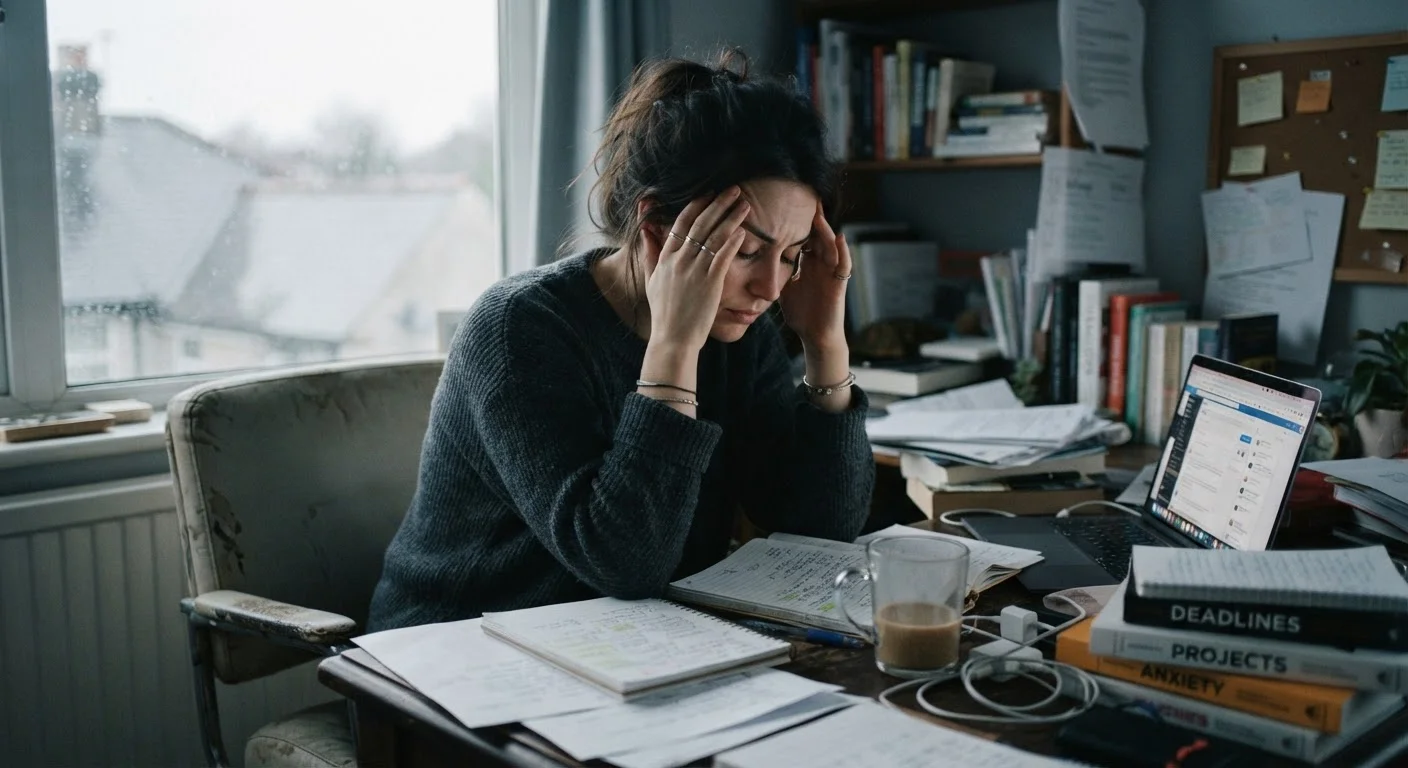

What Stress Actually Does to Your Body
Stress is your body's built-in alarm system. When you perceive a threat — a tight deadline, a difficult conversation, financial pressure — your brain triggers the release of hormones like cortisol and adrenaline. Heart rate rises, muscles tense, and digestion slows. This stress response was designed for short bursts of danger.
The problem arises when the alarm stays on. Chronic stress keeps your nervous system in a sustained state of high alert, which over time can contribute to sleep disruption, weakened immune function, digestive issues, and worsened mood. Understanding this is the first step — stress isn't just a feeling, it's a physiological process, and that's exactly why consistent habits can influence it.
Stress response
Your body's automatic physical reaction to a perceived threat, involving the release of hormones like cortisol and adrenaline that prepare you to respond quickly.
Chronic stress
Stress that persists over a long period — weeks or months — rather than resolving after a short-term challenge, which can have ongoing effects on physical and mental health.
Cortisol
A hormone released during stress that helps mobilize energy; when elevated for long periods, it can disrupt sleep, mood, and immune function.
Parasympathetic nervous system
The part of your nervous system responsible for the 'rest and digest' state — it calms your body down after a stress response, slowing heart rate and reducing tension.
Circadian rhythm
Your body's internal 24-hour clock that regulates sleep-wake cycles, hormone release, and other biological processes.
Mindfulness
The practice of deliberately paying attention to the present moment — thoughts, feelings, and sensations — without judging them as good or bad.
Why Habits — Not One-Time Fixes — Matter
Many people reach for a single solution when stress peaks — a relaxing bath, a walk in the park, or a weekend off. These can help in the moment, but they don't train your nervous system to handle stress more efficiently over time. What research consistently shows is that repeated, predictable behaviors gradually recalibrate how your body responds to stressors.
Think of stress-relief habits like physical conditioning: a single workout doesn't make you fit, but three months of regular movement does. The same logic applies to breathwork, sleep routines, and mindfulness. The triggers of stress in your life may not disappear, but your physiological and psychological response to them can become more manageable with practice.
Start Smaller Than You Think You Should
One of the most common reasons new habits fail is starting too ambitiously. If you're new to stress-relief practices, commit to just two or three minutes of a new habit daily rather than a full routine. Consistency across small sessions builds the neural pathways that make the habit stick — scale up only after the behavior feels automatic.
Five Evidence-Informed Habits Worth Starting With
You don't need to overhaul your lifestyle overnight. Begin with one or two of these well-researched habits and add others gradually.
- Prioritize sleep consistency. Going to bed and waking at the same time each day supports your circadian rhythm and helps regulate cortisol. Even small improvements in sleep quality are linked to reduced stress reactivity. See the principles behind sustainable stress relief for more on sleep-focused strategies.
- Move your body regularly. Aerobic exercise is one of the most consistently supported stress modulators in research. A brisk walk, a bike ride, or gentle swimming — frequency matters more than intensity for beginners.
- Practice controlled breathing. Slow, deliberate breathing activates the parasympathetic nervous system — your body's natural calming mechanism. Breathing techniques for stress are easy to learn and require no equipment.
- Build social connection intentionally. Research in social psychology consistently links meaningful relationships to lower stress and better emotional resilience. Even brief, genuine interactions can buffer stress responses.
- Try mindfulness or grounding practices. Mindfulness involves paying deliberate, non-judgmental attention to the present moment. It doesn't require meditation cushions or lengthy sessions. Starting with mindfulness can be as simple as five minutes of focused breathing or a short body scan.
Common Beginner Mistakes to Avoid
Starting out, it's easy to adopt habits that feel relieving but subtly work against you. Scrolling social media to unwind, for instance, can increase exposure to stressful content. Venting without resolution can sometimes reinforce a stress mindset rather than process it. Alcohol is often used as a short-term relaxant, but it disrupts sleep architecture and can worsen anxiety over time.
Being aware of these patterns is important. Some habits that feel helpful can actually backfire — understanding which ones means you can make more intentional choices without self-criticism.
Avoidance Can Disguise Itself as Self-Care
Not every activity that feels relaxing in the moment actually reduces stress in the long run. Behaviors like excessive TV watching, overeating, or withdrawing from others can provide short-term relief while reinforcing avoidance patterns that make stress harder to manage over time. If you notice a habit consistently leaves you feeling worse afterward, it's worth reconsidering its role in your routine.
When to Seek Professional Support
Self-help habits are a meaningful starting point, but they are not a substitute for professional care when stress becomes severe or persistent. If you find that stress is significantly impairing your work, relationships, or physical health — or if feelings of hopelessness, panic, or inability to function are present — it's time to reach out to a qualified mental health professional or your primary care physician.
Therapists trained in approaches like Cognitive Behavioral Therapy (CBT) can help you identify and change the thought patterns that amplify stress. A physician can rule out underlying medical causes for stress-related symptoms. Seeking help is not a sign that self-help has failed — it's an additional tool, and often the most effective one for certain circumstances.
This article is for general informational and educational purposes only and does not constitute medical or mental health advice. Always consult a qualified healthcare professional for guidance specific to your situation.