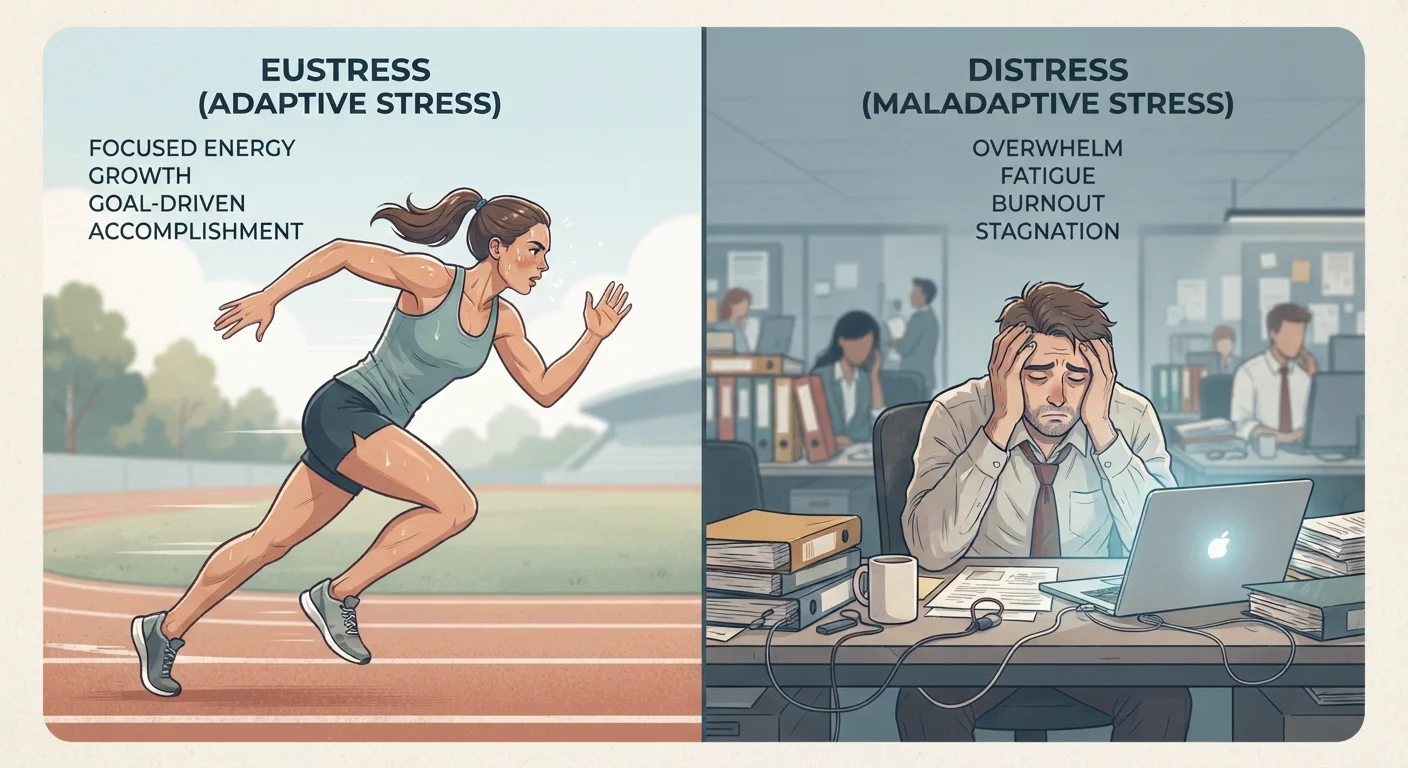

When Exercise Stops Helping and Starts Hurting
Exercise has well-documented benefits for mood, anxiety, and stress resilience. But the relationship between movement and mental health is not simply "more is better." For a growing number of people — particularly those already navigating high stress or burnout — the way they exercise matters as much as whether they exercise at all.
The mental health case for movement rests on moderate, consistent activity that the nervous system can absorb and recover from. When workouts become compulsive, punishing, or disconnected from how you actually feel, they can feed the same stress cycles you're trying to escape. Separating exercise myths from evidence is an important first step before building any fitness routine for mood support.
~150 min
Weekly moderate exercise linked to mood benefits
Public health guidelines from the U.S. Department of Health and Human Services suggest approximately 150 minutes of moderate-intensity activity per week is associated with meaningful mental health benefits — intensity is not the primary driver.
~30%
Adults who report exercise worsening stress
Research published in mental health and sports science literature consistently finds a subset of exercisers report that their routines increase rather than decrease psychological stress, often linked to compulsive or guilt-driven motivations.
Common Mistakes That Undermine Exercise's Mental Health Benefits
Most people don't set out to make exercise counterproductive — the pitfalls below are easy to fall into precisely because they often look like dedication or discipline from the outside. Understanding why each mistake happens makes it easier to recognize in your own routine.
Treating exercise as punishment or a way to 'earn' rest.
Why it happens: Cultural messaging often frames workouts as a debt to be paid rather than a form of self-care. This mindset is especially common in people already managing perfectionism or self-critical thought patterns.
Starting with extreme intensity when you're already stressed or burned out.
Why it happens: People often turn to hard exercise during high-stress periods hoping for a fast emotional reset. While moderate movement genuinely helps, launching into intense sessions when cortisol is already elevated can amplify physiological stress rather than counter it.
Skipping rest days out of guilt or fear of losing progress.
Why it happens: The all-or-nothing thinking that often accompanies anxiety makes taking a day off feel like failure. This is also reinforced by fitness communities that glorify daily high-output training.
Using rigid, performance-focused goals as the sole measure of success.
Why it happens: Goal-setting advice commonly emphasizes metrics — distance, weight lifted, calories burned — which can shift focus away from how exercise actually makes you feel. When those metrics slip during a stressful period, motivation collapses entirely.
Ignoring the difference between productive discomfort and warning signals.
Why it happens: The 'no pain, no gain' ethos makes it difficult to distinguish healthy exertion from physical or psychological distress. People with burnout tendencies may be especially likely to override their body's signals.
Overtraining Can Mimic and Worsen Anxiety
Chronically intense exercise elevates cortisol — the body's primary stress hormone — and can produce symptoms like irritability, poor sleep, and racing thoughts. If your workouts are leaving you more wired than calm, that is a physiological signal worth taking seriously, not pushing through.
If you notice that your relationship with exercise feels driven by guilt, anxiety, or rigid rules rather than genuine care for yourself, that pattern may also show up in other areas — worth exploring alongside resources on stress habits that feel helpful but aren't.
Exercise Is Not a Substitute for Professional Care
While movement is a well-supported self-help tool for mood and stress, it does not replace evaluation or treatment by a qualified mental health professional. If you are experiencing persistent anxiety, depression, or burnout symptoms, please consult a licensed healthcare provider before making significant changes to your exercise routine.
Building a Routine That Actually Supports Your Mental Health
The goal is not to exercise less — it's to exercise in ways your mind and body can use. A few principles make that more likely:
- Start where you are, not where you think you should be. If you're in a high-stress period, a 20-minute walk delivers real neurological benefit without amplifying an already-taxed system.
- Choose activities that involve some enjoyment or social connection. Research consistently shows that autonomous motivation — doing something because it feels rewarding rather than obligatory — predicts long-term adherence and mood benefit far better than guilt-driven effort.
- Pair movement with recovery. Sleep, downtime, and even practices like mindfulness are not the opposite of exercise — they're the conditions under which exercise benefits consolidate.
- Notice what happens after, not just during. A workout that leaves you calmer, clearer-headed, and more energized a few hours later is working for your mental health. One that leaves you depleted, irritable, or anxious most of the time probably isn't.
If you suspect chronic exhaustion has moved beyond ordinary stress fatigue, understanding the difference between stress and burnout — and why pushing through often makes it worse — can help clarify what kind of support you actually need.
This article is for general informational purposes only and does not constitute medical or mental health advice. Always consult a qualified healthcare professional about your individual circumstances.