Why Community Format Matters for Mental Health
Humans are wired for connection, but the form that connection takes shapes what we actually get from it. Research in social psychology consistently links a sense of belonging to lower rates of depression, anxiety, and loneliness — yet not all community experiences produce that sense of belonging equally well.
Online communities and in-person groups have grown up alongside each other, often serving overlapping but distinct emotional functions. Understanding those differences can help you make more intentional choices about where you invest your time and trust. For a broader look at how different structures support shared mental health, see the varied forms community takes.
This article is for general informational purposes only and is not a substitute for professional mental health advice. If you are in crisis or need clinical support, please reach out to a qualified healthcare provider.
What Online Communities Genuinely Offer
Digital communities — forums, social media groups, moderated mental health platforms, and video-based peer groups — have expanded who can access peer support dramatically. Their core strengths are real.
Accessible regardless of location or mobility
Online communities remove geographic and physical barriers, making peer support available to people in rural areas, those with disabilities, or anyone with limited transportation options.
Anonymity lowers the barrier to disclosure
Sharing sensitive experiences feels less risky when identity can remain private, which may encourage people to seek support earlier than they otherwise would.
Available at any hour, including crisis moments
Unlike scheduled in-person meetings, many online communities operate around the clock, offering a point of contact during difficult nights or weekends.
Connects people around niche or stigmatized experiences
For conditions or life situations that are rare or highly stigmatized, online communities can gather a critical mass of people who genuinely understand — something local geography rarely allows.
Lower social stakes for those with anxiety
People who find face-to-face social interaction overwhelming may find digital spaces a manageable starting point for rebuilding confidence in community.
~1 in 5
U.S. adults experiencing mental illness annually
According to the National Institute of Mental Health, approximately one in five U.S. adults lives with a mental illness in any given year, underscoring the scale of need for accessible community support.
26%
Adults reporting no one to confide in
Research published in the American Sociological Review found that roughly a quarter of Americans reported having no close confidants — a figure that highlights the gap communities of all kinds are trying to fill.
For people managing stigmatized conditions, rural isolation, physical disability, or demanding schedules, online spaces often represent the only viable point of entry into community at all. That accessibility matters deeply. To explore what digital connection can and cannot provide in more depth, see what online connection does and doesn't provide.
Where Online Communities Fall Short
Despite their reach, digital communities carry limitations that are worth taking seriously rather than minimizing.
Lacks physical presence and nonverbal connection
Text and even video strip away much of the relational richness that comes from shared physical space — tone, body language, and touch that signal genuine safety and belonging.
Greater risk of misinformation spreading unchecked
Online health communities vary enormously in moderation quality, and well-meaning but inaccurate advice can circulate widely before being corrected.
Anonymity can reduce accountability and enable harm
The same anonymity that protects some members can allow others to behave in ways that would be socially unacceptable in person, including harassment or toxic dynamics.
Passive scrolling can substitute for real connection
Browsing community feeds without genuinely engaging can create an illusion of belonging while leaving underlying loneliness unaddressed.
Platform instability threatens continuity
Online communities are subject to platform shutdowns, algorithm changes, or policy shifts that can abruptly dissolve years of relational investment.
Anonymity, while protective in some ways, can also reduce accountability and allow harmful dynamics to go unchecked. It is worth periodically asking whether a community you participate in is actually supporting your mental health — or quietly wearing you down. The signs a community is genuinely supporting your mental health checklist can help you evaluate this honestly.
What In-Person Groups Provide That Digital Cannot Easily Replicate
Face-to-face communities — neighborhood groups, faith communities, hobby clubs, peer support circles, or mutual aid networks — offer something qualitatively different from what screens can deliver.
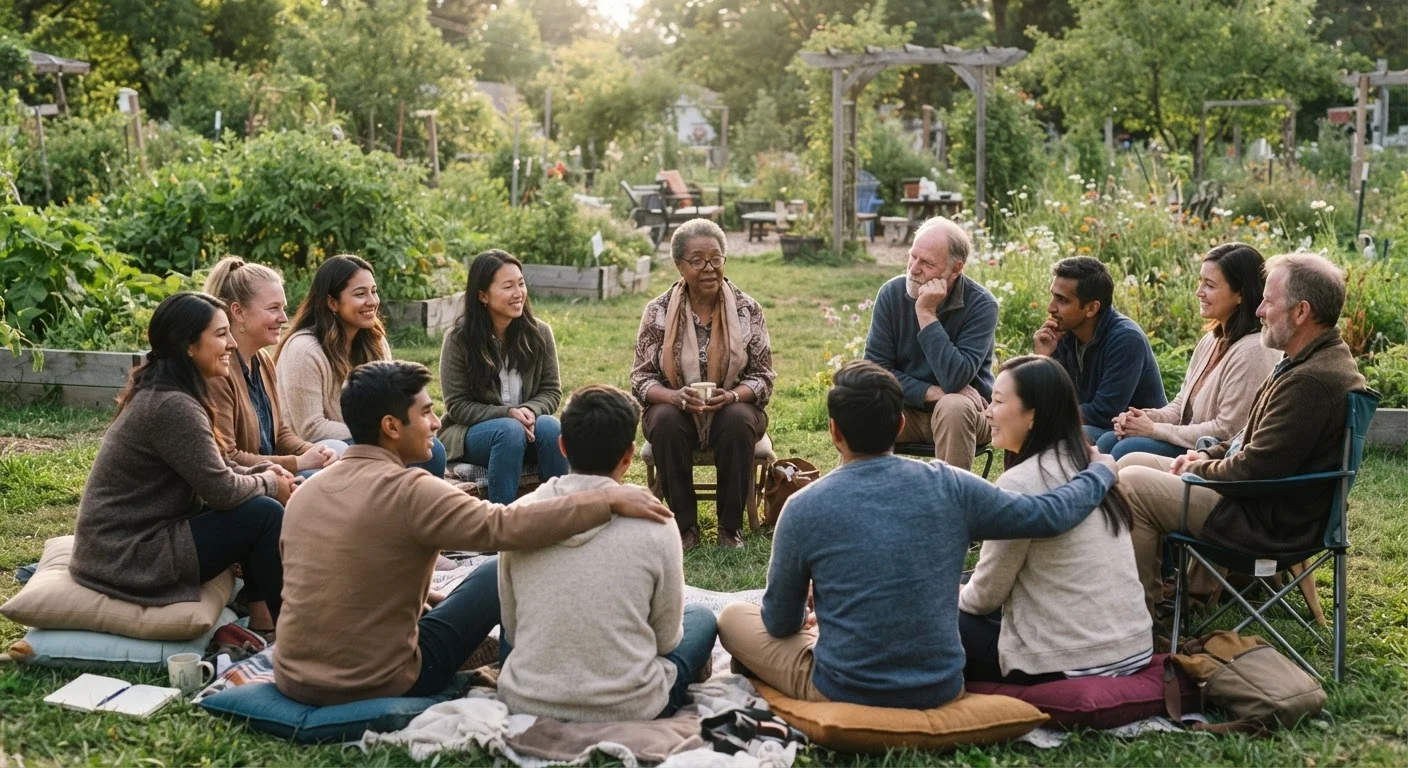
Physical co-presence activates our social nervous system in ways that text and video do not fully replicate. Eye contact, shared laughter, a hand on the shoulder, or simply sitting in the same room with others who understand your experience all contribute to a felt sense of safety and belonging. Studies examining peer support groups consistently find that in-person attendance is associated with stronger social bonding over time compared to online-only participation, though the evidence base continues to evolve.
In-Person Groups and the Evidence Base
Research on peer support groups — including those for depression, addiction recovery, and grief — generally shows positive outcomes for participants, though study designs vary considerably. The benefits of in-person attendance appear linked to social bonding, accountability, and the normalizing effect of shared experience. It is worth noting that what works best varies by individual, condition, and group quality rather than format alone. Always consult a mental health professional about which type of support is appropriate for your specific situation.
In-person groups also tend to build local ties — relationships that can translate into practical help, shared resources, and the kind of reciprocal care that strengthens collective wellbeing over the long term. For a direct comparison of how these formats perform in structured peer support settings, see how online support groups and in-person meetings compare.
Choosing What Works for You — or Combining Both
There is no single right answer about which format to prioritize. Your circumstances, personality, specific needs, and available options all factor in. Someone managing social anxiety may find online participation a meaningful first step before attempting in-person connection. Someone craving physical presence after a period of isolation may find an in-person group far more restorative than any amount of screen-based interaction.
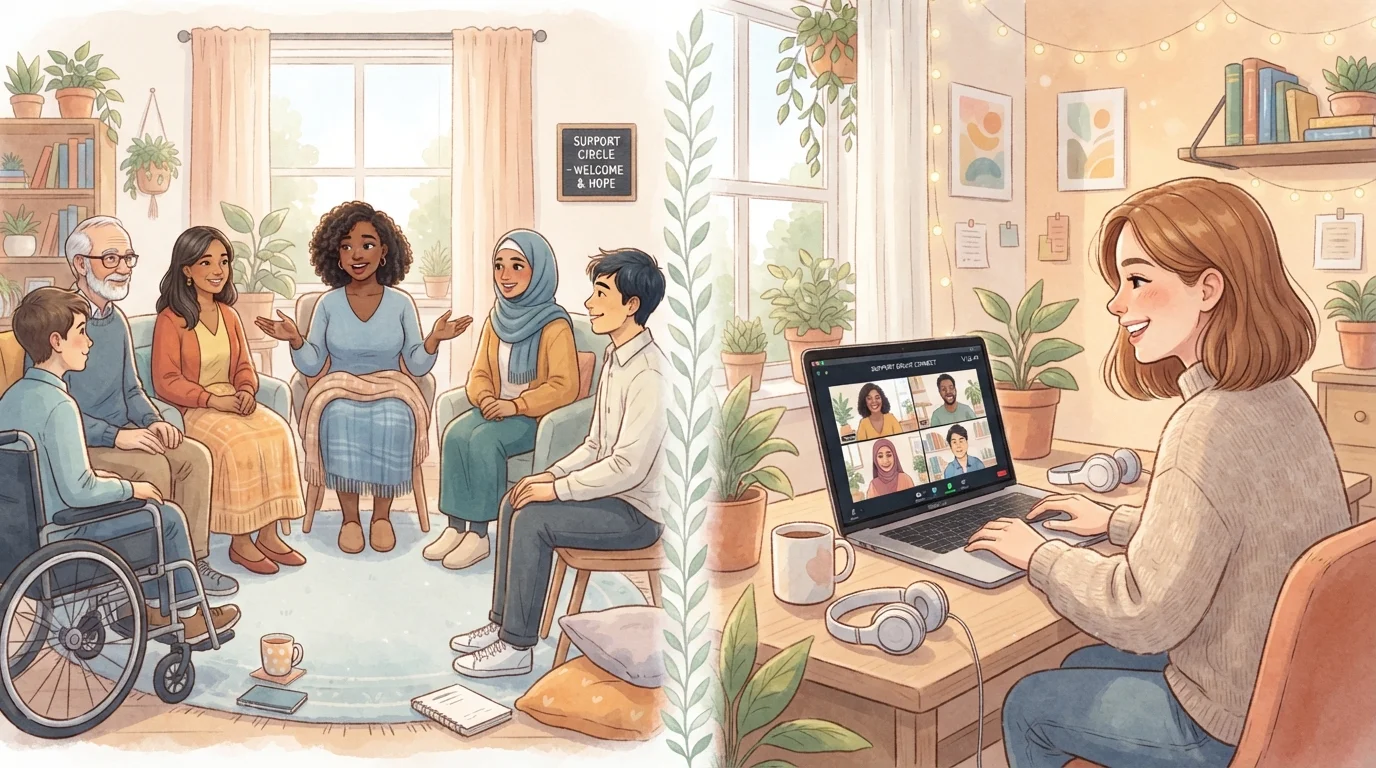
Many people benefit from using both: an online community for day-to-day connection, information sharing, or support during difficult nights, paired with an in-person group for the deeper relational nourishment that physical presence tends to provide. For a fuller exploration of the trade-offs involved, weighing the trade-offs between online and in-person communities offers a practical framework.
Whatever format you choose, the quality of the community matters more than its medium. Loneliness and isolation can persist even in active communities if the connection feels superficial or unsafe — so staying attentive to whether a space is genuinely serving your wellbeing is always worthwhile.